Leave Your Message

China Top 10 Heat Exchanger Furnace Suppliers

China’s heat exchanger furnace industry serves glass, ceramics, metallurgy, chemical processing, and advanced manufacturing. Its suppliers offer different designs, heating methods, materials, and service capabilities. Choosing the right partner requires more than comparing catalog prices.

This guide introduces China’s Top 10 Heat Exchanger Furnace Suppliers through practical purchasing criteria. We examine manufacturing experience, temperature control, heat-transfer efficiency, furnace structure, insulation quality, and customization support. We also consider certifications, factory communication, installation guidance, spare-parts availability, and after-sales response. These details matter on a production floor, where uneven heating can create visible defects, wasted energy, and costly downtime.

Performance should be verified carefully. Product brochures may show impressive temperature ranges, but real results depend on load shape, atmosphere, operating cycles, and maintenance practices. Ask suppliers for technical drawings, test records, reference projects, and clear warranty terms. A site audit or video inspection can reveal workmanship that photographs hide.

The ranking is not absolute. A supplier suitable for laboratory trials may not fit continuous industrial production. Some companies may provide strong engineering but limited overseas support. Others may offer attractive prices while requiring closer quality supervision. That difference deserves attention. This article aims to provide a balanced, experience-informed starting point for buyers evaluating Heat Exchanger Furnace manufacturers in China. Readers should confirm current capabilities directly, because equipment models, certifications, lead times, and export services can change. Reliable decisions come from documented evidence, technical dialogue, and realistic operating requirements. Small details matter.
China Top 10 Heat Exchanger Furnace Suppliers

Heat Exchanger Furnace Fundamentals: 300–1,200°C Operation and 60–90% Heat Recovery

China’s heat exchanger furnaces commonly operate between 300°C and 1,200°C. At lower temperatures, air preheaters support drying and process heating. Above 900°C, refractory design, oxidation control, and thermal expansion become critical. The U.S. Department of Energy reports that industrial facilities may lose 20–50% of input energy as waste heat. Heat recovery therefore affects both fuel use and furnace stability.

A well-designed recuperative or regenerative system can recover roughly 60–90% of available exhaust heat, depending on gas composition, fouling, leakage, and temperature difference. The upper range needs disciplined maintenance. It is not an automatic specification. For example, a 1,000°C exhaust stream can preheat combustion air before entering the burner, reducing the energy needed to reach the target temperature. The European Commission’s Best Available Techniques guidance also treats heat recovery as a major energy-efficiency measure, but stresses process integration and safe operating limits.

Temperature mapping matters. Sensors should track furnace zones, outlet gas, air supply, and exchanger surfaces. Dust loading can quietly reduce performance. A 5–10% efficiency decline may remain unnoticed without regular heat-balance checks. Engineers sometimes overstate recovery because they measure hot-side temperature only. That is a weakness. Supplier comparisons should include pressure drop, material selection, inspection access, emissions controls, and verified recovery data from comparable duty. Reports from the U.S. DOE and European Commission provide useful benchmarks, but actual results still depend on fuel, load pattern, and operator practice.
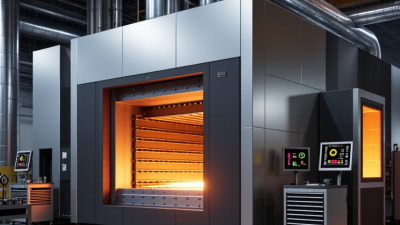
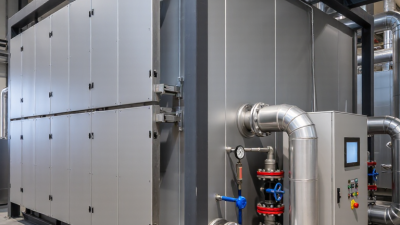
China’s Top 10 Suppliers Ranked by Capacity, Efficiency, Compliance, and Service

China Top 10 Heat Exchanger Furnace Suppliers

China’s top ten heat exchanger furnace suppliers should be judged by more than factory size. Capacity includes annual output, fabrication space, skilled technicians, and pressure-testing equipment. A large workshop helps, but it does not guarantee stable quality. Numbers can mislead.

Efficiency depends on heat recovery, fuel use, temperature control, and shutdown performance. Reliable suppliers provide test records, material certificates, weld inspections, and clear maintenance instructions. Compliance also matters. Buyers should check quality systems, pressure equipment procedures, emissions controls, and documentation for the destination market. Field evidence counts. A supplier with strong engineering experience can identify thermal stress before it becomes a costly failure.

Service separates capable manufacturers from ordinary exporters. The strongest suppliers offer process design support, spare-parts planning, installation guidance, and responsive troubleshooting. Their engineers understand fouling, corrosion, vibration, and uneven heat distribution. Capacity should be ranked alongside delivery consistency. Efficiency should be verified through operating data, not attractive promises. Compliance should include traceability from raw material to final inspection.

This ranking is not perfect. Supplier information changes, and published capacity may reflect equipment rather than actual production. Buyers should request recent references, factory audit access, performance guarantees, and after-sales response times. Service matters. A smaller supplier may outperform a larger one when communication is faster and technical decisions are clearer.

Core Technologies: Recuperative, Regenerative, Tubular, and Plate Heat Exchanger Furnaces

China Top 10 Heat Exchanger Furnace Suppliers: Core Technologies

China’s leading heat exchanger furnace suppliers increasingly compete through thermal efficiency, not catalog size. The U.S. Department of Energy estimates that process heating consumes about 51% of manufacturing energy use. Its waste heat recovery report also identifies roughly 1,670 trillion Btu of technically recoverable industrial heat annually. These figures explain the growing demand for recuperative and regenerative furnace designs.

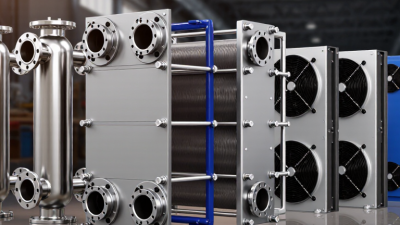
Recuperative furnaces transfer exhaust heat continuously through a metallic exchanger. They suit stable production lines and moderate temperature recovery. Regenerative furnaces use paired chambers and ceramic media, storing heat before releasing it into combustion air. This design can deliver deeper recovery, but switching valves and seals require disciplined maintenance. Tubular heat exchanger furnaces provide compact gas paths and strong pressure control. Plate heat exchanger furnaces offer high surface-area density and easier modular replacement, although fouling can reduce performance.

Real-world selection needs more than a claimed efficiency percentage. The supplier should provide tested flue-gas temperatures, pressure-drop data, material grades, and emission results. EN 746-2 and ISO 13577 offer useful safety references for industrial thermoprocessing equipment. A 2023 industrial energy-efficiency review by the International Energy Agency stresses that measured operating data matters more than theoretical equipment ratings. That point is easy to overlook. A furnace may perform well in a laboratory, yet lose efficiency when dust, cycling, or poor insulation enters production. Careful buyers should request site trials, service records, and calculations based on actual fuel consumption.

China Top 10 Heat Exchanger Furnace Suppliers - Core Technologies: Recuperative, Regenerative, Tubular, and Plate Heat Exchanger Furnaces
Rank Anonymous Supplier Profile Core Furnace Technology Typical Furnace Temperature Heat-Recovery Configuration Typical Air Preheat Range Common Industrial Applications Typical Construction Materials Main Technical Advantages Key Design Limitations
1 Supplier Profile A High-temperature regenerative furnace 800–1,600°C Paired ceramic beds or checker-brick regenerators with periodic flow reversal 800–1,100°C Steel reheating, forging, nonferrous melting, and high-temperature heat treatment High-alumina ceramics, refractory castables, heat-resistant steel, and insulation brick Very high exhaust-gas heat recovery; substantial reduction in fuel consumption and furnace exhaust temperature Requires switching valves, control synchronization, regular maintenance, and sufficient flue-gas cleanliness
2 Supplier Profile B Compact regenerative burner furnace 750–1,400°C Regenerative burner pairs integrated directly into the furnace wall 700–1,000°C Aluminum holding and melting, billet heating, heat treatment, and industrial batch furnaces Silicon-carbide or high-alumina regenerator media, refractory fiber, and stainless or heat-resistant steel Compact layout, rapid heat recovery, low installation footprint, and good turndown capability Burner pairing and pressure balance are critical; particulate deposits can reduce regenerator performance
3 Supplier Profile C Metallic recuperative furnace 600–1,200°C Continuous counter-flow gas-to-air recuperator positioned in the flue-gas path 300–700°C Heat treatment, powder coating, ceramic processing, and general industrial ovens 310S, 253MA, nickel alloys, stainless steel, and ceramic insulation Continuous operation, simple airflow arrangement, and lower control complexity than regenerative systems Metal temperature limits restrict use at very high furnace temperatures; corrosion and thermal fatigue require attention
4 Supplier Profile D Ceramic recuperative furnace 900–1,500°C Gas-to-air recuperator made from silicon-carbide or other high-temperature ceramic elements 500–900°C Forging, ceramic firing, glass processing, and high-temperature atmosphere furnaces Silicon carbide, cordierite, high-alumina ceramics, refractory brick, and fiber modules Higher temperature resistance and improved oxidation resistance compared with many metallic recuperators Ceramic elements are brittle and may be damaged by thermal shock, impact, or rapid uncontrolled heating
5 Supplier Profile E Tubular heat exchanger furnace 700–1,300°C Parallel or counter-flow tubes separating combustion exhaust from combustion air 350–750°C Continuous annealing, steel strip processing, brazing, and controlled-atmosphere heating Heat-resistant stainless steel, nickel alloys, silicon carbide, and refractory-lined steel casing Modular construction, controllable heat-transfer area, and easy integration into continuous furnace lines Tube oxidation, thermal expansion, fouling, and leakage prevention must be carefully managed
6 Supplier Profile F Radiant-tube furnace with recuperated burners 750–1,100°C process temperature Recuperative burner preheats combustion air while radiant tubes keep combustion products separate from the work zone 300–650°C Bright annealing, galvanizing lines, metal strip heating, and atmosphere-controlled treatment Heat-resistant steel, nickel-chromium alloys, ceramic fiber, and refractory castable Protects product atmosphere, provides indirect heating, and supports uniform temperature control Radiant-tube life depends on material selection, burner adjustment, tube temperature, and furnace atmosphere
7 Supplier Profile G Plate heat exchanger furnace 500–900°C Compact plate-fin or corrugated plate gas-to-air heat exchanger installed in the exhaust system 200–500°C Paint curing, drying ovens, food-processing ovens, and medium-temperature industrial heating Stainless steel, aluminized steel, aluminum for lower-temperature sections, and mineral insulation Compact size, large heat-transfer surface area, and relatively low pressure drop when correctly selected Generally unsuitable for heavily contaminated exhaust or extremely high-temperature furnace gas without pre-cleaning
8 Supplier Profile H Waste-heat boiler and air-preheating furnace system 600–1,200°C Flue gas first transfers heat to combustion air, hot water, or steam through a staged recovery system 250–650°C Foundries, chemical processing, galvanizing, heat treatment, and facilities with steam demand Boiler steel, stainless steel, refractory-lined chambers, and corrosion-resistant heat-transfer surfaces Can recover heat for both combustion-air preheating and useful steam or hot-water generation Higher system complexity; gas dew point, corrosion, water quality, and condensate management are important
9 Supplier Profile I Modular recuperative batch furnace 500–1,100°C Packaged recuperator connected to a batch chamber and exhaust duct 250–600°C General heat treatment, stress relieving, tempering, preheating, and laboratory-scale production Stainless steel, refractory brick, ceramic fiber, and heat-resistant burner components Flexible batch operation, straightforward installation, and comparatively simple maintenance procedures Heat recovery varies with batch cycle; intermittent operation can reduce annualized recovery performance
10 Supplier Profile J Hybrid recuperative-regenerative furnace 800–1,500°C Regenerative burners for the main heating zones combined with recuperative sections for auxiliary zones 500–1,000°C Large continuous furnaces, steel reheating, forging lines, and energy-intensive thermal processing Refractory ceramics, heat-resistant steel, silicon carbide, castable linings, and insulated furnace panels Balances high heat recovery with flexible zone control and can be adapted to different production loads More demanding commissioning, combustion-control integration, and maintenance planning than single-technology systems
Engineering note: Temperature and air-preheating values are typical industry ranges rather than guaranteed specifications. Actual performance depends on fuel type, furnace geometry, exhaust-gas composition, excess-air ratio, production load, heat-exchanger material, pressure drop, and maintenance conditions.

Performance Metrics: Thermal Efficiency, Emissions, Pressure Rating, and Service Life

China Top 10 Heat Exchanger Furnace Suppliers

Supplier comparisons should begin with measured thermal efficiency, not catalog promises. The International Energy Agency reports that industry uses roughly 37% of global final energy. The U.S. Department of Energy estimates process heating represents about 51% of manufacturing energy use. For each supplier, request efficiency curves at 50%, 75%, and 100% load. A furnace reaching 90% efficiency only at full load may perform poorly during frequent batch cycles. Real operating records matter more.

Emissions require a fixed test method. The U.S. Environmental Protection Agency’s AP-42 database provides recognized emission factors for fuel-burning equipment, but site conditions can change results. Ask for nitrogen oxide, carbon monoxide, and carbon dioxide data at a stated fuel rate and oxygen level. Flue gas readings should come from commissioning tests, not only laboratory sheets. Small details matter.

Pressure rating needs equal scrutiny. Design pressure, test pressure, temperature, and corrosion allowance should match applicable ASME pressure-vessel requirements. A higher rating is not automatically safer. It may increase cost and reduce heat-transfer efficiency. Service life depends on thermal cycling, weld quality, fouling, and maintenance access. A 20-year claim means little without inspection records and replacement-part data. I would also examine tube failure history. Suppliers rarely publish it. That gap deserves attention.

Industry Applications: Petrochemical, Steel, Glass, Ceramics, and Food Processing over 1 MW

For China’s top 10 heat exchanger furnace suppliers, capacity above 1 MW is only the starting point. IEA Energy Technology Perspectives 2024 reports that industry consumes about 37% of global final energy. Therefore, furnace efficiency, heat recovery, and stable temperature control directly affect operating costs.

Petrochemical plants often require high-temperature gas or thermal-oil systems with corrosion-resistant heat-transfer surfaces. Steel producers need robust designs for dusty flue gas and continuous operation. World Steel Association data reports global crude steel production of about 1.89 billion tonnes in 2023. That volume shows why small efficiency losses can become major costs. Glass furnaces need even heat across long melting zones. Ceramic kilns demand accurate firing curves, sometimes above 1,200°C. Food processors need cleaner layouts, washable surfaces, and careful separation between combustion gases and product air.

Practical testing matters. A supplier should provide measured thermal efficiency, pressure-drop data, material certificates, and service records from comparable plants. The U.S. Department of Energy’s Industrial Decarbonization Roadmap highlights thermal efficiency and waste-heat recovery as important industrial improvement paths. Still, a polished datasheet is not enough. I would inspect burner stability, refractory wear, access for cleaning, and control response at partial load. This is where many evaluations become uncertain. A 1 MW rating may describe maximum output, not dependable daily performance. Suppliers should also explain maintenance intervals, emissions controls, and heat-recovery performance under real production conditions.