Leave Your Message

Why Buy a Heat Exchanger Furnace for Industrial Use?

Why Buy a Heat Exchanger Furnace for Industrial Use?

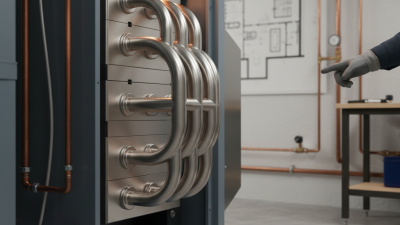
Industrial heat is rarely just about reaching a high temperature. It is about controlling energy, production speed, safety, and operating cost. A Heat Exchanger Furnace transfers heat through a controlled exchange process, rather than wasting all combustion energy into exhaust gases. This design can support stable temperatures in metal treatment, ceramics, chemicals, food processing, and other demanding operations.

Professor Yunus A. Çengel explains, “Heat transfer is the science that deals with the rate of transfer of thermal energy.” His principle clarifies the purchasing decision. A furnace should not only become hot. It should deliver heat evenly, repeatedly, and with measurable efficiency. Operators can monitor temperature zones, fuel use, airflow, and product quality. These details matter beside a production line at 5 a.m.

Reliability is equally important. A well-designed Heat Exchanger Furnace may reduce thermal shock, protect sensitive materials, and recover useful heat from exhaust streams. It can also lower emissions when matched with suitable burners and controls. However, results depend on maintenance, insulation, heat-transfer design, and correct sizing. It is not a magic machine.

Poor installation can erase expected savings. Some decisions remain uncertain.

Buyers should examine lifecycle cost, service access, spare parts, control accuracy, and documented performance. They should request realistic test data, not impressive promises. The strongest investment is a furnace that fits the process, workload, available fuel, and safety requirements. In industrial use, disciplined engineering usually matters more than a low purchase price.
Why Buy a Heat Exchanger Furnace for Industrial Use?

What Is an Industrial Heat Exchanger Furnace?

Why Buy a Heat Exchanger Furnace for Industrial Use?

What Is an Industrial Heat Exchanger Furnace?

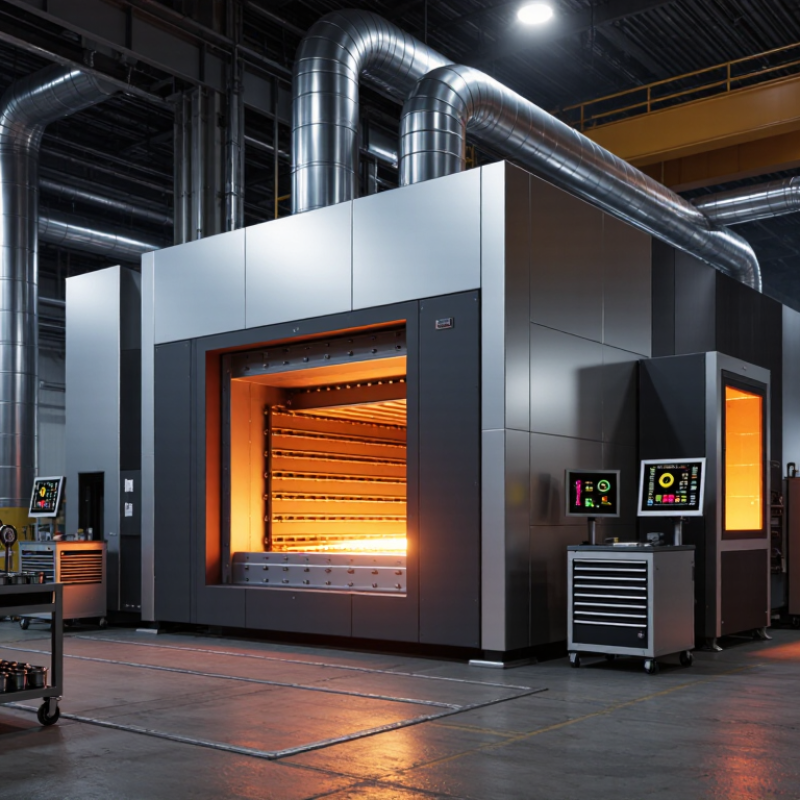
An industrial heat exchanger furnace heats materials without exposing them directly to combustion gases. Fuel burns in a separate chamber. Heat then moves through metal tubes, plates, or radiant surfaces.

The heated air or gas enters the process chamber. It warms steel parts, ceramics, glass, powders, or treated chemicals. This arrangement helps control temperature, atmosphere, and product cleanliness. It also reduces contamination risks during demanding production cycles.

The U.S. Department of Energy’s Industrial Decarbonization Roadmap (2022) reports that process heating represents roughly 51% of manufacturing energy use. That figure makes heat recovery and furnace efficiency practical priorities. The Department’s waste heat recovery studies also identify exhaust streams as valuable energy sources. Many systems preheat combustion air or incoming process gas with recovered heat.

The design is not automatically efficient. Poor insulation, blocked passages, or weak airflow can waste energy quickly. Real furnaces drift. A small temperature difference across a load may affect hardness, color, or final dimensions. Operators should check thermocouples, seals, pressure, and exhaust temperature during routine production. The International Energy Agency also identifies industrial efficiency as an important pathway for reducing energy demand and emissions. Performance depends on maintenance, not equipment alone.
How Does a Heat Exchanger Furnace Work?

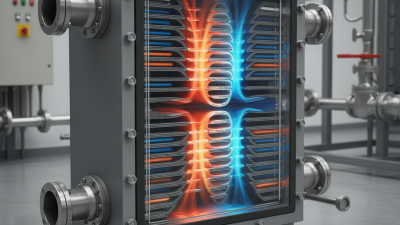
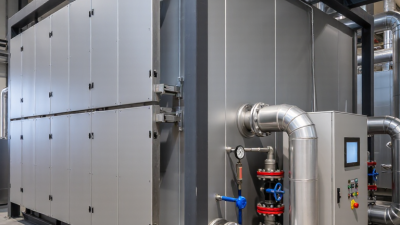
A heat exchanger furnace separates combustion from the heated process stream. Fuel burns inside a sealed chamber. Hot flue gas then moves across metal tubes or plates. Heat crosses the wall, while gases remain isolated. The process air exits cleaner and more stable. This matters when products cannot tolerate smoke, moisture, or direct flame contact.

Control is practical, not mysterious. Thermocouples measure outlet temperature. Dampers regulate flue-gas flow. Fans maintain pressure across the exchanger. In counterflow designs, the hottest exhaust meets the incoming cold air, improving heat transfer. The U.S. Department of Energy reports that process heating uses about 51% of energy in American manufacturing. Even modest recovery can therefore affect operating costs. The International Energy Agency also reports that industry consumed roughly 37% of global final energy in 2022.

On a factory floor, performance depends on details. Fouled tubes reduce airflow. Poor insulation leaves hot surfaces near workers and equipment. A small leak can mix combustion products with process air. Operators should record inlet temperature, outlet temperature, pressure drop, and fuel consumption during commissioning. Keep records. They expose gradual losses.

A furnace may reach its advertised efficiency only under controlled conditions. Real production changes. Loads vary, doors open, and maintenance gets delayed. That is where my confidence becomes cautious: calculated efficiency is not the same as delivered efficiency. Independent testing, routine cleaning, and correctly sized controls provide stronger evidence than a brochure.

Why Buy a Heat Exchanger Furnace for Industrial Use?

A heat exchanger furnace transfers heat from hot exhaust gases to incoming combustion air or process air. This reduces the energy required to reach the target furnace temperature and can lower fuel consumption.

How it works: the chart uses the heat-transfer equation Q = m × Cp × ΔT. The calculated scenario assumes 1 kg/s of exhaust gas, a specific heat capacity of 1.1 kJ/kg·K, and exhaust cooling from 600°C to 200°C. Heat recovery increases as heat exchanger effectiveness improves. Actual results vary with furnace design, gas composition, airflow, fouling, and operating temperature.

What Industrial Benefits Does It Provide?

Why Buy a Heat Exchanger Furnace for Industrial Use?

A heat exchanger furnace can transfer heat between separate air or gas streams without mixing them. This design helps industrial plants reuse energy that would otherwise leave through exhaust vents. In practical operation, recovered heat can prewarm incoming air, reduce fuel demand, and support more stable furnace temperatures. That matters when processing metal parts, ceramics, glass, or other heat-sensitive materials. Steadier temperatures may also reduce uneven heating and rejected batches.

The benefits are not automatic. A poorly sized exchanger can restrict airflow, increase maintenance, or deliver less savings than expected. Engineers should review operating temperatures, fuel type, production cycles, and dust levels before installation. With suitable insulation and regular inspection, the system can improve thermal efficiency and reduce pressure on combustion equipment. It may also lower emissions, although actual results depend on controls, maintenance, and plant conditions. Field measurements are more reliable than optimistic estimates.

Tips: Check heat-loss data before choosing capacity. Keep exchanger surfaces clean. Monitor outlet temperature and pressure drop each shift. Train operators to notice unusual noise, odors, or unstable flames. Do not ignore small changes. They often appear before expensive failures. A pilot installation can reveal problems that simulations miss, especially where production schedules change frequently. Bear this in mind: energy savings must be measured after installation, not assumed from catalog figures.

Which Industries Use Heat Exchanger Furnaces?

Heat exchanger furnaces serve industries that need intense, continuous heat and better fuel control. Steel plants use them for reheating slabs, billets, and coils before rolling. Recovered exhaust heat can preheat combustion air, reducing the fuel needed inside the furnace. The U.S. Department of Energy reports that process heating represents about 51% of manufacturing energy use. That makes recovery systems especially relevant where furnaces operate around the clock.

Glass and ceramic manufacturers also depend on stable furnace temperatures. Glass melting requires uniform heat across large chambers, while ceramic kilns must control heating and cooling carefully. Petrochemical facilities use fired heaters and related heat recovery equipment to support cracking, reforming, and distillation operations. The International Energy Agency states that industry consumes roughly 37% of global final energy. Even modest thermal improvements can therefore affect operating costs and emissions.

Food processing, metal casting, aluminum production, and mineral treatment may also benefit from this technology. These sites often handle hot air, combustion gases, or drying streams that still contain usable energy. However, the fit is not automatic. Dust, corrosive vapors, and frequent temperature changes can foul exchanger surfaces. A 2022 U.S. Department of Energy industrial assessment guide stresses measurement before equipment selection. That practical warning matters. Published averages cannot predict every plant. Operators should compare fuel records, exhaust temperatures, maintenance labor, and production schedules before approving a furnace upgrade.

Why Buy a Heat Exchanger Furnace for Industrial Use? - Which Industries Use Heat Exchanger Furnaces?

Industry Typical Industrial Process How a Heat Exchanger Furnace Is Used Typical Operating Temperature Primary Benefits Important Design Considerations
Steel and Metal Processing Annealing, stress relieving, tempering, brazing, and preheating of metal products. Transfers heat from combustion gases or another hot process stream to the furnace atmosphere or incoming combustion air without directly mixing the streams. Approximately 300–1,200 °C Improved temperature uniformity, reduced fuel consumption through combustion-air preheating, and lower contamination risk for sensitive metal surfaces. Heat-resistant alloys, oxidation control, furnace atmosphere management, and resistance to thermal cycling are important.
Automotive Manufacturing Paint curing, powder-coating ovens, component heat treatment, and aluminum processing. Recovers heat from exhaust gases and transfers it to fresh process air or combustion air used in curing and heat-treatment equipment. Approximately 120–650 °C Lower operating costs, stable curing temperatures, reduced exhaust heat loss, and better product consistency. Low-temperature corrosion, volatile organic compound control, airflow balance, and clean-air separation must be addressed.
Glass Manufacturing Melting, refining, forming, and annealing of glass products. Uses high-temperature exhaust energy to preheat combustion air, improving the thermal efficiency of melting and annealing furnaces. Approximately 500–1,600 °C Reduced fuel demand, more stable furnace operation, lower flue-gas losses, and improved use of recovered heat. Dust loading, corrosive vapors, high thermal stress, leakage prevention, and refractory compatibility are critical.
Ceramics and Refractories Drying, biscuit firing, glazing, sintering, and calcination of ceramic products. Preheats combustion air or recirculated process air by recovering energy from kiln and furnace exhaust. Approximately 200–1,500 °C More efficient firing, shorter warm-up periods, improved kiln temperature control, and reduced thermal energy waste. Particulate filtration, dust-resistant exchanger geometry, thermal expansion, and prevention of product contamination are required.
Chemical and Petrochemical Processing Thermal treatment, cracking, reforming, evaporation, drying, and process-fluid heating. Exchanges heat between furnace flue gas and process fluids, feed streams, or combustion air while maintaining separation between hazardous media. Approximately 250–1,000 °C Fuel savings, controlled process temperatures, reduced emissions intensity, and more efficient feed preheating. Material compatibility, pressure containment, fouling, hazardous-area requirements, and leak detection are essential.
Food and Beverage Processing Oven baking, roasting, drying, sterilization, and thermal treatment of packaged or unpackaged products. Recovers heat from oven exhaust and transfers it to incoming air or hot-water systems while keeping combustion gases away from food-contact areas. Approximately 80–350 °C Reduced fuel use, more consistent product quality, lower exhaust temperatures, and improved hygiene control through indirect heating. Food-grade air separation, cleanability, condensation control, corrosion resistance, and sanitary airflow design are important.
Pharmaceutical Manufacturing Drying, sterilization, granulation, powder processing, and controlled-environment heating. Provides indirect heat transfer so process air can be heated without exposing products to combustion by-products. Approximately 80–300 °C Clean heat transfer, precise temperature control, reduced contamination risk, and repeatable batch performance. High-quality sealing, validated temperature control, cleanable surfaces, material traceability, and strict air-quality requirements are needed.
Paper and Pulp Production Web drying, coating drying, bleaching-related heating, and process-air heating. Transfers energy from hot exhaust or process streams to dryer supply air, combustion air, or water circuits. Approximately 100–450 °C Lower steam or fuel demand, improved dryer efficiency, better moisture control, and reduced heat released to the exhaust system. Moisture condensation, fiber and chemical deposits, corrosion, airflow pressure drop, and cleaning access must be considered.
Textile Manufacturing Fabric drying, heat setting, coating, curing, and finishing. Recovers heat from stenter frames, ovens, or exhaust systems to preheat fresh air used in textile finishing equipment. Approximately 120–250 °C Reduced gas consumption, stable fabric dimensions, more uniform finishing, and lower exhaust heat losses. Lint filtration, fouling prevention, airflow control, fire protection, and easy maintenance access are necessary.
Waste Treatment and Resource Recovery Thermal treatment, incineration, sludge drying, and energy recovery from hot exhaust gases. Recovers energy from flue gas to preheat combustion air, drying air, feed materials, or a secondary heat-transfer fluid. Approximately 150–1,100 °C Higher overall energy recovery, reduced auxiliary fuel use, improved combustion stability, and lower waste heat discharge. Acidic gases, dust, fouling, erosion, corrosion, emissions compliance, and safe isolation of contaminated streams are major concerns.
Note: Temperature ranges are typical engineering ranges and vary by furnace type, material, atmosphere, fuel, residence time, and process requirements. Actual heat recovery, efficiency, and material selection should be confirmed through a site-specific thermal and safety assessment.

What Factors Should Buyers Consider?

Why Buy a Heat Exchanger Furnace for Industrial Use?

When evaluating a heat exchanger furnace, buyers should begin with process requirements, not appearance or advertised output. A furnace must match the required temperature, heating medium, material load, and operating schedule. Confirm the rated capacity under real conditions, including start-up losses and seasonal temperature changes. A perfect forecast is unrealistic.

Thermal efficiency matters, but it should not be judged alone. Ask for measured fuel consumption, heat recovery data, and emissions performance from comparable installations. Examine the exchanger material, weld quality, insulation thickness, and access points for cleaning. These details affect service life.

Request maintenance records or independent test reports when available. A polished brochure is not enough.

Safety and control systems deserve equal attention. Check over-temperature protection, pressure monitoring, alarm logic, and emergency shutdown procedures. The furnace should also fit existing ducts, utilities, floor loading, and ventilation arrangements.

Calculate the cost of spare parts, inspection time, and planned downtime. A low purchase price may hide expensive maintenance.

In practical plant reviews, operators often reveal problems that specifications miss. Ask how quickly technicians can replace seals, inspect tubes, or remove deposits. Consider training requirements and local technical support.

A spreadsheet can still mislead when it ignores dirty filters, uneven loading, or unstable power. Buyers should compare several operating scenarios before approving the investment.