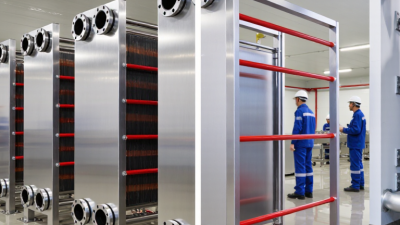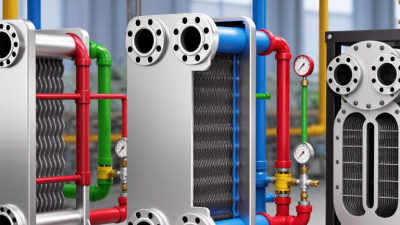
A Brazed Plate Heat Exchanger is often chosen when a system needs efficient heat transfer in a compact space. Thin, corrugated metal plates create narrow channels for two fluids to exchange heat. The plates are joined by brazing, so the unit usually has no gaskets to replace. That can reduce routine maintenance and help limit the space needed beside a boiler, chiller, or process line. Compactness is useful.
The design is not right for every duty. Its narrow passages may be more sensitive to particles or scale than some alternatives, and the brazed construction can make internal cleaning difficult. A practical choice depends on the actual fluids, operating temperatures, pressure limits, flow rates, and expected fouling. Small details matter. Even water quality can change maintenance needs.
Before selecting a unit, compare manufacturer performance data with the system’s real operating conditions, not just its peak rating. Check pressure drop, materials, connection size, and the temperature range at both normal and changing loads. For example, a unit serving a clean water loop may suit a different plate pattern or alloy than one handling glycol or a process fluid. Ask the supplier to confirm compatibility and performance using the intended conditions. That step helps prevent oversizing, poor heat transfer, or an unsuitable operating margin. The trade-off deserves thought: a compact exchanger can be a strong option, but only when its limits fit the job.
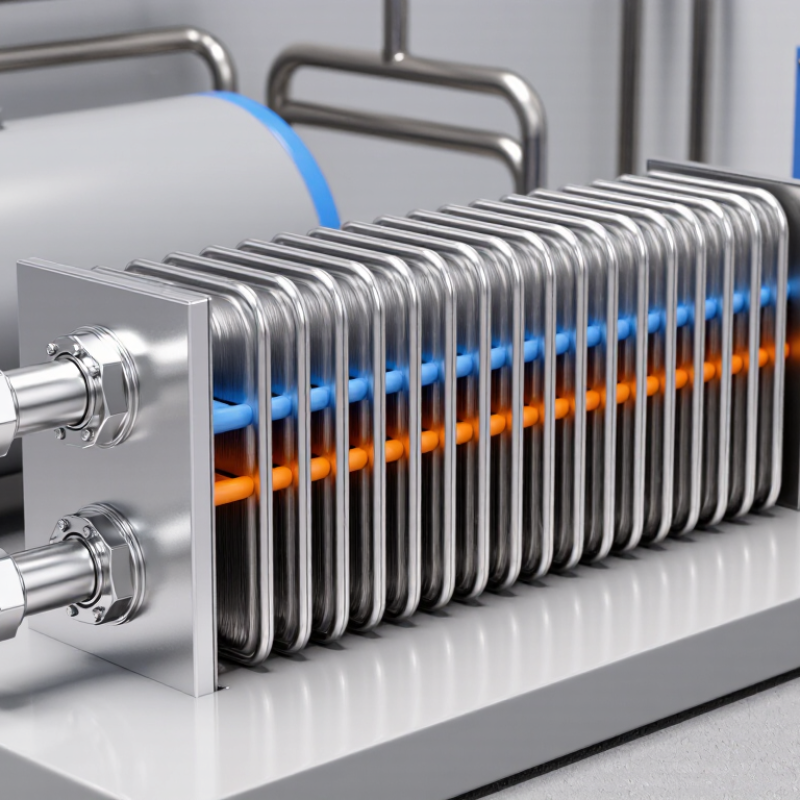
A brazed plate heat exchanger transfers heat between two fluids without mixing them. It contains thin, corrugated metal plates stacked tightly together. The plate pattern creates alternating channels: hot fluid flows through one set, while cooler fluid moves through the next. Heat crosses the metal walls. A small detail matters: the corrugations also guide flow and support the plates under pressure.
Unlike gasketed models, this unit has no replaceable seals between plates. Instead, brazing material joins the plates at their contact points, forming a compact, sealed core. Stainless steel is common, while copper or nickel may be used for brazing, depending on fluid compatibility. The result is often small enough to fit beside a pump or inside a mechanical cabinet. Small, but not simple.
The International Energy Agency’s 2022 report, The Future of Heat Pumps, describes heat as accounting for around half of global energy consumption. Efficient heat transfer is therefore important, though an exchanger alone cannot guarantee energy savings. Correct sizing and flow rates matter. So does water quality.
Narrow channels can foul, and a brazed core is generally harder to open and clean than a gasketed unit. That trade-off is easy to overlook. When selecting one, check operating pressure, temperature limits, fluid chemistry, and maintenance access—not just its compact footprint.
Why Choose a Brazed Plate Heat Exchanger?
How Its Plates Transfer Heat Between Fluids
Inside a brazed plate heat exchanger, thin, corrugated metal sheets form alternating channels. One fluid moves through every other channel; the second flows through the spaces between them. They remain separate. Heat passes through the metal plates, not by mixing the fluids.
The plates’ ridges create a zigzag path. This spreads each fluid across a broad surface and encourages mixing near the plate, helping heat move efficiently. Many units arrange the streams in opposite directions, so cooler fluid meets warmer fluid along much of the exchanger. Small details matter. Flow rate, inlet temperature, and fluid properties all affect actual performance.
At the plate edges and contact points, brazing holds the stack together and seals the channels. The compact design can transfer substantial heat in a small space, but it is not ideal for every fluid. Thick deposits or particles may restrict narrow passages, and unsuitable plate or braze materials can corrode. In practice, checking fluid compatibility and pressure drop matters as much as comparing heat-transfer ratings. One limitation is easy to overlook: a compact exchanger may be harder to clean internally than a unit designed to open.
A brazed plate heat exchanger (BPHE) transfers heat through thin metal plates while keeping the two fluid circuits separate. Actual capacity and operating limits depend on the unit design, fluids, flow rates, and system conditions.
| Design aspect | How it works | Typical characteristic | Practical benefit |
|---|---|---|---|
| Alternating flow channels | Thin plates form a series of narrow passages. The two fluids flow through alternating channels, so each plate separates a hot-side passage from a cold-side passage. | Many plate channels operate in parallel within a compact assembly. | Provides a large heat-transfer area in a relatively small footprint. |
| Heat conduction through plates | Heat moves from the hotter fluid to the plate surface, conducts through the metal, and then passes into the cooler fluid. | Heat transfer depends on plate material and thickness, surface area, flow conditions, and fluid properties. | Transfers heat directly between circuits without requiring the fluids to mix. |
| Corrugated plate pattern | Pressed ridges and grooves guide the flow and promote mixing close to the plate surfaces. | The pattern increases turbulence compared with a simple smooth passage, while also contributing to pressure drop. | Supports efficient heat exchange; pump or compressor selection must account for the pressure drop. |
| Counter-current flow | In many installations, the fluids flow in opposite directions through the exchanger. | Counter-current arrangement can maintain a useful temperature difference across more of the heat-transfer surface. | Can achieve close outlet-temperature approaches when the unit is correctly selected and operated. |
| Brazed plate pack | Plates are joined at their contact points by brazing material, forming a sealed pressure boundary without conventional plate gaskets. | Stainless-steel plates are commonly used; copper or nickel brazing may be selected according to application and fluid compatibility. | Creates a compact, rigid exchanger with few routine gasket-replacement requirements. |
| Fluid separation | Intact plates and brazed joints keep the hot and cold circuits separate as heat passes through the metal. | Leak performance depends on correct design, installation, operation, and maintenance. | Allows heat exchange between separate process or building-system circuits. |
| Common applications | Used for liquid-to-liquid heating or cooling and, in suitable designs, refrigerant evaporation or condensation. | Common uses include hydronic heating, domestic hot-water systems, refrigeration, and heat-pump systems. | One compact exchanger format can serve a range of thermal duties when properly specified. |
| Selection and maintenance limits | Narrow passages can be affected by particles, deposits, freezing, or fluid incompatibility. Most brazed units cannot be opened for mechanical cleaning. | Filtration, water treatment, suitable fluid chemistry, and operation within the rated limits are important. | Best suited to compatible, relatively clean fluids; heavily fouling duties may need another exchanger type. |
Which Design Features Improve Efficiency and Reliability
A brazed plate heat exchanger uses thin, corrugated metal plates to create many narrow flow channels. This compact arrangement provides a large heat-transfer area without requiring a bulky shell. The corrugations encourage turbulence, helping heat move between fluids even when the unit is small. In counterflow designs, the fluids travel in opposite directions, which can support effective heat exchange across the plate pack.
Every channel matters.
The brazed joints hold the plates together without removable gaskets, reducing potential leak paths and routine gasket replacement. Plate and brazing materials should match the fluids, temperatures, and pressures in the system.
That detail is easy to overlook.
Narrow channels can also collect debris or scale, so clean fluid and suitable filtration help protect performance. In practice, installers should check pressure drop and flow requirements, not just the unit’s heat-transfer rating.
A more compact exchanger is not automatically a better fit.
If conditions vary widely, operating limits and maintenance access deserve careful review.
There is a trade-off.
High turbulence improves heat transfer, but it may also increase pressure drop. Choosing well means balancing efficiency with reliable operation.
Brazed plate heat exchangers are commonly used in building heating and cooling systems, where space is limited and separate fluid circuits need to transfer heat efficiently. In a mechanical room, they may connect a boiler loop to a heating circuit or transfer energy between chilled-water lines. Their compact, corrugated plates create a large heat-transfer area in a relatively small unit.
Space is tight. That matters in retrofit projects, where existing pipework leaves little room for bulky equipment.
They are also found in heat pumps, refrigeration equipment, swimming-pool heating, and some industrial process systems. In a refrigeration installation, the exchanger can serve as a condenser or evaporator, depending on the system design. Heat pumps often use one to move energy between refrigerant and water circuits. Selection still requires care: fluid chemistry, operating pressure, temperature range, and flow rate must suit the exchanger’s materials and construction. A brazed unit is not easy to open for cleaning, so dirty or scaling fluids may call for another design.
The fit is not automatic. A clear review of operating conditions can prevent an efficient-looking choice from becoming a maintenance problem.
How to Decide Whether One Fits Your Application
A brazed plate heat exchanger can suit systems needing high heat transfer in a compact footprint. But the name alone does not make it the right fit. Start with the actual duty: required heating or cooling capacity, inlet temperatures, flow rates, and allowable pressure drop. A design that meets the temperature target but restricts flow may increase pumping costs. Check both sides.
The U.S. Department of Energy’s 2008 report, Waste Heat Recovery: Technology and Opportunities in U.S. Industry, estimated that 20–50% of industrial energy input is lost as waste heat. That figure is broad, not a forecast for any one site. Still, it makes heat recovery worth assessing. Estimate recoverable heat from measured operating data, not a best-case brochure condition.
Then examine the fluids and maintenance plan. Brazed units have narrow passages and are generally not opened for mechanical cleaning. Dirty water, suspended solids, or scaling risk may call for filtration, water treatment, or a different exchanger type. Check fluid compatibility, design pressure, temperature limits, and the supplier’s particle-size guidance. Space is saved. Service flexibility may not be. I would also compare performance at part load; real systems rarely stay at design conditions all day. A short field trial can reveal issues calculations miss.