China’s Phe Heat Exchanger industry is entering 2026 with stronger demand from food processing, district heating, refrigeration, and industrial decarbonization. The International Energy Agency reports that industry consumes nearly 40% of global final energy. That figure explains why compact heat recovery now matters.
PHE technology is practical. Thin stainless-steel plates create turbulent flow inside a small frame. This design can transfer substantial heat while using less floor space than many shell-and-tube alternatives. Grand View Research identifies energy efficiency, modular construction, and expanding HVAC demand as major market drivers in its Plate Heat Exchangers Market Report. However, market estimates differ between research firms. Readers should compare methods, product categories, and regional definitions carefully.
Ramesh K. Shah, a recognized compact heat-exchanger researcher, stated, “Heat exchangers are the key to energy conservation.” The sentence is simple. Its engineering meaning is not. A poorly selected Phe Heat Exchanger can suffer from fouling, gasket failure, pressure loss, or uneven flow. A well-designed unit can reduce heating demand and simplify maintenance.
This ranking examines China’s leading manufacturers through measurable criteria. These include thermal performance, pressure ratings, materials, certification, customization, delivery capability, and after-sales service. Technical brochures alone are not enough. Field experience matters, especially where hard water, corrosive fluids, or frequent cleaning affect service life.
The list is not perfect. Supplier data can be incomplete. Some claims still require independent verification. That limitation deserves attention before any purchasing decision.
China Top 10 PHE Heat Exchanger Manufacturers 2026
A plate heat exchanger, or PHE, transfers heat through thin metal plates. Separate channels carry hot and cold fluids. The fluids do not mix. Heat crosses the plates instead.
Its value is practical. A PHE can deliver high heat-transfer efficiency within a compact footprint. This matters in factories where floor space, water, and steam are expensive. The International Energy Agency’s Energy Technology Perspectives 2024 reports that industry consumes about 37% of global final energy. The U.S. Department of Energy also identifies process heating as roughly half of manufacturing energy use. Even modest recovery can therefore reduce fuel demand and operating costs.
It is not a magic box. Fouling, gasket aging, pressure loss, and unsuitable materials can weaken performance. In a food plant, protein deposits may narrow channels like dried paint in a pipe. In a chemical facility, chloride-rich water may attack poorly selected alloys. Engineers should check flow velocity, temperature cycling, cleaning access, and design pressure. ISO 15547 provides relevant requirements for industrial plate heat exchangers, while ASHRAE guidance supports careful thermal and hydraulic selection. A datasheet can look perfect and still fail in the field. That uncomfortable gap deserves more attention.
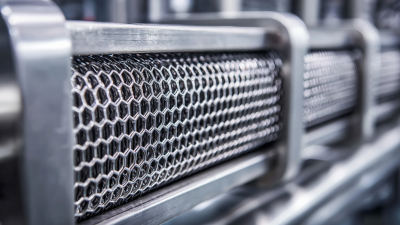
Plate heat exchangers (PHEs) transfer heat efficiently through thin corrugated plates. The gasket material determines the practical operating temperature range, chemical compatibility, maintenance cycle, and reliability of the unit.
The ranges shown are representative engineering values and can vary by gasket grade, fluid, pressure, and operating conditions. Selecting the correct material helps PHEs deliver stable heat transfer, reduce leakage risk, and support demanding industrial applications.
Evaluating China’s PHE manufacturing market requires more than comparing catalog prices. Buyers usually examine heat-transfer performance, pressure ratings, plate materials, gasket quality, and service temperature ranges. A capable manufacturer should explain its selection calculations clearly. It should also provide test records, material traceability, and measurable production tolerances. Practical evidence matters.
Factory experience is judged through equipment, process control, and completed applications. Reviewers may inspect forming presses, cleaning lines, assembly areas, and pressure-testing stations. They should ask how rejected plates are handled. Small details reveal discipline. Welding or brazing quality, gasket compression, and channel alignment can affect field reliability. Technical teams should understand fouling, corrosion, flow imbalance, and maintenance access.
Market evaluation also considers delivery consistency, customization, documentation, and technical support. A supplier may offer many models but struggle with unusual fluids or fluctuating loads. That weakness deserves attention. A site audit, sample inspection, and independent performance verification can reduce uncertainty. Certifications support credibility, but certificates alone prove little about daily execution. Export packaging, spare-parts planning, response time, and compliance with the destination market also influence the final assessment. No ranking is perfect. Project conditions change, and a lower-cost unit may become expensive when cleaning frequency or downtime is ignored.
China’s top ten PHE heat exchanger manufacturers represent a broad industrial landscape. Their profiles differ in scale, specialization, and export experience. Some focus on stainless steel plate units for food processing and district heating. Others build titanium or nickel-alloy equipment for corrosive chemical applications. Their factories commonly use automated pressing, laser welding, CNC machining, and helium leak testing.
A reliable profile should examine more than production capacity. It should review plate thickness, gasket materials, thermal design software, pressure testing, and service response. Several manufacturers offer customized channel patterns for chilled water, steam, oil, and high-viscosity fluids. Experienced engineering teams can adjust port sizes and flow paths after studying site conditions. That practical step often prevents uneven temperature distribution and unnecessary pressure loss.
Certifications, traceable materials, and inspection records add confidence, but they do not tell the whole story. A factory may have modern equipment yet provide weak after-sales support. Another may be smaller but respond faster with replacement plates and maintenance guidance. Public information is sometimes incomplete, so buyers should verify test reports, reference projects, and delivery records directly. Even careful comparisons have limits. Real performance can change with fouling, water quality, installation errors, and operating habits. Profiles of these ten manufacturers are therefore best used as a starting point for technical discussions, not as a substitute for independent evaluation.
China’s top ten PHE heat exchanger manufacturers show clear differences in product range, engineering depth, and factory control. Most produce gasketed plate heat exchangers for HVAC, food processing, district energy, and general industrial cooling. Several also offer brazed, welded, and semi-welded designs for higher pressure or chemically demanding service. The details matter. Buyers should compare plate materials, gasket compounds, connection sizes, allowable pressure, and thermal performance rather than relying on catalogue capacity alone.
Manufacturing capability separates similar-looking suppliers. Stronger factories use automated pressing lines, controlled vacuum brazing, laser welding, and documented leak testing. Their laboratories can verify heat-transfer coefficients under changing flow rates and temperature differences. Some facilities maintain CNC machining, robotic assembly, and traceable inspection records from raw plate to final pressure test. This supports repeatability when orders involve hundreds of units. However, published test conditions are not always identical. A larger rated capacity may reflect ideal water service, not a real process with fouling, viscosity, or uneven flow distribution.
Product customization also varies. Experienced engineering teams can adjust channel patterns, plate thickness, pass arrangements, and frame dimensions after reviewing operating data. They should explain pressure drop, cleaning intervals, spare-gasket availability, and expected service life in practical terms. A useful comparison includes response time, drawing accuracy, factory acceptance testing, and after-sales troubleshooting. Some manufacturers still depend heavily on manual checks, which can create inconsistent tightening or documentation gaps. That weakness deserves attention, even when pricing appears attractive. Performance claims require verification.
Anonymized industry capability comparison; manufacturer names and brand identifiers are intentionally omitted.
| Rank | Anonymized Manufacturer Profile | Primary PHE Product Type | Typical Applications | Common Plate Materials | Gasket / Joining Technology | Typical Design Pressure | Typical Operating Temperature | Approx. Heat-Transfer Area Range | Manufacturing Capabilities | Quality and Export Readiness |
|---|---|---|---|---|---|---|---|---|---|---|
| 1 | Profile A | Gasketed plate-and-frame heat exchangers | District heating, HVAC, process cooling, food and beverage | AISI 304, AISI 316L, titanium on request | Clip-on or glue-fixed gaskets; laser-welded plate pairs available | 0.6–2.5 MPa | −20°C to 180°C, media dependent | 0.5–2,500 m² per unit | CNC plate pressing, automated gasket installation, hydraulic testing | ISO 9001-oriented production; standard export documentation |
| 2 | Profile B | Brazed plate heat exchangers | Refrigeration, heat pumps, hydraulic oil cooling | Stainless steel 316L with copper or nickel brazing | Vacuum brazing in controlled-atmosphere furnaces | 3.0–4.5 MPa | −196°C to 225°C, design dependent | 0.1–150 m² per unit | Automated furnace brazing, helium leak testing, pressure cycling | Suitable for OEM supply and containerized export orders |
| 3 | Profile C | Welded and semi-welded plate heat exchangers | Chemical processing, refrigerants, high-temperature oils | 316L, 904L, duplex stainless steel, nickel alloys | TIG, orbital and laser welding; replaceable gasket frame | 1.6–4.0 MPa | −40°C to 350°C | 5–1,200 m² per unit | Robotic welding cells, radiographic or dye-penetrant inspection | Strong customization capability for corrosive media |
| 4 | Profile D | Large-frame gasketed PHE systems | Power generation, utility water, central energy stations | 304L, 316L, titanium and high-alloy options | Bonded and lock-in gaskets; multi-pass configurations | 1.0–2.5 MPa | −10°C to 200°C | 50–3,000 m² per unit | Large-format pressing, frame fabrication, computerized thermal sizing | Experienced in skid packages and project-based deliveries |
| 5 | Profile E | Compact brazed and micro-channel-compatible units | Residential heat pumps, chillers, solar thermal systems | 316L stainless steel; copper-brazed assemblies | Continuous vacuum brazing and automated port welding | 2.5–4.5 MPa | −40°C to 200°C | 0.05–80 m² per unit | High-volume assembly lines, barcode traceability, leak testing | Optimized for repeat orders and standardized models |
| 6 | Profile F | Sanitary gasketed plate heat exchangers | Dairy, beverage, brewing and pharmaceutical processing | 316L stainless steel with polished product-contact surfaces | FDA-style elastomers, hygienic connections, CIP-compatible design | 0.6–1.6 MPa | −10°C to 160°C | 1–800 m² per unit | Surface polishing, orbital welding, sanitary pressure testing | Provides material certificates and hygienic documentation packages |
| 7 | Profile G | Marine and seawater-duty plate heat exchangers | Marine engines, desalination, offshore cooling systems | Titanium, 254SMO, 316L and duplex stainless steel | Resistant elastomers; reinforced frames and coated components | 1.0–2.5 MPa | 0°C to 180°C | 5–1,500 m² per unit | Corrosion-resistant fabrication, flow-distribution testing, passivation | Marine-project documentation and corrosion-control experience |
| 8 | Profile H | Industrial gasketed and welded PHE assemblies | Oil and gas auxiliaries, chemical plants, compressed-air systems | 316L, duplex, nickel alloys and titanium | Welded plate cassettes with bolted service frames | 1.6–4.0 MPa | −40°C to 300°C | 10–1,000 m² per unit | Procedure-qualified welding, NDT coordination, dimensional inspection | Capable of supporting engineering procurement projects |
| 9 | Profile I | Customized compact and semi-welded PHEs | Data-center cooling, battery thermal management, industrial HVAC | 304L, 316L, titanium and aluminum options by design | Laser welding, vacuum brazing and replaceable gasket sections | 1.0–3.0 MPa | −40°C to 180°C | 0.2–300 m² per unit | Rapid prototyping, 3D flow analysis, automated thermal testing | Strong engineering support for OEM and private-label projects |
| 10 | Profile J | Standardized gasketed PHE product range | Commercial HVAC, water heating, swimming pools and general industry | AISI 304, AISI 316L and titanium options | Clip-on EPDM, NBR, FKM and PTFE-compatible gasket options | 0.6–2.0 MPa | −20°C to 180°C | 0.5–1,000 m² per unit | Standard plate patterns, modular frames, routine pressure testing | Competitive for standard specifications and moderate-volume orders |
Note: Pressure, temperature, surface-area and material ranges are representative engineering ranges for commercially available plate heat exchanger configurations. Actual limits depend on plate pattern, gasket material, connection design, fluid properties and applicable certification requirements.
Choosing a Chinese PHE manufacturer requires more than comparing prices. The right supplier must match your process conditions, standards, and maintenance plans. Grand View Research estimates the global plate heat exchanger market will grow strongly through 2030, driven by industrial energy efficiency and heat recovery. Demand is rising. So is supplier competition.
Start with thermal evidence. Request a calculation sheet showing flow rate, inlet and outlet temperatures, pressure drop, fouling allowance, and heat-transfer margin. Ask whether plates use 316L stainless steel, titanium, or another suitable alloy. For seawater, ordinary stainless steel may fail prematurely. Material certificates, weld records, gasket specifications, and pressure-test results should be traceable.
Fit matters. Confirm connections, footprint, spare-plate availability, and cleaning access before approval. A unit that performs well but cannot enter your plant room is still a poor choice. Review quality systems against ISO 9001, and check pressure-vessel compliance with applicable EN or ASME requirements. The 2024 MarketsandMarkets heat exchanger outlook identifies energy efficiency as a major market driver, but efficiency claims require test conditions. Ask for them.
Request references from projects with similar fluids and temperatures. Examine response times, not only sales promises. Some suppliers offer impressive drawings yet provide weak after-sales support. That risk is easy to underestimate. No datasheet removes every risk. Use a staged review: technical clarification, sample documentation, factory inspection, and final acceptance testing. Allow room for correction. Real projects rarely match the first calculation perfectly.