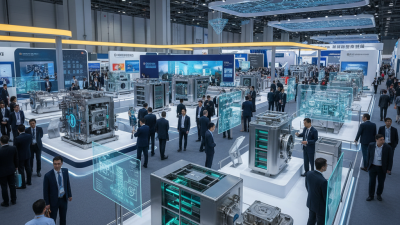
China Top PHE Exchanger Manufacturers and Suppliers
China has become a major sourcing base for industrial heat-transfer equipment. Its manufacturers serve food processing, HVAC, refrigeration, chemical, pharmaceutical, and marine applications. A well-selected Phe Exchanger can reduce energy loss while maintaining stable process temperatures.
The International Energy Agency reported in Energy Efficiency 2023 that industry represents about 37% of global final energy consumption. This figure explains the growing attention to efficient thermal systems. Plate heat exchangers offer compact construction, close temperature control, and flexible capacity expansion. Grand View Research’s Heat Exchanger Market analysis also identifies industrial growth and energy-efficiency requirements as important market drivers. However, market reports use different definitions. Their figures are not perfectly comparable.
This guide examines China’s top PHE Exchanger manufacturers and suppliers through practical purchasing criteria. These include plate material, gasket compatibility, pressure ratings, thermal design, welding quality, and after-sales support. Stainless steel 316L may suit corrosive or hygienic duties, while titanium plates can perform better in seawater applications. Buyers should request certified performance data, pressure-test records, material certificates, and drawings before approval. AHRI Standard 400 provides a useful reference for liquid-to-liquid heat exchanger performance. ISO 9001 certification can support process consistency, but it cannot replace factory inspection.
Experience matters. A supplier that understands fouling, gasket aging, and cleaning access is usually more valuable than one offering the lowest quotation. Not every catalog claim survives field conditions. Comparing test evidence, references, and service responsiveness remains essential. This introduction provides a practical starting point for evaluating reliable Chinese suppliers and avoiding costly specification mistakes.
What Are PHE Heat Exchangers and How Do They Work?
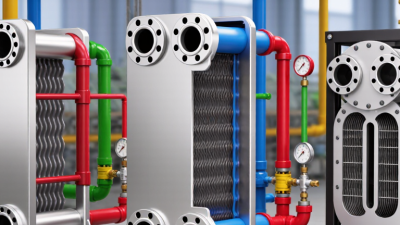
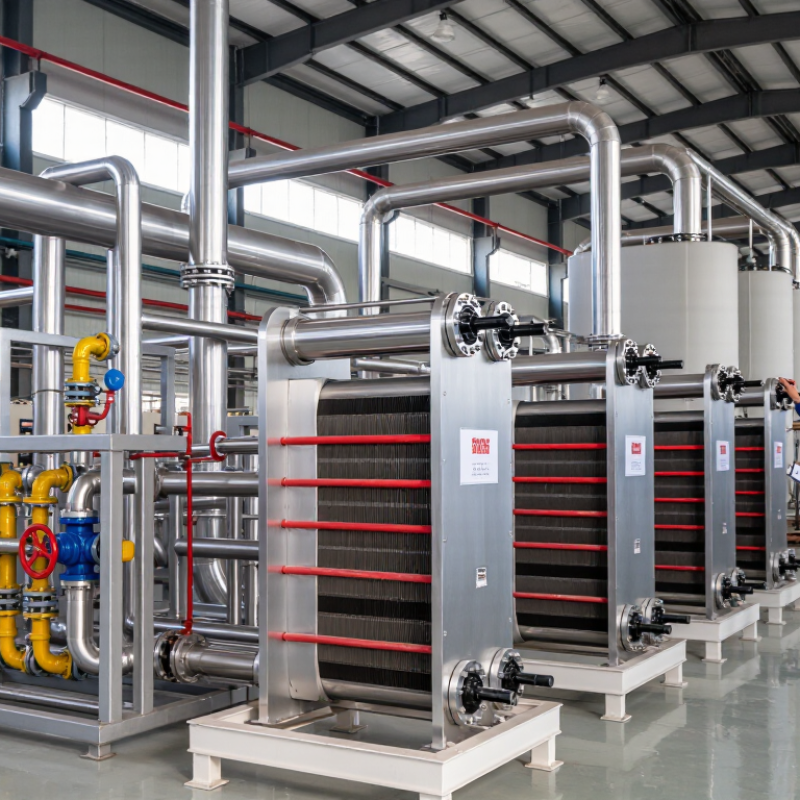
A plate heat exchanger (PHE) transfers heat between two fluids through thin, corrugated metal plates. The fluids remain separated. They flow through alternate channels, often in opposite directions. This counter-current design maintains a stronger temperature difference across the unit. Corrugations create turbulence, improving heat transfer while keeping the equipment compact. The channels stay separate.
Gaskets direct each fluid through its assigned path and prevent external leakage. In brazed or welded designs, the sealing method changes, but the principle remains similar. Hot water may heat a cold process stream without mixing with it. The U.S. Department of Energy’s Waste Heat Recovery report estimates that industrial facilities can lose 20–50% of energy input as waste heat. PHEs can recover part of this loss in suitable systems, especially where temperatures and fluid chemistry are controlled.
Selection requires more than comparing heat-transfer area. Engineers must check flow rate, pressure drop, fouling risk, gasket compatibility, and cleaning access. China-based manufacturers and suppliers often provide different plate patterns and materials for food, chemical, HVAC, and marine applications. A larger unit is not automatically better. The International Energy Agency’s Energy Efficiency 2023 report states that efficiency measures could provide over 40% of the emissions reductions needed by 2030. Still, a calculation can mislead when operating data is incomplete. Real performance depends on maintenance, water quality, and seasonal loads. That detail matters.
Key Factors for Evaluating Chinese PHE Manufacturers
China Top PHE Exchanger Manufacturers and Suppliers
When evaluating Chinese PHE manufacturers, start with documented thermal performance, not attractive catalog images. Ask for heat-transfer data under conditions similar to your project. Flow rate, inlet temperature, pressure drop, and fouling risk should be clearly stated. A reliable supplier can explain the calculation method and identify its limits. This matters.
Inspect plate and gasket materials carefully. Stainless steel grades, gasket compounds, plate thickness, and connection standards affect service life. Request material certificates, pressure-test records, and welding or forming quality controls where applicable. Factory experience is useful, but evidence is stronger. A clean workshop does not automatically prove stable production.
Evaluate communication after the quotation. Technical drawings should reflect your media, operating pressure, cleaning method, and maintenance space. Ask about spare parts, replacement timing, warranty terms, and remote support. A supplier that admits design uncertainty may be more trustworthy than one promising everything. I have seen projects delayed by small connection details, so reviewing drawings twice is worthwhile.
Tips: Compare at least three suppliers using the same specification sheet. Request a sample calculation, inspection photos, and recent delivery references. Check whether serial numbers support traceability. Clarify who approves design changes. Do not judge capability from price alone; an inexpensive exchanger may require more cleaning or earlier gasket replacement.
Leading Types of PHE Exchanger Manufacturers in China
China’s PHE exchanger manufacturers generally specialize in several leading equipment types. Gasketed plate heat exchanger manufacturers serve food processing, HVAC, chemical, and general industrial systems. Their removable plates make inspection and cleaning relatively convenient. Brazed plate exchanger manufacturers focus on compact units for refrigeration, heat pumps, hydraulics, and domestic hot-water systems. These units save space, but field repair is less flexible.
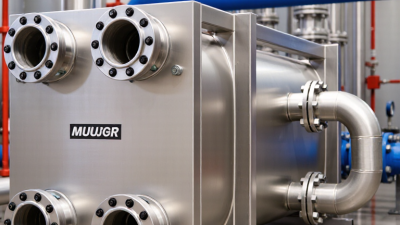
Welded and semi-welded plate exchanger manufacturers handle higher temperatures, aggressive fluids, or duties unsuitable for standard gaskets. Welded designs reduce gasket exposure, while semi-welded units can separate difficult fluids from easier-to-maintain circuits. Some Chinese suppliers also produce wide-gap and pillow-plate exchangers for fluids containing fibers, particles, or crystallizing materials. Practical buyers should review plate material, gasket compound, pressure testing records, and thermal-performance data. Ask for drawings, nozzle dimensions, and spare-part lead times. Small details matter.
A low price can hide limits.
During supplier evaluation, compare manufacturing depth rather than catalog size. Check whether the factory controls plate pressing, laser welding, gasket assembly, and final inspection internally. Request references for similar flow rates and temperatures, not unrelated projects. One weakness remains common: selection may rely too heavily on nominal capacity. Actual fouling, seasonal temperature changes, and cleaning routines can alter performance. A reliable manufacturer should discuss these uncertainties openly and revise the design when operating data changes.
How to Compare Chinese PHE Suppliers and Their Products
Comparing Chinese PHE suppliers starts with the heat-duty calculation, not the catalogue price.
The IEA’s Energy Efficiency 2023 report estimates that industry uses about
37% of global final energy.
Therefore, small thermal losses can become significant operating costs.
Ask each supplier for
duty, flow rate, inlet and outlet temperatures, pressure drop, and fouling assumptions.
Then check whether the selection matches
AHRI 400-2020 rating principles.
Look closely at
plate material, gasket compound, plate thickness, connection design, and allowable pressure.
Request performance data from a witnessed test, not only a simulation sheet. A useful supplier should provide inspection records, hydrostatic test results, material certificates, and replacement-part details.
Service experience matters here. Ask for references from similar fluids, temperatures, and operating hours. Compare
five-year costs, including cleaning, gasket replacement, energy use, and downtime.
The cheapest unit may become expensive after one difficult shutdown.
A clean drawing proves little. I would also question optimistic heat-transfer coefficients when fouling data is missing. That comparison is imperfect, but it exposes risk.
Suppliers with clear assumptions are usually easier to audit and correct during commissioning.