Leave Your Message
Choosing the right fresh water cooler affects more than office comfort. It influences drinking habits, maintenance costs, hygiene, and daily trust. A dependable Centere Fresh Water Cooler should provide clean-tasting water without creating complicated service demands.
Water-treatment consultant Michael Chen says, “A cooler should fit the water source, not merely match the room’s design.” His advice reflects practical experience from inspecting workplace hydration systems. Buyers should examine filtration stages, cooling speed, dispensing temperature, tank materials, noise levels, and energy consumption. They should also confirm replacement-filter availability and service support. A beautiful unit means little when its filter is difficult to replace.
Look closely.
This guide presents 10 practical tips for choosing the best fresh water cooler. It considers source-water quality, user capacity, installation space, sanitation features, warranty terms, and operating costs. Independent certifications and clear manufacturer documentation can support a more reliable decision. Still, no checklist is perfect. A model that suits a small clinic may struggle in a busy warehouse. Personal taste also matters, especially when people dislike a machine’s noise or water temperature.
Think beyond appearance.
Before purchasing, measure the available floor or counter space. Check whether a nearby outlet and drainage option exist. Ask how often the drip tray, reservoir, and dispensing points require cleaning. Small details become visible after months of use. The strongest choice balances performance, safety, convenience, and realistic maintenance—not marketing promises alone.
10 Tips to Choose the Best Fresh Water Cooler
Understanding What a Fresh Water Cooler Is and How It Works
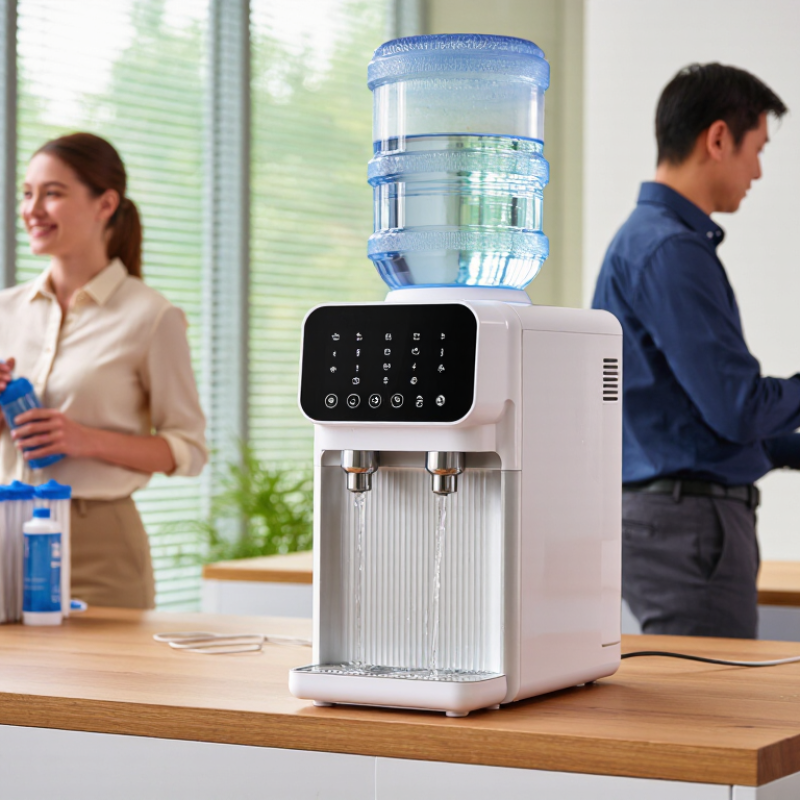
A fresh water cooler provides chilled drinking water from a refillable bottle or a plumbed supply. Unlike a simple refrigerator, it is designed for frequent dispensing. Most models use a cooling tank, thermostat, and compressor. The tank stores water, while the compressor removes heat. A faucet then delivers cold water when pressed. Some units also provide room-temperature or hot water. A built-in filter may reduce chlorine, sediment, or unpleasant taste. It cannot remove every possible contaminant. Check the filter’s certified performance carefully.
Tips: Choose the water source first. Confirm the cooler’s cooling capacity for your household or office. Look for food-safe materials and clear maintenance instructions. Check the filter type, replacement cost, and service interval. A quieter compressor matters in bedrooms and shared workspaces. Child-safety protection is useful on hot-water outlets. Select a drip tray that removes easily. Measure the installation area, including ventilation space. Confirm the power requirements before purchase. Read independent test results when available.
In daily use, keep the dispensing area dry and clean. Wash the tray regularly, especially during warm weather. Replace filters on schedule, even when the water tastes normal. I once trusted taste alone and delayed a replacement too long. That was a poor assumption. Also inspect tubing, seals, and unusual sounds. A cooler that works slowly may need airflow, cleaning, or professional inspection. Water quality differs by location, so local testing can guide a safer choice.
| Tip | Selection Dimension | What to Check | Practical Guidance | Why It Matters |
|---|---|---|---|---|
| 1 | Understand the System Type | Identify whether the unit is a point-of-use cooler connected to a water line or a bottle-fed dispenser. | A fresh water cooler generally refers to a plumbed-in, point-of-use unit that filters and dispenses mains water. Bottle-fed models require regular bottle replacement and storage. | The connection type determines installation requirements, operating costs, maintenance routines, and the amount of manual handling. |
| 2 | Choose the Cooling Technology | Compare compressor cooling with thermoelectric cooling. | Compressor systems usually provide stronger cooling and better performance for frequent use. Thermoelectric systems are often compact, quieter, and suitable for lighter demand. | Cooling technology affects recovery time, noise, energy use, cabinet size, and performance during busy periods. |
| 3 | Check Filtration Stages | Review the filter media and the contaminants each stage is certified or rated to reduce. | Common stages include sediment filtration for particles and activated carbon for chlorine, odors, and unpleasant tastes. A membrane stage may be used when dissolved solids require treatment. | A cooler does not automatically make every source water safe. Filtration should match the local water quality and the intended drinking use. |
| 4 | Verify Water-Quality Certifications | Look for independent certification of the complete filtration system, not only individual filter materials. | Check that performance claims are supported by recognized third-party testing and that the claimed contaminant reductions match the filter model being supplied. | Certification provides more reliable evidence than general statements such as “advanced filtration” or “pure water.” |
| 5 | Match Capacity to Demand | Consider the cold-water storage capacity, cooling recovery rate, and expected number of users. | For a small household, a compact unit may be sufficient. Offices, reception areas, and shared facilities need faster recovery and a larger chilled-water reserve. | A cooler that is undersized for its workload may dispense lukewarm water during peak periods and experience greater operating stress. |
| 6 | Measure the Installation Space | Measure width, depth, height, ventilation clearance, and the distance to the nearest water and power connections. | Allow additional room for filter replacement, cleaning, door or panel access, and safe routing of the water tubing and electrical cable. | Adequate clearance supports airflow, prevents overheating, and makes routine service safer and easier. |
| 7 | Review Water and Power Requirements | Confirm inlet pressure, tubing size, drain requirements, electrical voltage, and rated power consumption. | Most point-of-use units need a suitable cold-water connection and a grounded electrical outlet. Reverse-osmosis models may also produce wastewater and require a drain connection. | Incorrect plumbing or electrical conditions can reduce performance, cause leaks, or create safety risks. |
| 8 | Compare Maintenance Needs | Check filter replacement intervals, sanitization procedures, leak inspections, and access to service parts. | Replacement frequency depends on water quality and usage. Follow the manufacturer’s schedule, and replace filters before their rated capacity is exceeded. | Regular maintenance protects water quality, preserves flow rate, controls odors, and reduces the risk of microbial growth inside the system. |
| 9 | Evaluate Hygiene Features | Look for protected dispensing areas, easy-to-clean surfaces, spill management, and clearly separated hot and cold controls. | Touch-free activation can reduce contact, while removable drip trays and smooth, non-porous surfaces make cleaning more practical. | The dispenser outlet and surrounding surfaces are frequently touched and should be cleaned according to the usage environment. |
| 10 | Calculate Total Cost of Ownership | Include purchase price, installation, electricity, filters, sanitization, repairs, and water-related consumables. | Compare the expected cost over several years rather than choosing solely by the initial price. A low-cost unit may have higher filter or service expenses. | The total operating cost gives a more realistic basis for comparing systems and avoiding unexpected maintenance expenses. |