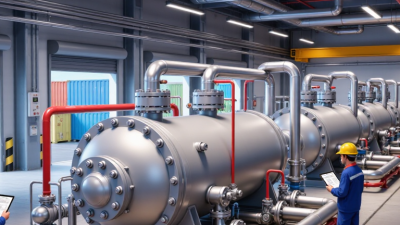
Buying a Heat Exchanger Furnace is not simply a capacity decision. It is a long-term energy, maintenance, and production decision.
The International Energy Agency reports that industry consumes nearly 40% of global final energy. Its Energy Efficiency 2023 analysis also identifies process heat as a major efficiency opportunity. The U.S. Department of Energy adds that process heating represents a substantial share of manufacturing energy use. These figures make furnace efficiency more than a technical preference. It affects operating costs, emissions, and production resilience.
Professor Sadik Kakaç describes heat exchangers as “devices used to transfer heat between two or more fluids at different temperatures.” That principle becomes practical during purchasing. Buyers should examine thermal efficiency, temperature uniformity, fuel flexibility, corrosion resistance, control accuracy, and after-sales support. A furnace that saves energy but creates uneven heating may still damage product quality.
Look closely at real operating details. Ask for tested fuel consumption, not only brochure estimates. Review performance at partial load, where many furnaces operate daily. Check whether replacement tubes, seals, sensors, and burners are locally available.
The seven buying tips in this guide focus on those decisions. They connect engineering data with factory experience, including commissioning delays and overlooked maintenance access. No checklist is perfect. Site conditions can defeat attractive specifications.
A reliable supplier should explain assumptions clearly. Independent testing, documented references, and lifecycle calculations deserve more trust than impressive claims. The cheapest Heat Exchanger Furnace may become expensive when downtime, spare parts, and unstable temperatures enter the calculation.
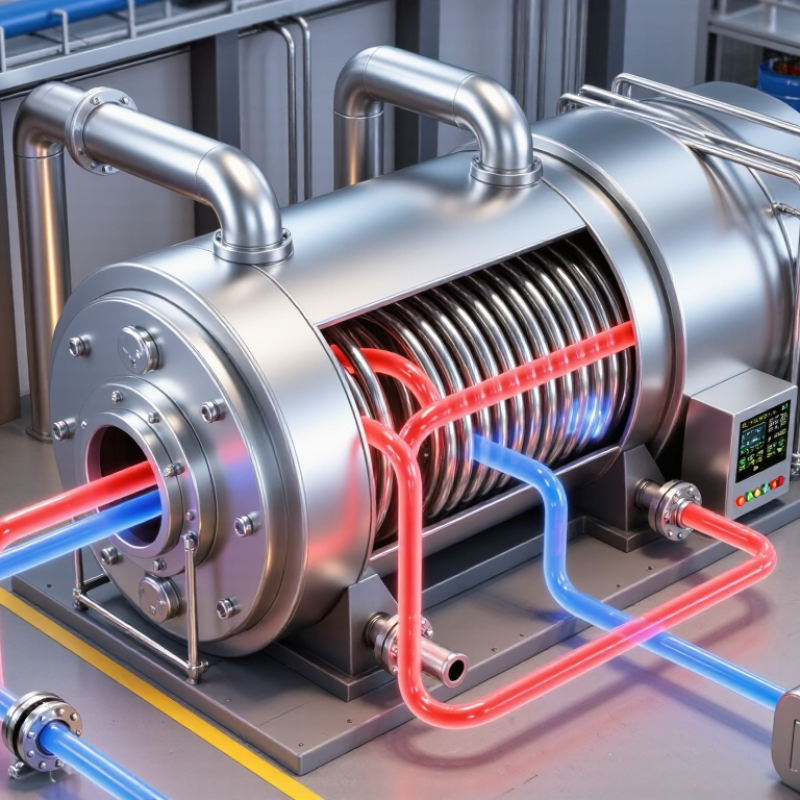
Before comparing heat exchanger furnace quotes, calculate the building’s heating load. A square-foot estimate can miss important details. Record room dimensions, ceiling heights, insulation condition, window area, air leakage, and local winter design temperatures. A drafty workshop with a high ceiling may need a different output than a tightly sealed office of the same floor area.
Use a qualified heating professional to assess these inputs and document the assumptions. Ask whether the calculation accounts for ventilation air, door openings, and changes in building use. Small details matter. A frequently opened loading bay can add a noticeable heating demand. So can an uninsulated roof. The estimate is not magic; field conditions may be imperfect, and the result should be reviewed against actual operating experience.
Compare quotes using the required heating capacity, not just the furnace’s largest advertised output. Check whether each supplier lists input and delivered output, and whether the heat exchanger design suits the planned temperature range and duty cycle. Request written assumptions and capacity data. If two proposals differ sharply, ask what changed in the load calculation. A cheaper unit may be undersized, while excess capacity can encourage inefficient cycling. I have seen early estimates overlook a cold corner or an added shift; revise the calculation when those details emerge.
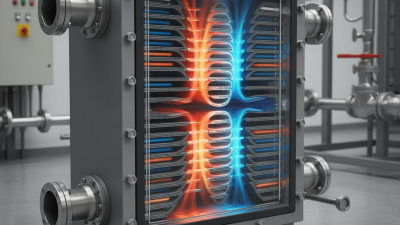
7 Heat Exchanger Furnace Buying Tips for Global Buyers
AFUE measures how much fuel becomes usable heat during a typical year. Standard furnace models often begin at 80% AFUE. High-efficiency models exceed 90%, sometimes reaching the mid-90s. A 95% AFUE furnace wastes less fuel through exhaust. That difference matters. However, AFUE is not the only buying factor.
For example, a 100,000 BTU input furnace at 80% AFUE delivers about 80,000 BTUs of heat. A 95% model delivers roughly 95,000 BTUs. In cold regions, this gap can reduce seasonal fuel use. In mild climates, savings may be smaller. Local fuel prices, operating hours, and insulation should guide the comparison.
High-efficiency units usually require sealed venting and condensate drainage. Check the installation requirements before comparing prices. A heat exchanger with corrosion-resistant materials may support longer service life, but installation quality remains critical. Poor airflow can raise stress, even with an excellent AFUE rating.
Ask for certified efficiency data and local compliance documents. Confirm whether the efficiency rating applies to the complete system or only the furnace. This detail is easy to miss. I would also compare maintenance access, replacement parts, and technician availability. A slightly lower rating may be practical if service support is limited. My own buying checklist would not treat 95% AFUE as automatically superior. Performance depends on the whole heating system.
7 Heat Exchanger Furnace Buying Tips for Global Buyers
Match Heat-Exchanger Materials to Fuel, Condensate, and Corrosion Conditions
Material selection starts with the fuel and the coldest expected return-air conditions. High-efficiency condensing furnaces cool flue gases enough to form acidic condensate. The U.S. Department of Energy’s Energy Saver guidance places condensing furnaces at 90% AFUE or higher. That efficiency can mean more time with wet surfaces. Check the condensate chemistry, not just the headline efficiency.
For natural gas, stainless steel and appropriately coated aluminized steel are common exchanger choices, but neither is universally best. ASHRAE’s Handbook—HVAC Systems and Equipment discusses corrosion-resistant construction and the need to account for operating conditions. Ask suppliers for material grade, weld details, and corrosion-test conditions. If fuel contains sulfur or combustion quality varies, request condensate and flue-gas data for the actual site. Small differences matter.
Inspect the drain path, too. A slow drain can leave acidic liquid pooling in seams or low points; a clean-looking exchanger may still be vulnerable. Where chloride exposure, coastal air, or frequent shutdowns are expected, have a qualified engineer review the alloy and coating specification. “Stainless” is not a complete specification. I would also question any quote that gives no test method or service-life assumptions. That omission is easy to miss.
For global buyers, a heat exchanger furnace is not just a thermal-performance purchase. Confirm whether its pressure-retaining parts fall under ASME Boiler and Pressure Vessel Code Section VIII, and request the applicable edition, design pressure, temperature, material records, and inspection documents. Where required, verify the vessel’s certification marking and traceability against its nameplate. Rules differ by jurisdiction. Ask the supplier to identify local approval needs in writing, rather than assuming one certificate covers every destination.
NFPA’s report Fires in Industrial and Manufacturing Properties, covering 2011–2015, estimated 37,910 such fires annually in the United States and about $1.2 billion in yearly direct property damage. That matters. For NFPA 86 alignment, ask for the furnace classification, written safety sequence, purge timing, flame-failure response, and high-temperature limit settings. During a factory acceptance test, observe burner shutdown and restart, and compare the results with the submitted control narrative. A folder can look complete. It may still omit the settings operators actually need. Request the adopted NFPA 86 edition and a documented commissioning checklist, then have qualified local personnel review both before installation.
Compare furnace ownership costs over five or ten years, not by purchase price alone. The U.S. Department of Energy’s Energy Saver guidance reports AFUE ratings near 80% for conventional furnaces and up to 98.5% for high-efficiency models. AFUE measures seasonal fuel conversion, not your exact bill. At equal heat demand, a 95% unit uses roughly 16% less fuel than an 80% unit. Local fuel prices and operating hours still matter.
Maintenance changes the calculation. ENERGY STAR recommends annual professional checkups for heating equipment. Ask what each visit includes, and price filters, replacement parts, and likely labor. Check whether technicians can reach the heat exchanger and condensate drain without major disassembly. Small items add up. A spreadsheet can still miss the cost of a delayed service visit, especially where parts are difficult to obtain.
Read warranty terms line by line. Compare heat-exchanger and parts coverage with labor, travel, exclusions, and registration deadlines. A long parts warranty may not cover the labor needed to install a replacement. Request written confirmation of local service availability and expected response times. Then compare estimated lifetime fuel and maintenance costs against the upfront quote. The result may favor a less efficient model in a mild climate, or a higher-efficiency unit with heavy annual use. It is not always obvious.