Choosing a Marine Heat Exchanger in 2026 requires more than comparing catalog capacity. Global buyers must connect thermal performance with seawater chemistry, vessel layout, maintenance access, and classification requirements. This guide introduces the leading Marine Heat Exchanger types used across commercial vessels, offshore platforms, naval support ships, and coastal power systems. Shell-and-tube, plate-and-frame, welded plate, and air-cooled designs each solve different engineering problems. Their real value depends on operating conditions.
Small details matter. A titanium plate may resist aggressive seawater better than stainless steel. A shell-and-tube unit may tolerate pressure changes and rough service more comfortably. Gasket selection can affect maintenance intervals, leakage risk, and total ownership cost. Buyers should review heat duty, flow velocity, pressure drop, fouling tendency, and available footprint before requesting quotations. Classification approval also deserves careful attention. Certification names alone do not prove suitable performance.
Field experience shows that no single type wins every project. Some manufacturers publish excellent efficiency figures, yet omit cleaning frequency or spare-part lead times. That gap can distort purchasing decisions. Product data may also vary between laboratory testing and a working engine room. A careful comparison should include drawings, material certificates, test records, warranty terms, and references from similar vessels. Independent verification helps, although it adds time and cost. This article outlines practical selection criteria for global buyers, while recognizing that climate, crew capability, and local service support can change the final decision. Performance matters. Reliability matters more.
2026 Top Marine Heat Exchanger Types for Global Buyers
Marine heat exchangers transfer heat between seawater, freshwater, lubricating oil, and engine coolant. Common designs include plate, shell-and-tube, and double-pipe units. Plate exchangers provide high heat-transfer efficiency in compact spaces. Shell-and-tube models tolerate harsher operating conditions and easier mechanical cleaning. Double-pipe units suit smaller duties, but usually require more installation space.
Selection starts with the duty, not the catalogue. Confirm heat load, inlet temperatures, flow rates, allowable pressure loss, and available footprint. Seawater quality matters greatly. Warm, sediment-rich water can accelerate fouling and corrosion. Titanium or suitable marine alloys may improve durability, but material compatibility still requires engineering review. It is an easy detail to underestimate.
UNCTAD’s Review of Maritime Transport 2024 states that ships carry over 80% of global merchandise trade by volume. This scale increases pressure for dependable cooling and lower maintenance downtime. The IMO Fourth IMO GHG Study 2020 estimated shipping produced 2.89% of global anthropogenic greenhouse-gas emissions in 2018. Efficient cooling supports fuel and emissions goals, although a heat exchanger cannot solve every efficiency problem. Buyers should also check cleaning access, spare-part availability, inspection intervals, class requirements, and performance at partial load. A polished datasheet may still hide weak real-world performance. Pilot testing with representative seawater can expose that weakness early.
Shell-and-Tube Heat Exchangers for Marine Systems
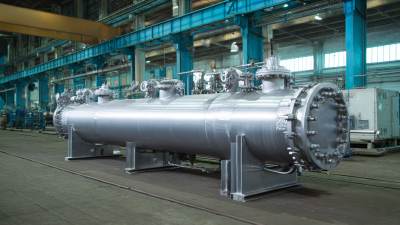
Shell-and-tube heat exchangers remain practical choices for marine cooling in 2026. Their construction tolerates vibration, pressure changes, and continuous operation. Seawater usually flows through corrosion-resistant tubes, while freshwater cools engines, gearboxes, or hydraulic systems. Removable tube bundles simplify inspection. That matters offshore.
The International Maritime Organization’s 2023 GHG Strategy targets net-zero emissions from international shipping by around 2050. It also seeks at least a 20% reduction by 2030, compared with 2008 levels. These targets increase pressure on marine operators to improve thermal efficiency. DNV’s Maritime Forecast to 2050 also identifies energy efficiency and fuel flexibility as major design priorities. A well-sized exchanger can support both goals, but oversizing is not automatically better. It may increase weight, footprint, and pumping demand.
Tips: Check fouling margins using real seawater conditions, not laboratory assumptions. Confirm class requirements, design pressure, temperature limits, and tube material compatibility. Titanium offers strong seawater resistance, but it raises procurement costs. Nickel alloys may suit difficult conditions, yet installation quality remains critical. Keep strainers accessible. Record inlet and outlet temperatures during operation. Small temperature changes often reveal fouling early. One imperfect lesson is clear: a polished specification cannot replace regular inspection.
Indicative typical overall heat-transfer coefficients for seawater-cooled marine shell-and-tube applications. Higher values generally indicate more compact heat-transfer performance, while the actual result depends on fluid properties, fouling, flow velocity, materials, temperature difference, and design standards.
Reference basis: commonly reported engineering ranges for clean-to-moderately fouled marine cooling duties; values are representative design ranges rather than guaranteed equipment ratings.
Plate Heat Exchangers for Compact Vessel Applications
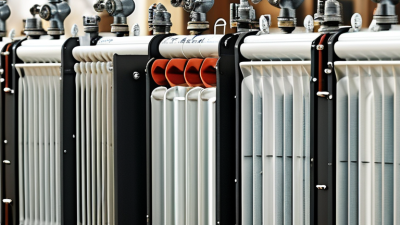
Plate heat exchangers suit compact vessels where every millimeter of machinery space matters. Their corrugated plates create strong turbulence and transfer heat through a small footprint. This helps cool jacket water, lubricating oil, freshwater, and hydraulic circuits. In practice, service engineers often value front access for inspection and plate cleaning. That saves valuable time during short port stays.
Material selection needs careful attention. Seawater duties commonly require corrosion-resistant plates and suitable gasket compounds. Operating pressure, temperature, vibration, and thermal expansion must match the vessel’s actual conditions. A marine heat exchanger should also allow safe isolation, draining, and replacement of individual components. Small vessels may experience unstable flow when pumps operate below design capacity. That detail is easy to overlook.
Sizing software provides useful guidance, but it cannot predict every onboard problem. Fouling may increase when water quality changes near coastal areas. A slightly larger heat-transfer margin can reduce operational stress, although excessive oversizing may lower flow velocity. That trade-off deserves review. Engineers should confirm classification requirements, pressure-test procedures, spare-plate availability, and maintenance access before approval. The neatest installation is not always the most reliable one. Sometimes, a simple layout performs better.
| Heat Exchanger Type | Typical Marine Use | Typical Heat-Duty Range | Typical Maximum Working Pressure | Typical Temperature Range | Compactness | Main Advantages | Key Limitations |
|---|---|---|---|---|---|---|---|
| Gasketed Plate-and-Frame | Engine jacket-water cooling, central fresh-water cooling, HVAC, fuel and lube-oil preheating | Approximately 10 kW–10 MW | Approximately 10–25 bar, depending on design and gasket selection | Approximately −20°C to 180°C, subject to gasket material | Very high | Small footprint, low fluid volume, easy capacity expansion, high heat-transfer coefficient and accessible plates for cleaning | Gaskets require inspection and periodic replacement; unsuitable fluids or excessive vibration can shorten service life |
| Brazed Plate | Small workboats, auxiliary systems, seawater-to-freshwater cooling, hydraulic-oil cooling and compact HVAC circuits | Approximately 2–500 kW | Typically 16–30 bar, subject to construction and temperature | Approximately −40°C to 200°C, depending on brazing material | Extremely high | No gaskets, low weight, minimal installation space and low refrigerant or water charge | Cannot normally be opened for mechanical cleaning; sensitive to blocked channels and poor water filtration |
| Welded Plate | High-pressure seawater cooling, fuel-oil heating, hydraulic systems and demanding engine-room duties | Approximately 100 kW–20 MW | Commonly 25–40 bar; higher values require specialized construction | Approximately −40°C to 350°C, depending on material and weld design | Very high | No gasket leakage path, high pressure and temperature capability, strong resistance to thermal cycling | More difficult to inspect and repair internally; chemical cleaning may be required |
| Shell-and-Tube | Large propulsion engines, condensers, steam systems, heavy-fuel treatment and applications with high fouling risk | Approximately 50 kW–30 MW | Typically 10–100 bar, depending on shell, tube and service design | Approximately −20°C to 400°C | Medium to low | Robust construction, suitable for dirty fluids, high temperatures and steam; tubes can often be mechanically cleaned | Larger footprint, greater weight and higher liquid volume than plate designs at comparable duty |
| Double-Pipe | Small auxiliary coolers, sample systems, low-capacity oil cooling and localized heating duties | Approximately 1–300 kW | Typically 10–40 bar, depending on pipe size and material | Approximately −40°C to 300°C | Medium | Simple design, independent flow passages, comparatively easy maintenance and flexible orientation | Limited heat-transfer area per unit of volume and generally uneconomical for large marine duties |
| Spiral Plate | Wastewater heating, sludge service, viscous fluids and duties where low fouling performance is important | Approximately 50 kW–5 MW | Typically 10–25 bar, depending on channel geometry | Approximately −20°C to 300°C | High | Strong turbulence, relatively low fouling tendency and efficient heat recovery for difficult fluids | Less standardized for vessel layouts; repair access and replacement sourcing may be more specialized |
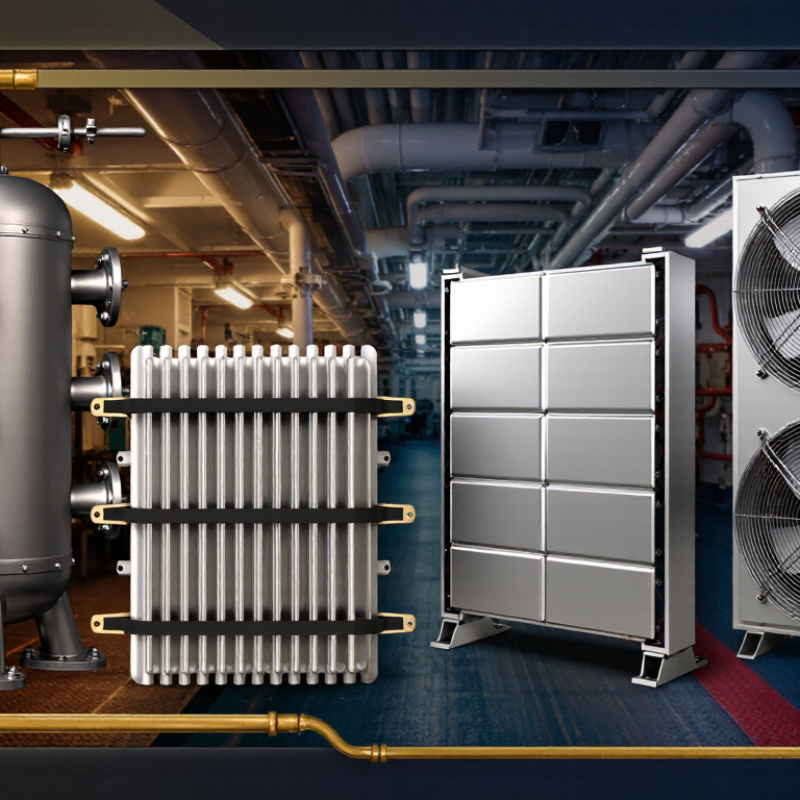
For global buyers, “other” marine heat exchanger types deserve closer attention. Shell-and-tube units remain practical for main engines, lube-oil cooling, and high-pressure circuits. Their generous tube spacing tolerates dirty seawater better than many compact designs. They are heavy, though.
Plate-and-frame exchangers suit freshwater cooling, hotel services, and HVAC systems. They provide high heat-transfer efficiency in a smaller footprint.
Spiral exchangers handle fluids containing suspended particles and support lower fouling risks.
Double-pipe units work well for smaller auxiliary systems, where simple maintenance matters.
Keel coolers transfer heat through hull-mounted grids, avoiding direct seawater entry. That simplicity helps.
The International Maritime Organization’s Fourth GHG Study 2020 estimated shipping produced 2.89% of global anthropogenic greenhouse-gas emissions in 2018. UNCTAD’s Review of Maritime Transport 2024 states that ships carry over 80% of global trade by volume. Efficient cooling therefore affects both vessel reliability and wider supply chains. Air-cooled exchangers can support hydraulic systems in dry, dusty ports, but they need clean airflow and sufficient deck space. Titanium plates resist seawater corrosion, while copper-nickel tubes remain widely used in marine cooling. Material choice is not a minor detail.
Field inspections often find fouling where specifications looked adequate. A smaller unit may save space but lose performance quickly in warm, sediment-heavy water. This is the uncomfortable part: no exchanger type wins every route, engine load, or maintenance culture. Designers should compare pressure drop, cleaning access, salinity, vibration, and seasonal seawater temperature before approving a purchase.
Marine heat exchanger selection starts with duty, seawater chemistry, and access space. Shell-and-tube units remain dependable for high pressure and dirty fluids. Gasketed plate units offer strong heat transfer in a smaller footprint, but gasket replacement adds recurring labor. Welded plate designs reduce leak paths, although repairs can be less forgiving.
Material choice changes both performance and maintenance. Titanium resists seawater corrosion and tolerates high chloride exposure, but its purchase price is substantial. Cu-Ni alloys can perform well in marine cooling systems, yet velocity and oxygen conditions still matter. Duplex stainless steel may reduce weight and cost, but poor fabrication control can trigger crevice corrosion. Do not overtrust alloy labels. Installation quality matters more than many buyers admit.
The cost case should include cleaning, spare gaskets, downtime, lifting access, and disposal. AMPP’s IMPACT study estimated global corrosion costs at about US$2.5 trillion annually, equal to roughly 3.4% of global GDP. That figure is not exchanger-specific, but it shows why cheap materials can become expensive decisions.
UNCTAD’s Review of Maritime Transport 2024 states that ships carry over 80% of global trade by volume, making cooling reliability commercially important. In practice, fouling data is often weaker than brochures suggest. A conservative design, proper filtration, and inspection records usually beat optimistic efficiency claims.
Sometimes, the smaller unit is not the cheaper one.