Leave Your Message

2026 Best PHE Exchanger for Global Buyers

Choosing the best Phe Exchanger in 2026 requires more than comparing heat-transfer ratings. Global buyers face different fluids, climates, energy prices, maintenance skills, and compliance expectations. A plate heat exchanger that performs well in a Scandinavian district-heating plant may struggle in a humid coastal factory. Small details matter. Gasket material, plate thickness, port size, fouling resistance, and spare-part access can change the total ownership cost.

Heat-transfer authority Dr. Sadik Kakaç states, “Heat exchanger design is always a compromise between thermal performance, pressure drop, and cost.” This principle remains highly relevant when evaluating a modern Phe Exchanger. Buyers should examine verified thermal data, pressure-drop calculations, operating temperatures, flow rates, and cleaning procedures. They should also request documented factory testing and clear warranty terms. Marketing claims are not enough.

Real operating experience reveals uncomfortable facts. The highest-efficiency model is not always the most practical choice. A compact unit may reduce installation space but create narrower passages and more frequent cleaning. A lower-cost gasket may increase replacement work later. This guide compares leading Phe Exchanger solutions through performance, durability, serviceability, safety, and lifecycle value. It considers industrial refrigeration, food processing, chemical production, HVAC, marine systems, and renewable-energy applications. Regional certification and local technical support also deserve attention. Buyers should verify every specification with qualified engineers, because published data can change under actual conditions. No shortlist is perfect. The right decision depends on the plant, the fluid, and the people maintaining it.
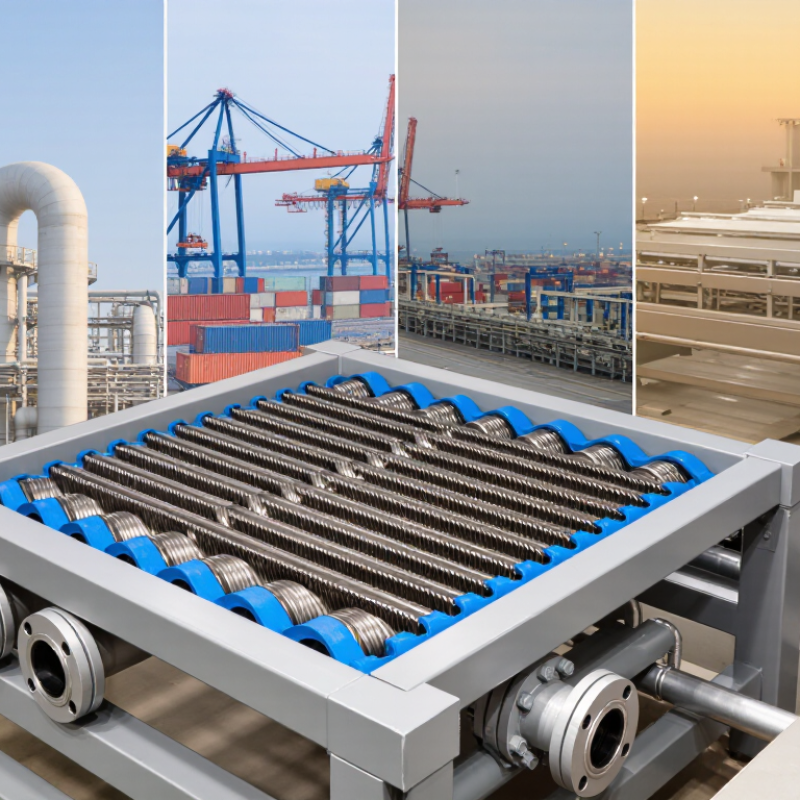
2026 Best PHE Exchanger for Global Buyers

What Is a PHE Exchanger and How Does It Work?

2026 Best PHE Exchanger for Global Buyers

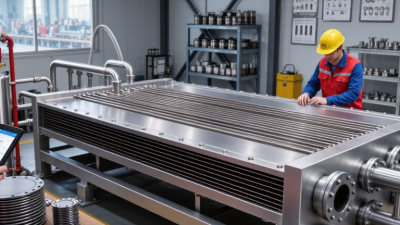
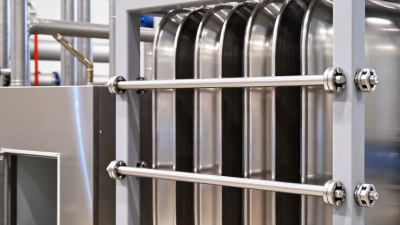
A PHE exchanger, or plate heat exchanger, transfers heat through thin metal plates. Two fluids flow in separate channels. They usually move in opposite directions, called counter-current flow. Heat crosses the plates, while the fluids remain separated. Corrugated plates create turbulence. This improves heat transfer in a compact space.

The U.S. Department of Energy’s Industrial Decarbonization Roadmap reports that process heating uses about 51% of energy in American manufacturing. The IEA Energy Efficiency 2023 report also identifies industry as using roughly 37% of global final energy.

These figures explain why efficient heat recovery matters. In practical installations, a PHE can reduce space requirements and respond quickly to changing loads. Small details matter.

Selection is not only about heat-transfer area. Buyers should verify operating pressure, fluid temperature, flow rate, fouling risk, gasket compatibility, and plate material.

Food liquids, seawater, glycol, and corrosive chemicals require different designs. Counter-current flow sounds simple, but poor flow distribution can weaken performance.

My own caution is this: published efficiency figures may not reflect dirty fluids or seasonal operation. Requesting field data, pressure-drop calculations, inspection access, and recognized testing documentation is wiser than choosing by catalogue capacity alone.
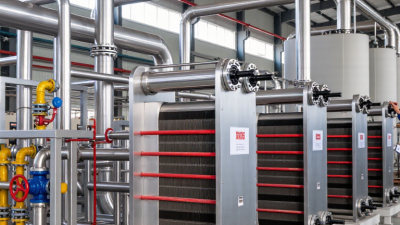

Key Types and Materials of PHE Exchangers

In 2026, global buyers need PHE exchangers matched to real operating conditions. A plate heat exchanger transfers heat through thin, corrugated plates. Its compact frame suits chilled water, process fluids, and food production.

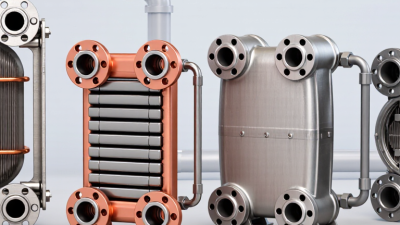
Gasketed PHEs are flexible and easy to open for cleaning. They work well when fluids remain compatible with elastomer seals. Brazed PHEs are compact, leak-resistant, and suitable for closed systems with moderate pressure. Welded PHEs handle higher temperatures and aggressive fluids. Semi-welded designs protect sensitive fluids while keeping maintenance practical. Selection should consider flow rate, pressure, temperature, fouling, and service access. A small frame may save space, but it can increase pressure loss.

Tips: Choose 316L stainless steel for many clean water applications. Use titanium plates for seawater or chloride-rich media. Nickel alloys may suit stronger chemical exposure. EPDM gaskets fit many water systems, while FKM can tolerate higher temperatures and selected oils. Confirm compatibility with actual fluid concentration, not its common name. Ask for material certificates, pressure-test records, and gasket details. Check whether local technicians can replace seals safely. Some suppliers provide attractive thermal data, yet field performance may differ. I have seen poor sizing create frequent cleaning work, despite correct calculations. Leave room for inspection and future flow changes.

How to Evaluate PHE Exchanger Performance and Efficiency

For global buyers in 2026, a PHE exchanger should be judged by measured performance, not catalog claims. Start with thermal duty: compare actual heat load, inlet temperatures, outlet targets, and fluid properties. A reliable supplier should provide test data, calculation assumptions, and allowable operating limits. The key result is the approach temperature. A smaller approach can improve heat recovery, but it may increase plate area and pumping cost.

Pressure drop matters. Check both circuits under clean and fouled conditions. If quoted pressure drop ignores connection losses, the selection may look efficient on paper only. Field experience shows that fouling often changes the decision. Ask about water quality, suspended solids, cleaning access, gasket compatibility, and spare plate availability. For seawater or aggressive chemicals, verify metallurgy through documented corrosion analysis. Do not accept “high efficiency” without a defined test point.

Lifecycle efficiency includes cleanability, downtime, energy use, and replacement intervals. A unit with lower purchase cost may consume more pumping energy for years. That calculation is often missed. I have seen small errors in viscosity or flow rate distort the selected model. Request a signed datasheet and a factory performance test when the duty is critical. Standards and certification requirements also vary by destination, so local compliance review remains necessary. Expect some compromise. The best choice balances verified heat transfer, stable pressure drop, serviceability, and realistic operating data.

2026 Best PHE Exchanger for Global Buyers

How to Evaluate PHE Exchanger Performance and Efficiency

Engineering interpretation: A higher NTU generally indicates greater heat-transfer area or a stronger overall heat-transfer coefficient, producing higher thermal effectiveness. The values shown are calculated using the counterflow effectiveness–NTU method with a heat-capacity-rate ratio of 0.60, a representative water-to-water PHE design condition. Buyers should also verify pressure drop, fouling allowance, materials, gasket compatibility, and cleanability before selecting a unit.

Global Standards, Certifications, and Buyer Requirements

Selecting the best PHE exchanger for global buyers requires more than comparing heat transfer area. Start with verified operating data: flow rate, inlet and outlet temperatures, pressure, fluid chemistry, and allowable pressure drop. Materials must match the application. Stainless steel plates may suit water systems, while aggressive fluids require careful alloy selection. Gasket compatibility is equally important.

Ask suppliers which standards apply to the destination market. Pressure equipment may require compliance with the European Pressure Equipment Directive or ASME-related requirements, depending on location and design. Request material certificates, pressure-test records, welding documentation, and serial-number traceability. ISO 9001 certification can support process reliability, but it does not replace product-specific inspection. For hygienic services, food-contact requirements and cleanability evidence should be reviewed separately.

Buyer specifications should define thermal performance, design pressure, test pressure, connection type, gasket material, spare parts, and maintenance access. Ask for a complete datasheet, not a polished sales paragraph. A certificate alone proves little without matching equipment records. This is often missed. Delivery support also matters, including installation guidance and replacement-plate availability. Some buyers focus heavily on initial price, then discover poor access around the frame during cleaning. That choice can become expensive. Standards reduce risk, but engineering judgment still matters when fluids, climates, and local inspection practices differ.

How to Select the Best PHE Exchanger for Your Application

2026 Best PHE Exchanger for Global Buyers

How to Select the Best PHE Exchanger for Your Application

Selecting a plate heat exchanger starts with the process, not the catalogue. Define fluid type, flow rate, inlet temperature, outlet target, pressure, and allowable pressure drop. A food process may need hygienic construction, while a district heating loop may prioritize high thermal performance and easy maintenance. The wrong assumption here can become an expensive correction.

Energy efficiency deserves serious attention. The UNEP Global Status Report for Buildings and Construction 2023 states that buildings consumed about 34% of global energy and produced roughly 37% of energy-related emissions. A properly sized PHE can reduce heating and cooling demand through close temperature approaches. However, “higher efficiency” is not automatically better. Excessive plate density may increase fouling risk and pumping power.

Check material compatibility carefully. Stainless steel may suit many water systems, but chloride levels, acidity, and cleaning chemicals can change the decision. Ask for calculated heat duty, logarithmic mean temperature difference, pressure-drop data, gasket limits, and cleaning procedures. The U.S. Department of Energy’s Industrial Decarbonization Roadmap identifies thermal efficiency and heat recovery as important industrial improvement opportunities. Site measurements still matter more than generic tables. They are often incomplete. That is a weakness worth admitting.

Review operating variation, not only design conditions. Seasonal flow changes can affect control stability and thermal performance. Leave practical space for inspection, gasket replacement, and future capacity changes. A reliable selection balances efficiency, serviceability, safety, and lifecycle cost.