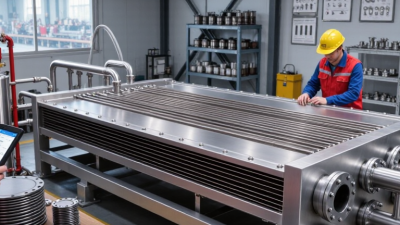
How to Choose a Brazed Plate Heat Exchanger?
Choosing a Brazed Plate Heat Exchanger is not just a matter of matching pipe sizes. The right unit must transfer the required heat while fitting the system’s pressure, temperature, and flow conditions. A compact exchanger may look ideal on a crowded plant room wall, but a small footprint alone does not guarantee good performance. The details matter.
Start with the heating or cooling duty, then identify both fluids and their operating temperatures. Flow rate, allowable pressure drop, and the properties of each fluid help narrow the options. Water is not the same as a glycol mixture, and corrosive fluids may require careful material checks. Plate material and brazing alloy should suit the application; confirm compatibility using reliable manufacturer data. Check connections, orientation, and available clearance before ordering. These are easy details to miss. They can make installation awkward.
A Brazed Plate Heat Exchanger has no removable gasketed plate pack, which supports a compact design but can limit access for mechanical cleaning. Consider fluid cleanliness, filtration, and the likely maintenance plan. Scaling or debris can reduce heat transfer over time. That risk deserves honest attention, even when the initial selection appears straightforward. Compare published performance data at your actual operating conditions, not just headline capacity. Then ask the supplier or a qualified engineer to verify the selection, including pressure limits and temperature range. Real systems rarely match assumptions perfectly. A little uncertainty is normal; documenting it helps prevent an expensive mismatch.
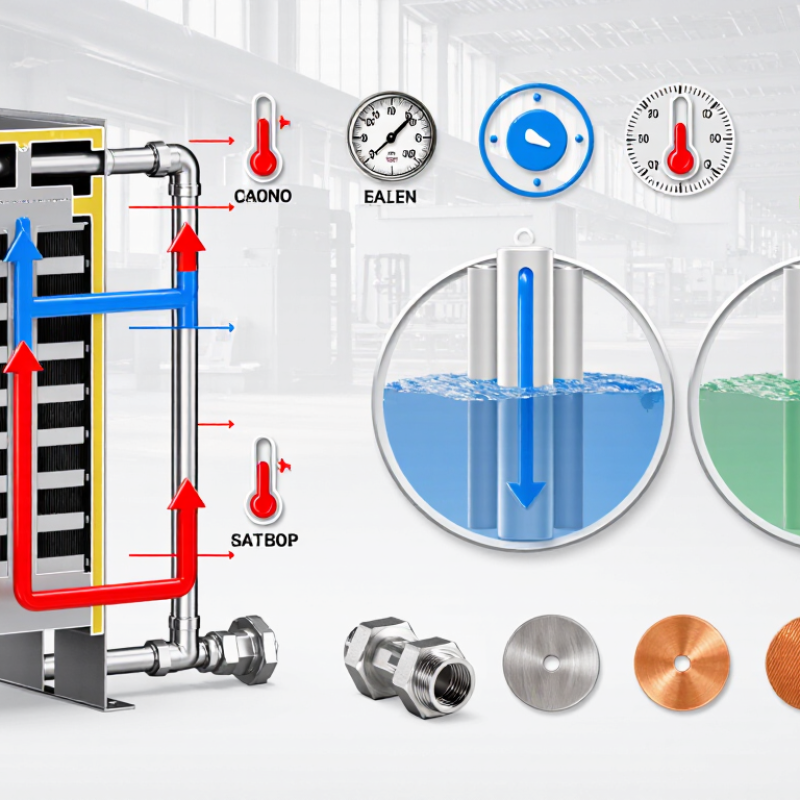
Identify the Heat Transfer Duty and Operating Conditions
Before selecting a brazed plate heat exchanger, define the heat transfer duty in measurable terms.
Record the required heat load, inlet and outlet temperatures, and flow rates for both fluids. For example, a heating loop may need to raise water from 20°C to 55°C while keeping the process flow steady. Small changes matter. A different flow rate can alter the required plate area and pressure drop.
Document operating conditions, not just normal conditions.
Include maximum working pressure, temperature swings, startup behavior, and the fluids’ composition. Glycol concentration, suspended particles, or corrosive chemistry can affect performance and material suitability. Check the allowable pressure drop against the pumps and piping already installed. A neat calculation can still miss a seasonal change in feed temperature; real operating data is more useful than a single design-point estimate.
Tips:
Use the coldest and hottest expected inlet temperatures in your review. Compare calculated duty with measured plant data when available. Ask a qualified thermal engineer to verify the selection, especially when fluid properties or operating conditions vary. Leave room for uncertainty. It is easy to over-trust a precise-looking spreadsheet.
Calculate Required Capacity, Flow Rates, and Temperature Approach
Choosing a brazed plate heat exchanger starts with a measured duty, not a catalogue rating. Calculate heat load using Q = m × Cp × ΔT, keeping mass flow, heat capacity, and temperature units consistent. For water, a 10 kW load across a 5°C change needs roughly 0.48 kg/s. Use actual fluid data for glycol or process mixtures; their heat capacity can differ substantially. Check both circuits. Record design inlet and outlet temperatures, expected flow variation, and the coldest seasonal condition. That detail changes the answer.
Next, define the temperature approach at both ends of the exchanger. In counterflow service, compare hot-inlet with cold-outlet, then hot-outlet with cold-inlet. A tighter approach may reduce required area, but it can demand more plates and raise cost or pressure drop. Do not select from capacity alone. Confirm allowable pressure drop, maximum working pressure, fouling tendency, and fluid compatibility with exchanger materials. Ask for performance at actual operating points, not only a nominal rating. A tidy spreadsheet can still mislead. Pump curves, fouling, and control-valve behavior may shift real flow after startup. Leave a sensible margin, but avoid oversized assumptions; oversizing can make low-load control awkward.
How to Choose a Brazed Plate Heat Exchanger?
Required Water Flow for a 100 kW Heat Load
For water, the required flow is estimated from Q = ṁ × cp × ΔT, using a specific heat capacity of approximately 4.18 kJ/(kg·K) and a density of approximately 1 kg/L. For a 100 kW load, a 10 K water temperature change requires about 8.6 m³/h; a smaller temperature change requires a higher flow rate.
Flow rate alone does not determine exchanger size. Check the required capacity and terminal temperature approach: for example, with hot water cooling from 80°C to 60°C and cold water heating from 30°C to 50°C, the terminal differences are 30 K and 10 K, giving a minimum approach of 10 K and an LMTD of approximately 18.2 K. Confirm the final selection against pressure-drop limits and the exchanger’s rated performance.
Choose Plate Materials and Compatible Joining Construction
Plate material and brazing alloy must suit the fluid, temperature, and pressure—not just the heat duty. ASM Handbook data place pure copper’s thermal conductivity near 400 W/m·K, compared with about 16 W/m·K for 316 stainless steel at room temperature. That difference can help explain copper’s heat-transfer appeal, but conductivity alone does not predict exchanger performance. Fouling, corrosion, and plate geometry matter too. Check the actual fluid chemistry.
The joining construction is equally important. Copper-brazed plate packs are common in many water and refrigerant applications; nickel-brazed designs may be specified for ammonia service or other demanding conditions. Neither option is universally compatible. Ask for the plate and filler-metal grades, operating limits, and documented fluid-compatibility data. ASHRAE’s Handbook—Refrigeration provides engineering guidance for evaluating refrigeration applications, but the final selection should match the actual operating conditions. A small mismatch in chemistry can become an expensive leak. I would not choose from a generic compatibility chart alone.
Tips: Confirm every fluid in the circuit, including cleaning chemicals. Compare the manufacturer’s stated pressure and temperature limits with your design conditions, and request test documentation for the proposed brazing alloy. If the fluid composition may change, allow for that uncertainty before specifying the unit.
Verify Pressure Limits, Fluid Compatibility, and Connection Types
Before comparing heat-transfer ratings, check the pressure limits for both circuits. The exchanger must handle the highest expected operating pressure, including pump starts and sudden valve closures. Compare this figure with the unit’s rated pressure at your actual operating temperature. Allow for temperature-related limits; a rating at room temperature may not apply to hot service. Small details matter. Keep the equipment datasheet with your design notes, and confirm any uncertain limits with the supplier.
Fluid compatibility depends on every wetted material, including the plates and brazing alloy. Identify the fluid concentration, pH, chloride content, and cleaning chemicals before selecting an exchanger. Water-glycol mixtures, for example, can behave differently as concentration and temperature change. Do not rely on a broad label such as “water compatible.” Check the specific chemistry. If the fluid composition may vary, that uncertainty deserves attention, not a guess.
Match connection type and size to the existing pipework. Confirm whether ports use a particular thread, flange, or other connection standard, and check the required orientation. A mismatch can mean extra adapters, more joints, and less room for maintenance. Measure twice. Also leave space to reach valves and remove connections during service. It is easy to focus on the exchanger itself and overlook the wrench clearance beside it.
Assess Installation Space, Maintenance Needs, and Supplier Support
How to Choose a Brazed Plate Heat Exchanger?
A compact exchanger can fit a crowded plant room, but the connections still need space. Measure pipe approach angles, valve positions, and the clearance needed for insulation. Leave room to work. A technician should be able to reach isolation valves and temperature sensors without leaning over hot pipework. Check the unit’s weight and mounting orientation against the support frame, too. A tidy drawing can hide awkward access once pumps and conduits are installed.
Maintenance needs depend on the fluid and operating conditions. Brazed units have no gaskets to replace, but they usually cannot be opened for mechanical cleaning. Ask what cleaning methods suit the plate material, deposits, and expected water quality. Confirm allowable pressure, temperature, and flow limits before specifying chemical cleaning. Fouling can reduce performance gradually; keeping inlet temperatures and pressure drops in a service log helps reveal changes. This is not always done consistently, even in well-run facilities.
Supplier support matters after the purchase. Provide realistic duty data, fluid properties, design temperatures, and available pressure drop—not just nominal capacity. Ask for selection calculations, connection drawings, installation guidance, and clear instructions for cleaning or troubleshooting. Check how quickly technical staff can respond and whether replacement units or compatible parts can be sourced. If the supplier cannot explain the assumptions behind a selection, pause and review them with your design team.