Leave Your Message

What Are the Top Types of Heat Exchanger Furnaces?

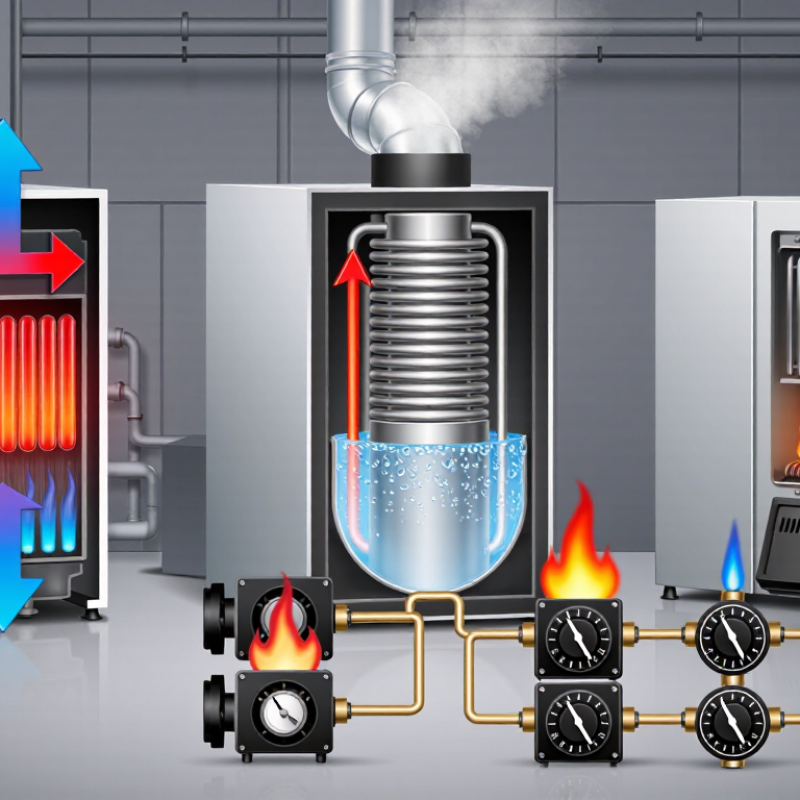
A Heat Exchanger Furnace moves heat from combustion gases into circulating air or water, while keeping exhaust separate from the occupied space. Its design shapes efficiency, comfort, noise, and maintenance needs. The choices are not interchangeable. A counterflow model, for example, directs air against the heat exchanger’s temperature gradient; a condensing furnace extracts additional heat from exhaust, while a non-condensing model sends more heat out through the flue. Multi-stage and modulating burners add another layer by adjusting heat output to demand.

The U.S. Energy Information Administration’s 2020 Residential Energy Consumption Survey reports that natural gas was the primary heating fuel in about 47% of U.S. homes. That helps explain the practical importance of gas-furnace design. The U.S. Department of Energy’s 2023 rule also sets a 95% AFUE standard for covered non-weatherized gas furnaces, scheduled to take effect in 2028. Efficiency labels matter, but installation, sizing, venting, and maintenance matter too. Details matter.

HVAC engineer John Siegenthaler, P.E., author of Modern Hydronic Heating, writes about matching heating equipment to building loads and system design. A practical paraphrase of that guidance is: “Choose the heat source for the actual load and the system it must serve.” This is a paraphrase, not a verbatim quotation. The overview below compares the top types of heat exchanger furnaces, their operating principles, and the trade-offs that affect real-world performance. Some categories overlap; that can make comparisons less tidy than product labels suggest.
What Are the Top Types of Heat Exchanger Furnaces?

How Heat Exchanger Furnaces Recover and Transfer Heat

Heat exchanger furnaces recover energy from hot exhaust before it escapes up the stack. A recuperative furnace sends exhaust through a metal heat exchanger, warming incoming combustion air on the other side. In a regenerative furnace, hot gases heat ceramic media; airflow then reverses, and the stored heat warms fresh air.

One transfers heat continuously. The other stores it briefly.

The U.S. Department of Energy’s 2008 report, Waste Heat Recovery: Technology and Opportunities in U.S. Industry, estimates that 20–50% of industrial energy input may leave as waste heat, depending on the process. This range is broad, but it shows why exhaust temperature and operating hours matter.

The International Energy Agency’s Energy Efficiency 2023 report puts industry’s share at about 37% of global energy use. Even modest recovery can therefore matter at scale.

In practice, recovered heat can preheat combustion air, reducing the fuel needed to reach furnace temperature. Still, the result is not automatic. Fouling, corrosion, pressure drop, and frequent temperature swings can erode savings. A clean exchanger can look efficient on paper; real performance needs measured inlet and outlet temperatures, fuel use, and maintenance records.
The Main Ways to Classify Heat Exchanger Furnaces

Heat exchanger furnaces are easier to compare when classified by how heat moves, rather than by name alone. A useful starting point is whether combustion gases contact the air being heated. In a direct-fired design, they mix. In an indirect-fired unit, a metal wall separates the two streams. That barrier adds a heat-transfer step, so construction and operating conditions matter.

Furnaces can also be grouped by heat source: gas, oil, electricity, or recovered process heat. The source affects controls, ventilation, and operating costs.

Other labels describe exchanger geometry. Tubular units direct hot gases through tubes, while plate-style passages transfer heat across broad surfaces. Finned tubes increase surface area in compact spaces, but dust may collect between the fins. The label alone cannot predict service life.

Airflow provides another way to classify designs. Counterflow sends the streams in opposite directions; parallel flow moves them the same way; crossflow meets them at an angle. These arrangements affect temperature patterns and exchanger size. For a workshop installation, check access panels and cleaning space, not just rated output. The categories are not always tidy. Some units combine features, and actual performance depends on airflow, fouling, and maintenance.

Recuperative Furnaces and Continuous Heat Recovery

Recuperative furnaces capture heat from exhaust gases and use it to preheat incoming combustion air. This transfer continues while the furnace operates. Hot exhaust passes through a heat exchanger, warming cooler air before it reaches the burners.

The U.S. Department of Energy’s 2008 Waste Heat Recovery: Technology and Opportunities in U.S. Industry report estimates that 20–50% of industrial energy input can leave as waste heat. That broad range is not a guaranteed furnace saving; actual recovery depends on operating temperatures, load, and equipment condition.

The benefit is visible at the burner: preheated air can reduce the fuel needed to reach a target temperature. In practice, operators should track exhaust temperature, combustion-air temperature, and fuel use per unit of output.

Small changes matter. A clogged exchanger or air leak can quietly reduce performance, while excessive pressure drop may increase fan demand. Recuperative systems also need materials suited to hot, corrosive exhaust and regular inspection.

Continuous recovery sounds straightforward, but furnace cycles and product changes complicate it. A design that performs well at steady load may deliver less during frequent starts or low throughput. That gap deserves attention.

Engineers can compare measured heat recovery across real operating shifts, rather than relying only on design-point estimates. The DOE report’s wide waste-heat range is a useful reminder: site measurements are essential before forecasting savings.

Regenerative Furnaces and Cyclic Heat Storage

Regenerative furnaces capture heat in ceramic checkerwork, then transfer it to incoming combustion air. In paired chambers, valves reverse the flow: one bed absorbs heat while the other preheats air. This cyclic exchange can reduce fuel use in high-temperature glass, steel, and ceramic processes. The cycle is the point.

The opportunity is significant, but savings are not guaranteed. A 2008 U.S. Department of Energy report, Waste Heat Recovery: Technology and Opportunities in U.S. Industry, estimates that 20–50% of industrial energy input may be lost as waste heat. That range describes industry broadly, not expected savings from one furnace. In practice, ceramic beds need clean, even airflow. Dust can block passages; repeated reversals can wear valves and seals. Operators can track fuel per tonne, exhaust temperature, and pressure drop across each bed. Small leaks matter. High preheat temperatures may still deliver modest net gains if fan power or maintenance demands rise. That trade-off deserves attention. Cycle timing depends on furnace load, refractory condition, and exhaust patterns, so one setting may not suit every shift.

What Are the Top Types of Heat Exchanger Furnaces? - Regenerative Furnaces and Cyclic Heat Storage

Furnace or system type How cyclic heat storage works Common applications Typical strengths Key operating considerations
Regenerative glass-melting furnace Hot exhaust passes through refractory checkerwork in one regenerator and heats it. After a reversal, incoming combustion air flows through the hot checkerwork and is preheated; paired chambers alternate roles. Continuous melting of container, flat, and other industrial glass. Stores heat in refractory material and can substantially preheat combustion air, supporting efficient operation at high furnace temperatures. Reversal timing, checkerwork condition, dust or batch carryover, and pressure balance affect performance. The cycle duration depends on furnace design and operating conditions.
Regenerative steel reheating furnace Paired regenerative chambers or burner assemblies alternately store heat from exhaust gas and release it to incoming combustion air. Flow direction is periodically switched. Heating steel billets, blooms, or slabs before rolling or forging. High combustion-air preheat can improve fuel use and enable high-temperature heating in suitable installations. Temperature uniformity, scale formation, burner control, and reliable switching need attention. Actual savings depend on the baseline furnace and operating profile.
Regenerative forging or heat-treatment furnace Regenerative burners use alternating flow paths: one side transfers heat from exhaust into a heat-storage medium while the other uses stored heat to preheat combustion air, then the roles reverse. Selected forging furnaces and industrial heat-treatment processes that require sustained elevated temperatures. Can recover exhaust heat while maintaining high air-preheat temperatures; burner arrangements can be adapted to different furnace layouts. Burner placement and cycling can influence heat distribution. The process may also require controls for product temperature, atmosphere, and emissions.
Hot-blast stove (related regenerative heater) A refractory checkerwork chamber is heated by combustion gas during one phase, then transfers stored heat to blast air during another. Multiple stoves can operate in sequence to provide a more continuous hot-air supply. Preheating blast air for ironmaking blast furnaces. Provides large-scale cyclic heat storage and delivers hot blast without requiring the combustion gas to mix with the blast air. A hot-blast stove is a regenerative heat-storage installation associated with a blast furnace, rather than a metal-melting or reheating furnace. Stove sequencing and refractory condition are important.
Regenerative burner system in an industrial furnace A pair or group of burners alternates between exhaust and firing modes. Heat is temporarily stored in refractory media or a compact heat-storage element and returned to incoming air after switching. Retrofits or new designs for suitable high-temperature furnaces, including reheating and forging applications. Offers a modular way to recover exhaust heat where paired flow paths and periodic reversal can be accommodated. This describes a heat-recovery arrangement, not a separate furnace class. Suitability depends on exhaust conditions, process requirements, available space, and control-system integration.

Note: Regenerative systems store heat temporarily in refractory or other heat-storage media and return it during a later part of the operating cycle. Performance varies with furnace design, fuel, production conditions, maintenance, and operating controls.

Common Heat Exchanger Designs Used in Furnaces

Common Heat Exchanger Designs Used in Furnaces

A furnace heat exchanger transfers heat from combustion gases to circulating indoor air without mixing the two streams. In many residential units, the primary exchanger uses curved steel tubes or folded, clamshell-shaped panels. These forms create a long gas path inside a compact cabinet. Air moves across the metal surface, then warm air enters the ducts. Small cracks matter: combustion gases may leak into the airstream, so inspection and proper venting are essential.

High-efficiency furnaces often add a secondary exchanger. It cools exhaust further, recovering heat as water vapor condenses. The condensate drains through a small line, which can clog or freeze if poorly installed. The U.S. Department of Energy’s Energy Saver guidance reports AFUE ratings of 90% to 98.5% for high-efficiency furnaces, compared with 56% to 70% for conventional models. That difference reflects whole-appliance fuel use, not exchanger performance alone.

Design choice affects durability and service access. Tubular exchangers handle repeated heating cycles, while compact panel designs can fit tighter cabinets but may be harder to inspect. DOE furnace test procedures measure seasonal fuel-use efficiency; they do not rank exchanger shapes. Real performance also depends on airflow, burner setup, and installation. A clean exchanger still cannot compensate for restricted ducts.