China Top Industrial Heat Exchanger Manufacturers You Should Know?
In today's industrial landscape, the demand for efficient heat exchange solutions is increasing. Industrial heat exchangers play a critical role in various sectors, including energy, oil and gas, and manufacturing. They facilitate heat transfer, enhancing energy efficiency and operational performance. This has led to the rise of leading manufacturers in China.
These manufacturers are renowned for their advanced technologies and quality products. They cater to a wide range of applications, making them influential players. However, the market is not without challenges. Some manufacturers struggle with maintaining consistent quality amidst growing competition. It's essential to identify the top companies that excel in innovation and reliability.
Understanding the landscape of industrial heat exchanger manufacturers in China is crucial for industry stakeholders. Their expertise and commitment to quality can significantly impact operational success. It is important to focus on those who are dedicated to continuous improvement and meeting global standards.
Overview of China's Industrial Heat Exchanger Industry Landscape
China's industrial heat exchanger industry has grown significantly in recent years. The landscape is diverse, with numerous manufacturers contributing to its development. These companies specialize in various sectors, including power generation, petrochemicals, and food processing. Each sector presents unique challenges and requires specific technologies.
The demand for efficient thermal management is driving innovation. Manufacturers are investing in advanced materials and designs to improve heat transfer efficiency. This has led to a surge in both competitiveness and collaboration within the industry. However, challenges remain, such as meeting stringent environmental regulations and ensuring product reliability. Companies often struggle to balance cost and performance.
In this dynamic environment, understanding the market's nuances is crucial. As new technologies emerge, traditional practices may become obsolete. This creates pressure on manufacturers to adapt or risk falling behind. It's a landscape filled with opportunities and challenges, requiring constant vigilance and expertise.
Key Performance Indicators of Leading Heat Exchanger Manufacturers
In the competitive landscape of industrial heat exchangers, understanding key performance indicators (KPIs) is crucial. Leading manufacturers focus on thermal efficiency, durability, and cost-effectiveness. Research indicates that thermal efficiency ratings for top manufacturers can reach as high as 90%. This metric reflects how well a heat exchanger converts energy, highlighting its operational effectiveness.
Service life is another significant KPI. Many manufacturers aim for a minimum operational lifespan of 15 to 20 years. However, maintenance and material quality often influence this. Studies show that up to 30% of heat exchangers fail prematurely due to inadequate maintenance practices. Regular inspections can ensure longevity and performance.
Additionally, adaptability to different industrial processes is fundamental. Heat exchangers must work efficiently across various temperatures and pressures. Reports suggest that customization is becoming a standard requirement. Around 40% of companies that prioritized bespoke solutions noted improved system efficiency. Understanding these KPIs helps industries select the right manufacturer for their needs.
China Top Industrial Heat Exchanger Manufacturers You Should Know - Key Performance Indicators
| Manufacturer Type |
Annual Revenue (Million USD) |
Market Share (%) |
Production Capacity (Units/Year) |
Quality Certifications |
| Copper Heat Exchangers |
150 |
25 |
20,000 |
ISO 9001, CE |
| Plate Heat Exchangers |
200 |
30 |
15,000 |
ISO 14001, ASME |
| Shell and Tube Heat Exchangers |
350 |
40 |
10,000 |
API, PED |
| Air Cooled Heat Exchangers |
100 |
15 |
5,000 |
ISO 9001 |
| Heat Recovery Systems |
250 |
20 |
12,000 |
ISO 50001, CE |
Top 5 Industrial Heat Exchanger Manufacturers in China by Market Share
China's industrial heat exchanger market continues to expand, driven by growth in
manufacturing and construction sectors. A recent report suggests that the top five manufacturers hold a significant portion of the market share, contributing over 60% collectively. These companies apply advanced technology to enhance
thermal efficiency, responding to increasing energy demands.
Market research from authoritative sources indicates that the combined revenue of these top firms exceeds $1.5 billion. This highlights not just their dominance but also the innovation landscape in China. They lead with effective designs and quality materials, crucial for industries such as oil and gas. Unexpectedly, many companies still face challenges in sustainability practices. The sector is under pressure to reduce emissions while maintaining performance.
Despite rapid growth, some manufacturers struggle with quality control. This inconsistency can affect customer trust and long-term contracts. Addressing these issues is vital for maintaining competitiveness. As the heat exchanger industry evolves, attention to both quality and environmental responsibility will shape future trends, ensuring that manufacturers can meet consumer demands while adhering to regulatory standards.
Technological Innovations Shaping China's Heat Exchanger Market
Recent technological innovations are transforming China's heat exchanger market. The industry is seeing a push towards efficiency and sustainability. Advanced materials and designs aim to improve energy transfer while reducing costs and waste. There’s a notable shift towards compact heat exchangers that require less space and enhance performance. This trend not only lowers energy consumption but also meets growing environmental standards.
Artificial intelligence and IoT integration are also becoming significant. Manufacturers use smart technologies to monitor performance and predict maintenance needs. This proactive approach reduces downtime and extends equipment lifespan. However, the challenge remains in staying updated with rapid advancements. Companies must balance innovation with practical applications in real-world situations.
Additionally, sustainability practices are gaining traction. Many manufacturers now prioritize eco-friendly materials and processes. Yet, the implementation of these practices often reveals gaps in knowledge and execution. Industry leaders face pressure to innovate while ensuring reliability and safety. The continuous evolution in the heat exchanger sector showcases both the potential and the hurdles in achieving a fully sustainable future.
Future Trends in China’s Industrial Heat Exchanger Sector and Growth Projections
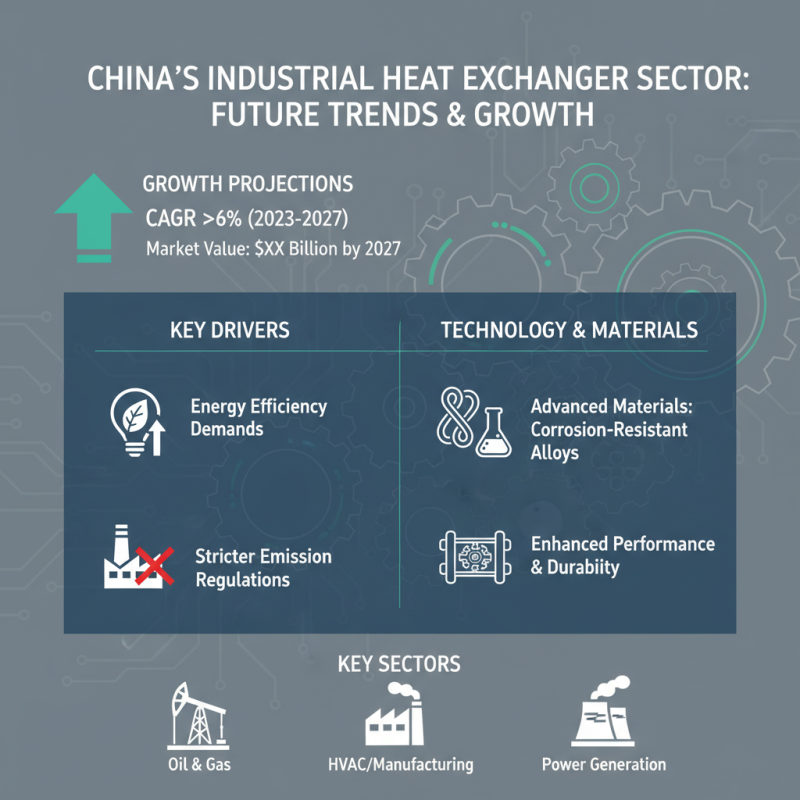
The industrial heat exchanger sector in China is evolving rapidly. Recent reports estimate a compound annual growth rate (CAGR) of over 6% through 2027. This growth is driven by increasing energy efficiency demands and stringent regulations on emissions. The adoption of advanced materials, such as corrosion-resistant alloys, plays a pivotal role. These materials enhance performance and durability, meeting the needs of various industries, from oil and gas to HVAC.
Despite progress, challenges remain. Many manufacturers struggle with innovation cycles. Keeping pace with technological advancements is vital. Some sectors are still reliant on traditional designs, which limits efficiency gains. Additionally, fluctuations in raw material costs can impact pricing stability. This might hinder smaller players from fully capitalizing on market opportunities.
Looking ahead, the emphasis will shift towards sustainability. Eco-friendly designs and waste heat recovery solutions are becoming essential. Industry experts predict a rise in smart heat exchangers, integrating IoT capabilities. These innovations could transform operational efficiency. However, manufacturers must adapt quickly. Those who fail to innovate risk falling behind. The path forward is complex but offers great potential for growth.