Essential Heat Exchanger Maintenance Tips for Optimal Efficiency?
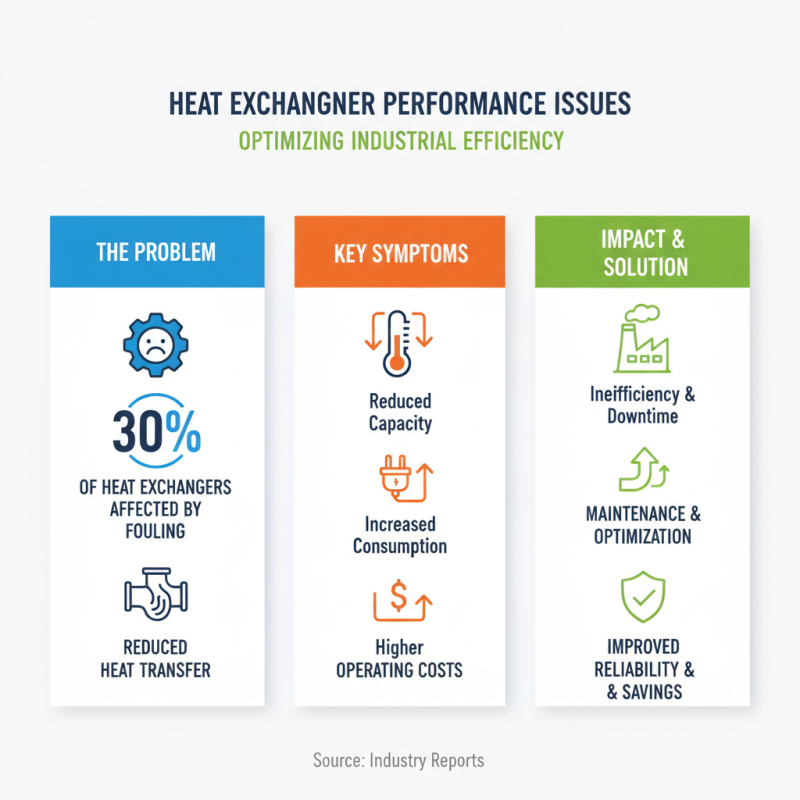
Heat exchangers are vital for numerous industrial processes. They ensure efficient thermal energy transfer. Neglecting their maintenance can lead to significant performance drops. According to a report by the International Journal of Heat and Mass Transfer, improper maintenance can reduce efficiency by up to 30%. This emphasizes the importance of effective Heat Exchanger Maintenance.
Renowned expert Dr. Emily Carter notes, "Routine checks and proactive maintenance can save companies thousands in downtime." Organizations that prioritize these practices typically report extended equipment life. Yet, many still overlook critical maintenance tasks. Regular cleaning and inspection are often sidelined, leading to corrosion and fouling. These issues can escalate costs, but awareness is key.
Understanding the specific needs of your heat exchanger can be challenging. Companies face diverse operational demands. Each system may require tailored maintenance solutions. As organizations better grasp these needs, they pave the way for improved efficiency and reduced operational risks. Recognizing the intricacies of Heat Exchanger Maintenance is the first step toward operational excellence.
Understanding Heat Exchanger Types and Their Functions
Heat exchangers play a critical role in various industries. They transfer heat between two fluids efficiently. Understanding the different types can help you choose the right one for your application.
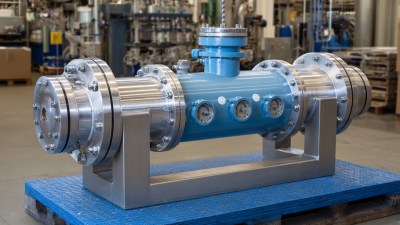
There are mainly three types of heat exchangers: shell and tube, plate, and air-cooled. Shell and tube exchangers consist of numerous tubes, allowing heat transfer through the tube walls. They are robust and widely used. Plate heat exchangers have thin plates for heat transfer, making them very efficient. Yet, the space they occupy can be a concern. Air-cooled heat exchangers use air instead of water, making them useful in areas with limited water access. Each type has advantages and drawbacks.
Regular maintenance is essential to ensure these devices operate efficiently. Clogging or leaks can significantly affect performance. Cleaning and inspecting them periodically is crucial. However, many overlook these tasks, leading to long-term issues. Identifying the correct type and maintaining it well is key to optimal efficiency.
Essential Heat Exchanger Maintenance Tips for Optimal Efficiency
| Heat Exchanger Type |
Function |
Maintenance Frequency |
Common Issues |
Maintenance Tips |
| Shell and Tube |
Heat transfer between two fluids through tubes |
Annually |
Clogging, corrosion |
Regularly inspect for leaks and clean tubes |
| Plate Heat Exchanger |
Efficient heat transfer in a compact design |
Every 6 months |
Fouling, gasket failure |
Check gaskets and clean plates regularly |
| Air-Cooled Heat Exchanger |
Uses air to cool fluids without water |
Quarterly |
Dust accumulation, fan issues |
Ensure fans are operational and clean the coils |
| Double Pipe Heat Exchanger |
Simple heat exchange between two fluids in concentric pipes |
Annually |
Blockage, thermal shock |
Monitor for temperature fluctuations and flush pipes |
| Fin Tube Heat Exchanger |
Increases surface area for better heat transfer |
Semi-Annually |
Fin damage, corrosion |
Inspect fins and apply protective coatings |
Step-by-Step Guide to Regular Maintenance Procedures
Heat exchangers play a crucial role in many systems. Regular maintenance ensures they work efficiently. To start, inspect the unit for visible corrosion or leaks. Look for scale build-up, which can hinder performance. If you notice anything unusual, consider a more thorough inspection.
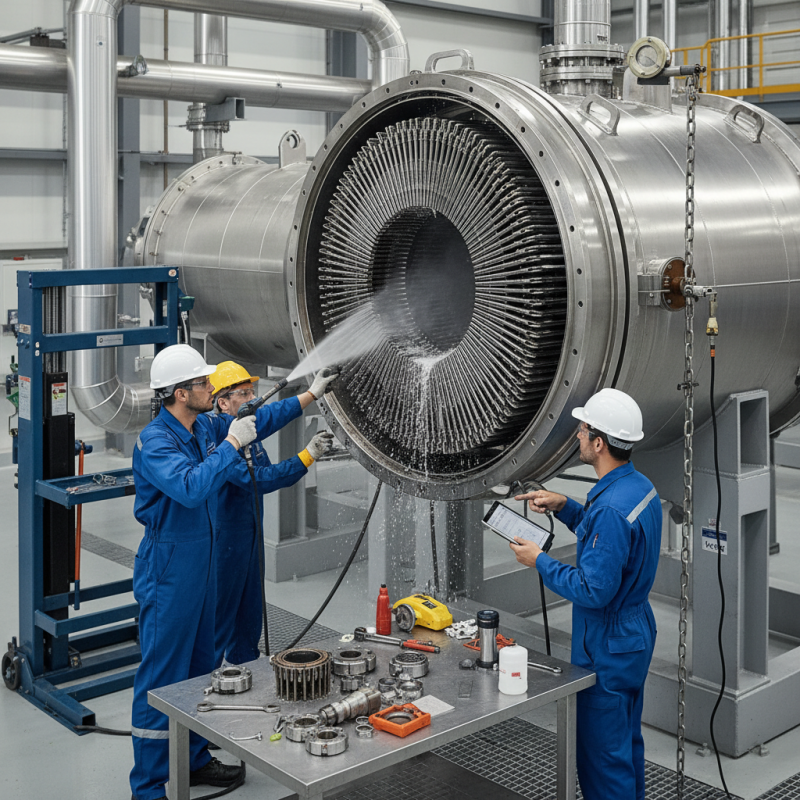
Next, clean the heat exchanger regularly. Use suitable cleaning agents that don’t damage the components. High-pressure water can remove accumulated dirt and debris. However, don’t overdo it; excessive pressure might lead to new issues. Check the seals and gaskets during cleaning. Worn-out seals can cause leaks that are hard to detect.
Monitor the operating temperature closely. If it fluctuates, it might indicate a problem. Addressing small issues before they escalate is wise. Don’t neglect the importance of these observations. Track maintenance activities in a log. This helps identify patterns and recurring issues. Keeping records aids in future decision-making. Each maintenance check can reveal insights that improve overall efficiency.
Essential Heat Exchanger Maintenance Tips for Optimal Efficiency
Best Practices for Cleaning and Inspecting Heat Exchangers
Cleaning and inspecting heat exchangers is crucial for optimal efficiency.
Begin by regularly checking for leaks and corrosion.
Water and air can cause damage over time. Look for signs of wear on connections and joints.
A simple visual inspection can reveal a lot.
When cleaning, don't use harsh chemicals that may damage materials.
Instead, opt for gentle cleaning solutions. Use brushes for debris removal, ensuring that you reach all areas.
Regular cleaning prevents buildup that can hinder performance.
After cleaning, inspect the unit for any signs of deformation. Pay attention to the fins and tubes.
If they appear bent or blocked, consider further action.
Keeping a maintenance log can help track issues over time.
Regular checks lead to better performance and fewer unexpected failures.
A proactive approach pays off in the long run.
When to Seek Professional Help for Heat Exchanger Issues
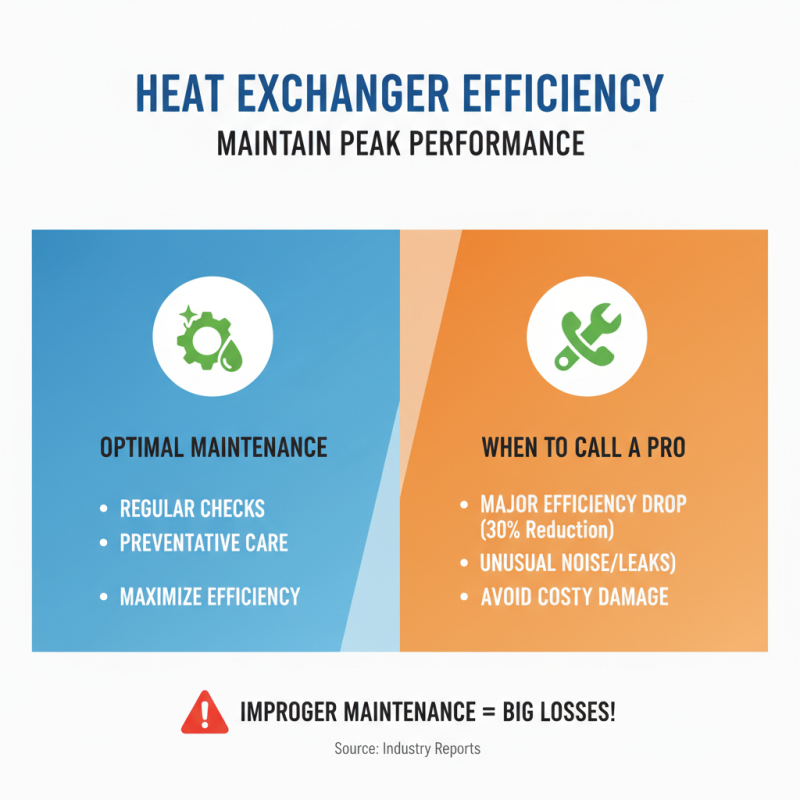
Maintaining heat exchangers is vital for optimal efficiency. However, knowing when to seek professional help is equally crucial. According to industry reports, improper maintenance can reduce efficiency by up to 30%. This is a significant loss that cannot be overlooked.
Watch for signs of wear, such as unusual noises or fluctuating temperature readings. These indicators often mean something isn't right. If left unchecked, minor issues can escalate into costly repairs. For example, pressure drops may indicate a blockage, necessitating a professional's attention.
Tips: Regular inspections can prevent problems from worsening. Check for leaks at least once every quarter. Clean the heat exchanger every six months to maintain performance. Monitor temperature differentials regularly; significant changes may mean service is needed.
Ignoring these signs can lead to bigger headaches. You could be looking at extensive downtime. So, act early. Consulting professionals can save time and money in the long run. Remember, timely intervention is key in maintaining heat exchanger efficiency.