2026 How to Choose the Right Brazed Plate Heat Exchanger?
Choosing the right Brazed Plate Heat Exchanger is crucial for efficiency and performance. These exchangers offer superior heat transfer in compact designs. They are widely used in refrigeration and HVAC systems. However, selecting the right one can be daunting. There are various factors to consider, such as size, flow rate, and operating conditions.
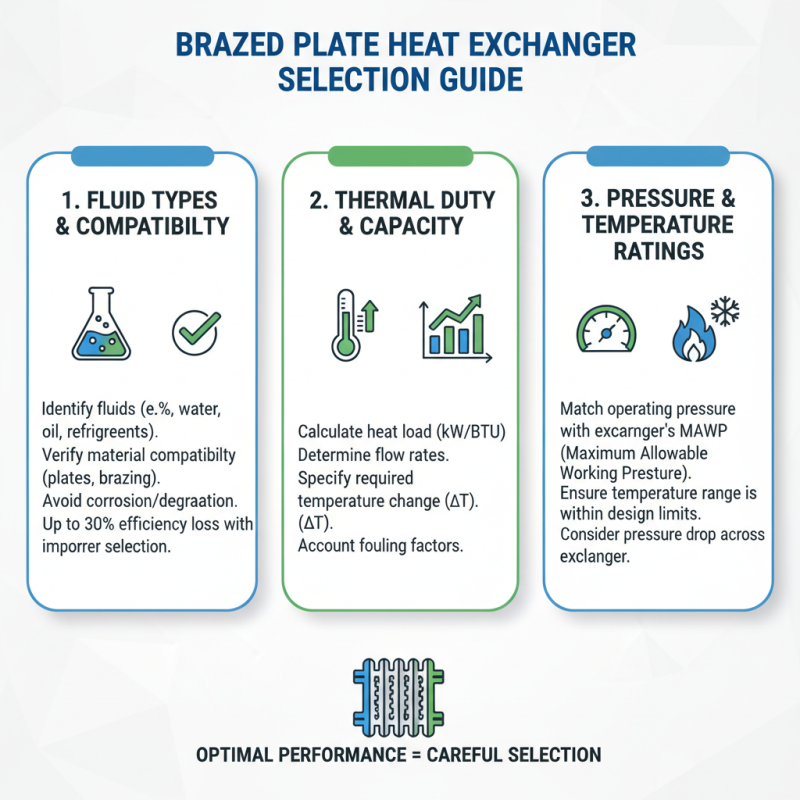
Understanding specific needs is essential. The wrong choice can lead to inefficiencies and higher costs. Consider the materials used in construction. Stainless steel is common, but other options exist. Durability and resistance to corrosion are vital. Additionally, think about the potential for fouling and how it affects performance.
Another key aspect is compatibility with existing systems. Ensure that the Brazed Plate Heat Exchanger aligns with your system's specifications. Ask questions and gather data. Engaging with experts can provide valuable insights. There’s no one-size-fits-all solution. Take the time to reflect on your requirements. Making informed decisions will lead to better performance and longevity.
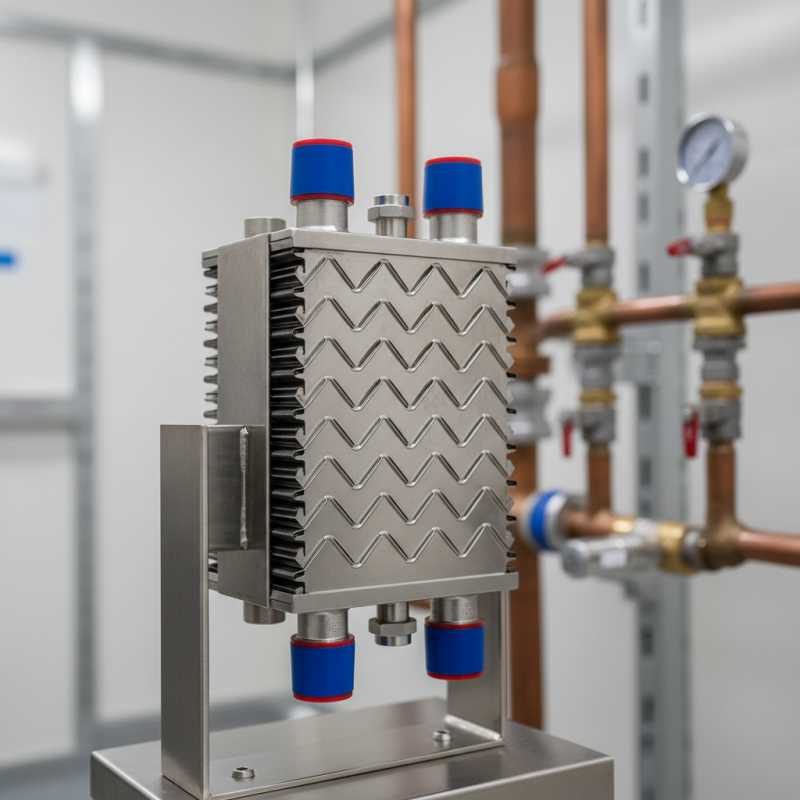
Understanding Brazed Plate Heat Exchangers and Their Applications
Brazed plate heat exchangers are compact and efficient. They consist of tightly packed plates, providing a large surface area for heat transfer. These units are widely used in various industries, from HVAC systems to food processing. They can withstand high temperatures and pressures, making them suitable for demanding applications.
One must carefully consider the specific needs before choosing a brazed plate heat exchanger. Not all applications require the same design or material. For instance, in some situations, corrosion resistance is crucial. In others, the size constraints may dictate the choice. These factors can complicate the selection process. It's easy to overlook critical parameters, leading to suboptimal performance.
Understanding the heat exchange requirements is vital. Analyze the fluid properties, flow rates, and desired thermal performance. A common mistake is picking the wrong size or type, which can reduce efficiency. It's important to test different configurations. Don't rely solely on manufacturer guidelines; real-world performance often varies. Reflecting on these details can lead to better decisions and improved system efficiency.
Comparing Efficiency Ratings: High-Performance Heat Exchangers Explained
When selecting a brazed plate heat exchanger, efficiency is a key consideration. High-performance heat exchangers often differ in their thermal performance ratings. Reports from industry leaders indicate that units can reach efficiencies as high as 90%. In contrast, less efficient models might only achieve 70%. This discrepancy is significant, especially in applications requiring optimal heat transfer.
The design of brazed plate heat exchangers is critical. The surface area for heat transfer plays a crucial role in overall efficiency. A study showed that increasing surface area by just 10% can boost heat exchange performance by 15%. However, more surface area can lead to higher pressure drop. It's a trade-off that users must navigate.
Additionally, the selection process involves material choice. Stainless steel is commonly favored for its durability and resistance to corrosion. However, cost considerations often lead to the use of alternative materials, which may compromise performance. Many industry experts stress the importance of understanding application requirements to avoid mismatches that could hinder efficiency. The path to selecting the right heat exchanger can be complex, demanding thorough analysis and reflection.
Comparison of Heat Exchanger Efficiency Ratings
Material Selection for Brazed Plate Heat Exchangers: A Performance Guide
Material selection is crucial for optimizing the performance of brazed plate heat exchangers (BPHEs). These devices are often made from stainless steel, copper, or nickel. Each material offers distinct advantages. According to recent industry data, stainless steel is the most common choice due to its excellent corrosion resistance and durability, making it ideal for high-temperature applications. However, it can be costly. Copper, while cheaper, is less effective in corrosive environments.
The choice of material directly influences thermal performance. For instance, nickel-brazed units can perform well in harsher conditions but might not be as widely available. Research indicates that the thermal conductivity of copper is nearly 400 W/mK, making it superior for heat transfer applications. Yet, the susceptibility to corrosion may necessitate careful consideration in specific environments.
There is always a trade-off to consider. A cheaper material could reduce initial costs but lead to higher replacement rates. Engineers often face the challenge of balancing upfront expenses with long-term maintenance needs. Those decisions can make or break project efficiency. So, understanding the operational environment is vital. Each choice comes with its own set of risks.
2026 How to Choose the Right Brazed Plate Heat Exchanger? - Material Selection for Brazed Plate Heat Exchangers: A Performance Guide
| Material Type |
Thermal Conductivity (W/m·K) |
Corrosion Resistance |
Temperature Range (°C) |
Cost Factor (1-10) |
| Copper |
398 |
High |
-200 to 200 |
5 |
| Stainless Steel |
16 |
Very High |
-270 to 800 |
8 |
| Aluminum |
237 |
Moderate |
-20 to 150 |
4 |
| Nickel |
90 |
High |
-200 to 1400 |
7 |
| Titanium |
21 |
Very High |
-250 to 600 |
9 |
Cost-Effectiveness Analysis of Brazed Plate Heat Exchangers in Industry
When considering brazed plate heat exchangers, cost-effectiveness is crucial. These units save energy and reduce operating costs. According to a recent industry report, energy savings can be as high as 30% compared to conventional heat exchangers. This efficiency reflects a more sustainable choice for industries like HVAC and food processing.
The initial investment can be concerning. However, operational savings often outweigh upfront costs. A study by the International Energy Agency shows that industries can recover costs within two years. Regular maintenance costs are relatively low, further enhancing their financial appeal. Heat exchanger efficiency directly impacts product quality and process reliability, which is vital for competitive performance.
Tips: Always calculate the total cost of ownership. Consider not just initial costs but also maintenance and utility bills. Involve your engineering team early in the selection process. Their insights can prevent costly mistakes down the line. Reflect on the decision-making process, as impractical choices may lead to unanticipated constraints in operations. Balancing cost and performance is key.