How to Choose the Right Marine Heat Exchanger for Your Needs?
Choosing the right marine heat exchanger can significantly impact your vessel's efficiency and performance. Marine heat exchangers are vital for cooling and heating systems in boats and ships. According to Mark Thompson, a renowned marine engineer, “Selecting the proper heat exchanger is crucial for optimal engine performance and longevity.”
The complexity of marine systems often complicates this choice. Different sizes and types cater to various applications. A mismatch can lead to overheating or inefficient operations. Consider factors such as the type of fluid, flow rates, and temperature differences.
Many users overlook maintenance and installation support. Ensuring proper installation is as important as selecting the right model. This industry continues to evolve, and adapting to new technologies can prove challenging. Whether you’re a seasoned professional or a novice, understanding your specific needs is essential. The right marine heat exchanger transcends mere component selection; it ensures reliability and performance at sea.
Types of Marine Heat Exchangers and Their Applications
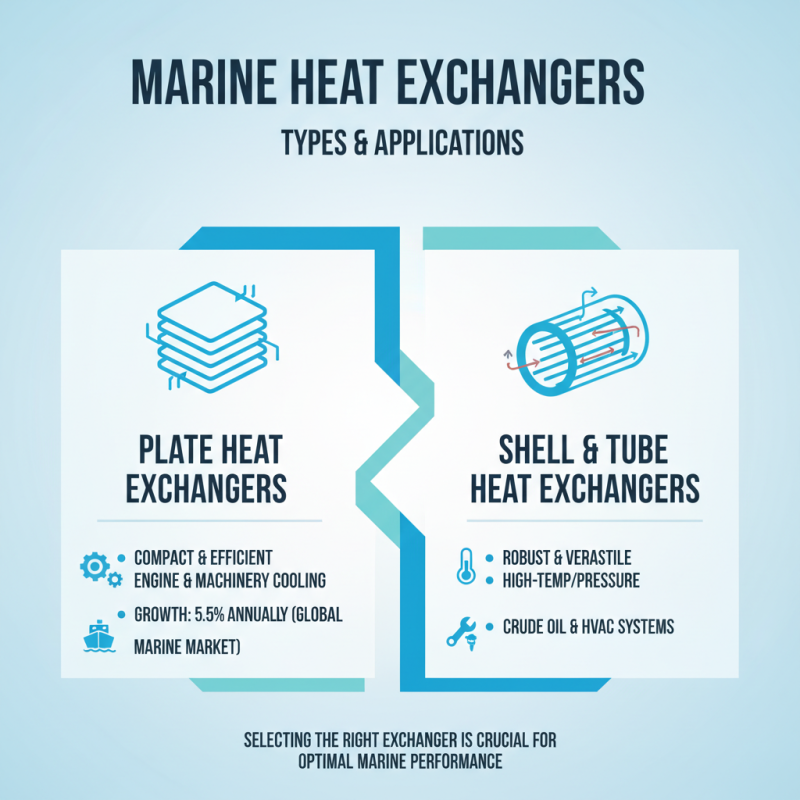
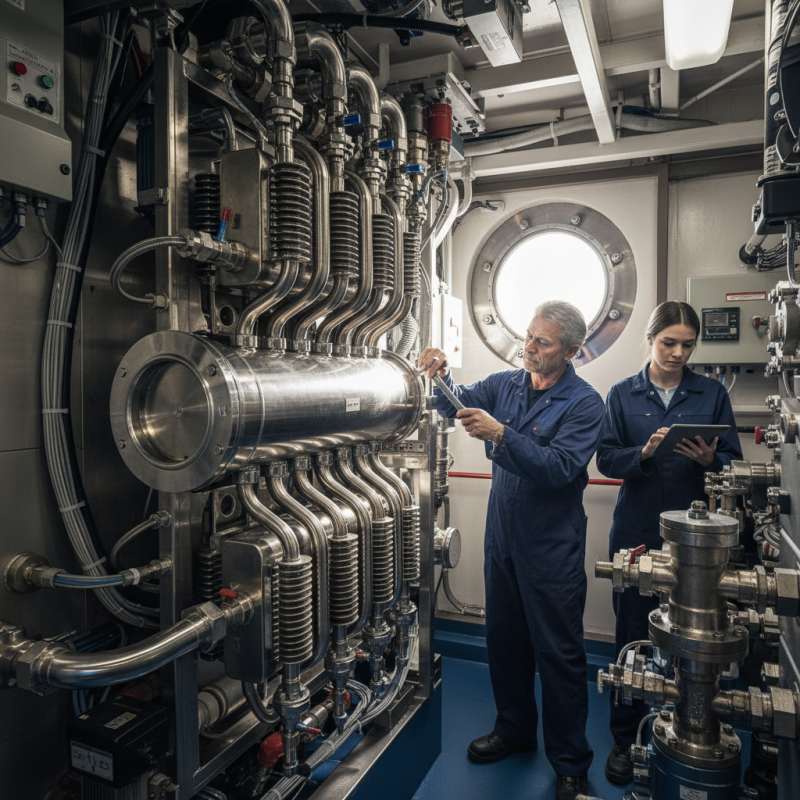
When selecting a marine heat exchanger, it's essential to consider various types and their specific applications. Plate heat exchangers are a popular choice. They are compact and efficient, often used in cooling systems for engines and machinery. According to a recent industry report, the global market for plate heat exchangers is projected to grow by 5.5% annually, indicating their rising importance in the marine sector.
Shell and tube heat exchangers are another critical type. They handle larger volumes and offer high durability, making them suitable for heavy-duty applications like oil cooling and ballast water systems. Data shows that over 60% of marine vessels utilize shell and tube exchangers for their reliability and efficiency under high-pressure conditions. However, they may require more space and maintenance compared to other types.
Lastly, air-cooled heat exchangers have gained traction due to their efficient operation in environments with limited water availability. They are ideal for offshore operations. However, their performance can be inconsistent in high-load scenarios. Understanding and evaluating these types is crucial for optimizing marine system efficiency. Each type has its strengths and weaknesses, suggesting a careful consideration of specific needs and conditions before making a choice.
Factors to Consider When Selecting a Marine Heat Exchanger
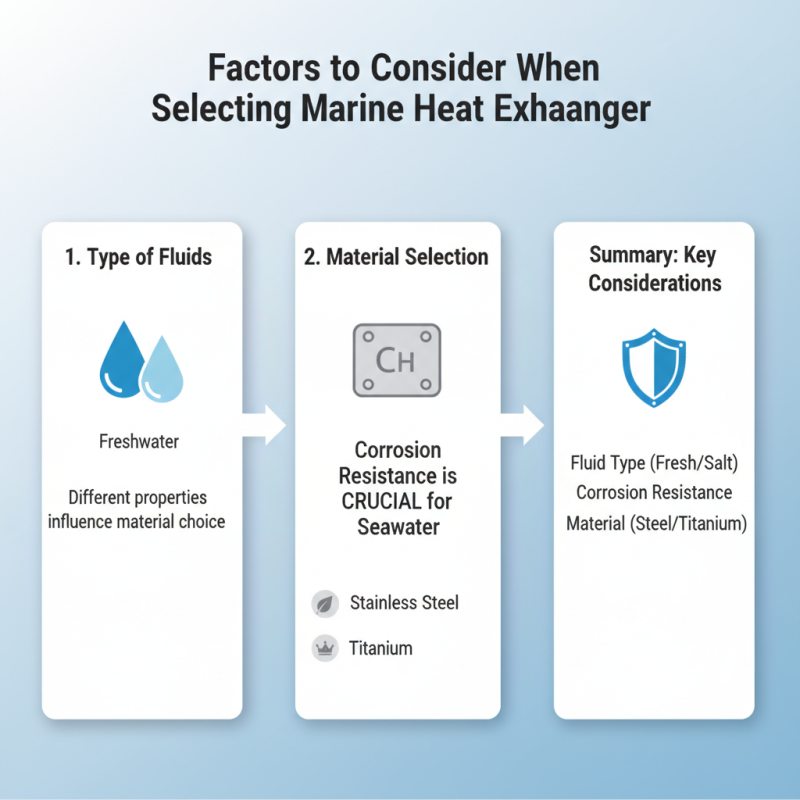
When selecting a marine heat exchanger, several key factors should guide your decision. Start by considering the type of fluids involved. Freshwater and seawater have different properties. This difference influences the materials used in the heat exchanger. Corrosion resistance is essential for seawater applications. Stainless steel or titanium options are often recommended.
Next, think about the heat transfer requirements. Calculate the desired capacity based on your system’s needs. A unit too small will overheat. One too big may lead to inefficiencies. Look into the flow rates too. Proper matches can greatly enhance performance. It’s also crucial to assess maintenance needs. Some models may need frequent cleaning, while others are easier to maintain.
Evaluate the installation space available on your vessel. The dimensions can limit your options significantly. Some designs may fit better in tight spaces. Keeping system design in mind is vital. Reflect on past experiences if you’ve used different exchangers. Sometimes, what worked before may not suit your current setup. Aim for a solution that balances performance, durability, and ease of use.
Understanding Heat Transfer and Efficiency in Marine Systems
When evaluating marine heat exchangers, understanding heat transfer is essential. Efficient heat transfer ensures that marine engines and equipment operate within optimal temperature ranges. Research indicates that heat exchangers can improve system efficiency by up to 20% if matched correctly to their applications. This underscores the importance of selecting the right unit based on the specific marine application needs.
Heat transfer efficiency is influenced by several factors. The type of material, surface area, and flow rates all play crucial roles. For instance, copper possesses a higher thermal conductivity than aluminum, leading to better performance in specific systems. However, aluminum is lighter and less expensive, which can sometimes create trade-offs in performance. It’s vital to consider these aspects when choosing a heat exchanger to avoid inefficiencies that can escalate operational costs.
Furthermore, thermal fouling can significantly diminish performance over time. Studies show that even a small layer of fouling can reduce heat transfer efficiency by up to 30%. Regular maintenance and cleaning can mitigate these effects, but neglect can lead to increased fuel consumption and lower reliability. Balancing maintenance costs with efficiency gains is critical for optimal long-term performance in marine applications.
How to Choose the Right Marine Heat Exchanger for Your Needs?
| Type of Heat Exchanger |
Material |
Efficiency (%) |
Weight (kg) |
Recommended Application |
| Plate Heat Exchanger |
Stainless Steel |
90 |
25 |
Cooling Engine Oil |
| Tube & Shell Heat Exchanger |
Copper |
85 |
40 |
Ballast Water Treatment |
| Air Cooled Heat Exchanger |
Aluminum |
80 |
30 |
Engine Cooling |
| Double Pipe Heat Exchanger |
Brass |
75 |
50 |
Hydraulic Oil Cooling |
Maintenance Tips for Longevity of Heat Exchangers
Maintaining your marine heat exchanger is essential for its longevity. Routine inspections are crucial. Look for signs of wear and tear.
Corrosion can sneak up on you, especially in saltwater environments. Use a soft brush to clean the exterior regularly,
removing any debris or algae buildup. Poor maintenance leads to inefficiency, which can escalate costs and reduce performance.
Pay attention to the fluid levels in the system. Low coolant levels can cause overheating. Top off fluids as needed, but also check for leaks.
Regularly flushing the system helps remove sediments. This buildup can impede heat transfer. Failing to do this might lead to more significant issues down the line.
Don't overlook the hoses connected to the heat exchanger. Inspect them for cracks or stiffness. They can deteriorate over time, risking leaks.
Replacing damaged hoses promptly is crucial. Remember, every component plays a role in the system’s efficiency.
Simple actions can lead to substantial benefits. Not maintaining these elements can result in costly repairs later on. Stay vigilant to ensure your heat exchanger operates optimally.
Common Mistakes to Avoid When Choosing a Heat Exchanger
Choosing a marine heat exchanger is crucial for efficiency and safety. Many users overlook the importance of matching the exchanger's specifications with their system. When the size is incorrect, it can lead to overheating or inadequate cooling. It's essential to consider the flow rates and pressure drop. These factors ensure the exchanger works optimally in your vessel's environment.
A common mistake is ignoring maintenance requirements. Some heat exchangers necessitate regular cleaning and inspection. Neglecting this can cause buildup and reduce performance. Users should account for ease of access during installation. It might seem trivial, but simplifying maintenance leads to better reliability.
Don't be swayed solely by price. While it's tempting to cut costs, cheaper options might compromise quality. Make sure to evaluate long-term performance. Researching materials is equally important. Some materials don't withstand marine conditions well. This oversight can lead to costly repairs. Thoughtful choices can save time and money in the long run.
Marine Heat Exchanger Efficiency by Type
This chart displays the efficiency of different types of marine heat exchangers based on common applications, helping you to choose the right one for your needs.