Why Choose Gasketed Plate Heat Exchanger for Your Industry?
In today's competitive industrial landscape, efficiency is key. The Gasketed Plate Heat Exchanger is an innovative solution that many industries rely on. This technology offers unmatched thermal performance and versatile design. Whether in food processing, chemical production, or HVAC systems, these heat exchangers stand out.
They feature a series of plates that create multiple flow paths. This design allows for maximum heat transfer with minimal space. Additionally, they are easier to clean and maintain than traditional exchangers. However, some industries hesitate to adopt them due to concerns about initial costs. It’s essential to weigh these upfront investments against long-term savings.
Selecting a Gasketed Plate Heat Exchanger can enhance energy efficiency. Yet, one must consider factors like fluid compatibility and pressure ratings. Careful evaluation of these elements is crucial for optimal performance. Embracing this technology can lead to significant gains, but it also requires a commitment to understanding the system’s needs.
Benefits of Gasketed Plate Heat Exchangers in Industrial Applications
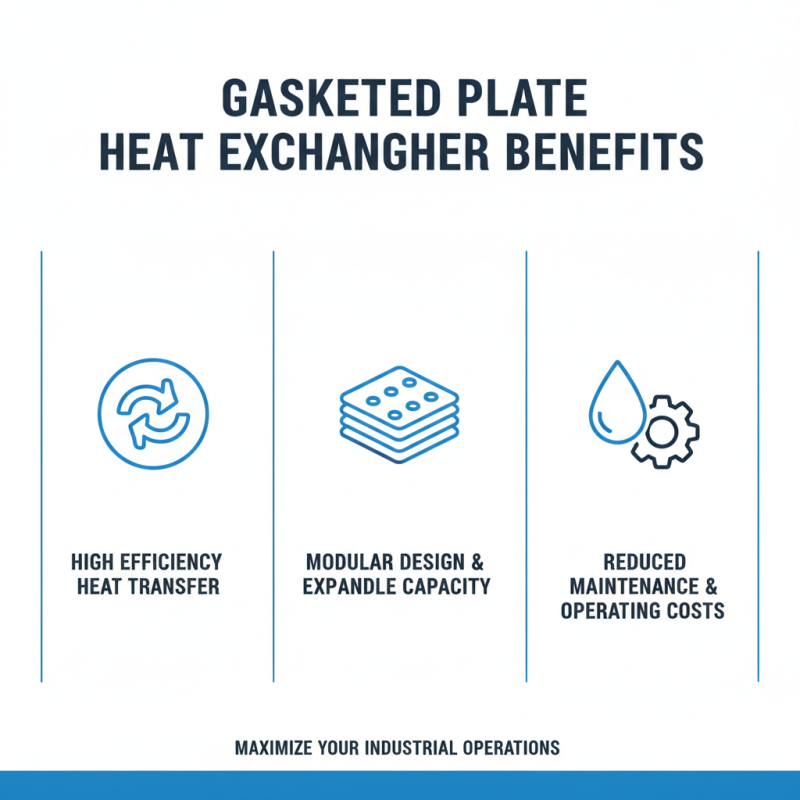
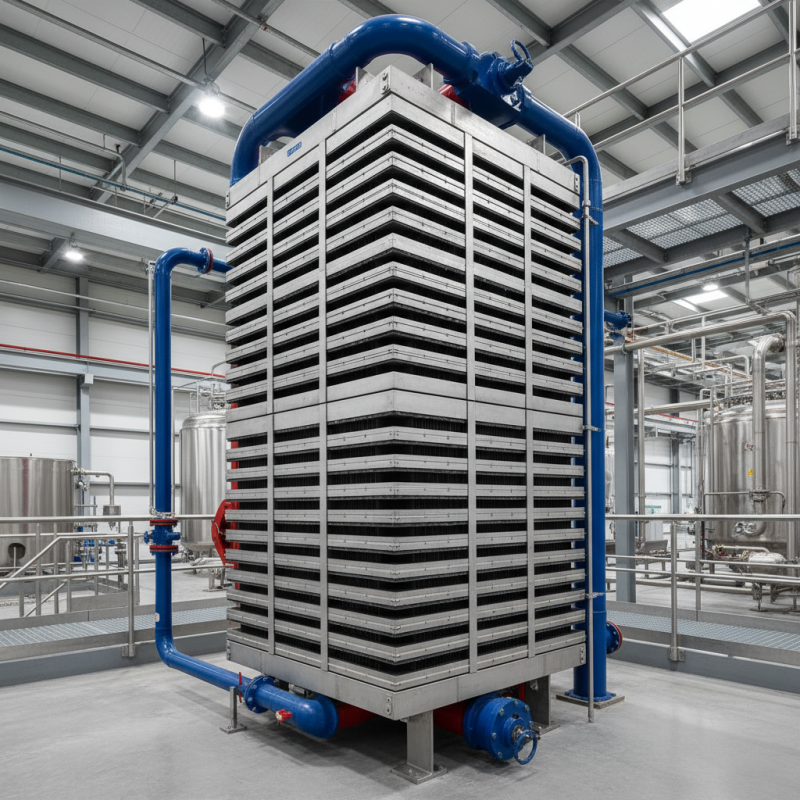
Gasketed plate heat exchangers stand out in industrial applications for several reasons. These devices are designed for efficient heat transfer between two fluids. They consist of multiple plates with gaskets that create individual channels for the fluids. This design maximizes the surface area, improving heat exchange efficiency. It’s important to think about how this design can benefit your operations.
In many industries, maintenance plays a critical role. Gasketed plate heat exchangers are user-friendly. Their modular design allows for easy disassembly for cleaning. This convenience helps to reduce downtime. However, gaskets may wear over time, necessitating periodic checks. It can be easy to overlook this maintenance need, which could lead to efficiency loss.
Energy savings are another significant advantage. These heat exchangers can operate at lower energy costs. Their effective performance can lead to reduced utility bills. However, if improperly installed, they might not deliver expected results. It’s crucial to pay attention to installation guidelines. A little oversight here can lead to inefficiency in the long run.
Key Design Features of Gasketed Plate Heat Exchangers Explained
Gasketed plate heat exchangers are essential in many industries. Their design features make them versatile and efficient. The plates in these exchangers create numerous channels. This design maximizes surface area, promoting heat transfer. The gaskets are vital as they seal the spaces between plates. This prevents fluid leakage, ensuring system integrity.
The compact nature of gasketed plate heat exchangers saves space. This feature is beneficial in facilities with limited room. Additionally, they allow for easy maintenance. You can dismantle the plates without complex procedures. It’s crucial, though, to check gaskets regularly. Gaskets wear out over time and can lead to inefficiencies.
Another key design aspect is their adaptability. These exchangers can handle various fluids and temperatures. However, not all designs are perfect. In some cases, fouling can occur, reducing efficiency. Regular monitoring can help manage these issues. It's important to evaluate if this system fits specific needs. Understanding these features aids in making informed choices.
Performance Efficiency Comparisons: Gasketed vs. Other Heat Exchangers
When it comes to heat exchangers, efficiency is key. Gasketed plate heat exchangers (GPHEs) have emerged as a leading choice across various industries. They can offer an impressive heat transfer coefficient, often exceeding 5000 W/m²K. This performance is significantly better than shell-and-tube heat exchangers, which typically achieve around 2000 W/m²K. Such metrics make GPHEs highly advantageous where space is limited.
Recovery rates are another critical factor. A recent industry report highlighted that GPHEs can maintain thermal efficiency levels of up to 90%. In contrast, traditional systems often lag behind, with recovery rates averaging only 75%. This drop in efficiency can lead to increased energy consumption and operational costs. Moreover, GPHEs are easier to maintain and clean, which in turn prolongs their lifespan and reduces downtime for inspections.
However, it's important to reflect on potential drawbacks. GPHEs may not excel in high-pressure applications, where shell-and-tube designs prevail. The gasket material may degrade over time, leading to leaks. These factors warrant careful consideration when selecting a heat exchanger system. Balancing performance with application-specific requirements is crucial for optimal operation in any industry.
Industry-Specific Use Cases for Gasketed Plate Heat Exchangers
Gasketed plate heat exchangers are versatile for various industries. In food processing, they efficiently cool and heat liquids. They help maintain food safety by controlling temperatures precisely. These exchangers are easy to clean, which is crucial in this industry.
In the pharmaceutical sector, gasketed plate heat exchangers ensure strict temperature control. They help maintain the integrity of sensitive products. Their compact design saves space, but can be challenging to integrate into large systems. It's essential to evaluate the layout before installation.
Chemical processing also benefits from gasketed plate heat exchangers. They handle aggressive fluids and provide high thermal efficiency. However, they require careful selection of materials to prevent corrosion. Companies must thoroughly analyze their needs to avoid potential failures. Choosing the right solution involves balancing efficiency and safety.
Why Choose Gasketed Plate Heat Exchanger for Your Industry? - Industry-Specific Use Cases for Gasketed Plate Heat Exchangers
| Industry |
Use Case |
Benefits |
| Food and Beverage |
Pasteurization |
Efficient heat transfer, easy maintenance, sanitary design |
| Chemical Processing |
Cooling and Heating Processes |
High temperature and pressure tolerance, customizable designs |
| HVAC |
Energy Recovery |
Improved energy efficiency, reduced operational costs |
| Pharmaceutical |
Temperature Control |
Strict hygiene standards, reliable performance |
| Marine |
Ballast Water Treatment |
Compact design, flexible installation options |
Cost-Effectiveness and Lifecycle Analysis of Gasketed Plate Heat Exchangers
Gasketed plate heat exchangers (GPHEs) are gaining traction for their cost-effectiveness and excellent lifecycle performance. According to a recent market analysis, GPHEs can reduce energy costs by up to 40%. This is largely due to their efficient design, which allows for maximum heat transfer with minimal energy consumption. The payback period for these systems is often less than three years, making them appealing for budget-conscious industries.
One key aspect is maintenance. GPHEs are easier to clean than traditional heat exchangers. Regular maintenance can prolong lifespan and reduce system downtime. A study indicates that proper upkeep can add 15-20% to the lifespan of a GPHE, leading to significant savings over time. Still, neglecting maintenance can lead to performance drops and increased costs.
Tips: Always schedule regular maintenance to maximize efficiency. Choose a design that fits your specific application. Consider lifecycle costs, not just initial investment. While GPHEs are generally a sound investment, it’s crucial to assess your specific needs and conditions. Costs might still creep up if unexpected repairs arise. This reflects the importance of understanding not only initial expenses but long-term operational demand.