Best PHE Heat Exchanger Types for Optimal Efficiency?
In the world of thermal management, selecting the right PHE heat exchanger is crucial. These devices play a significant role in various industries, from power generation to food processing. PHE heat exchangers are designed for high efficiency and compactness. This makes them suitable for applications with limited space.
Efficiency is not just a buzzword. It impacts operational costs and environmental sustainability. A poorly chosen heat exchanger may lead to higher energy consumption. This mistake can increase overall expenses significantly. Each application has unique requirements that must be addressed. Understanding these needs is vital for optimal performance.
Many types of PHE heat exchangers exist. They vary in design, material, and operating conditions. Some may excel in specific scenarios while performing poorly in others. It's essential to balance efficiency, cost, and the specific demands of your application. When selecting a PHE heat exchanger, reflection on these factors can lead to better choices, ensuring maximum performance and reliability.
Understanding PHE Heat Exchangers and Their Importance
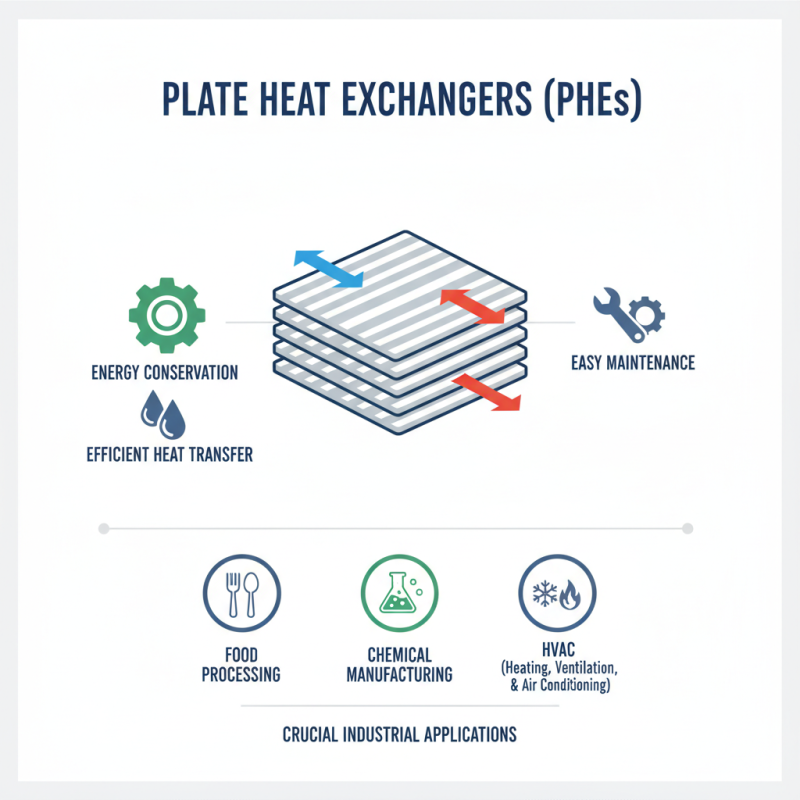
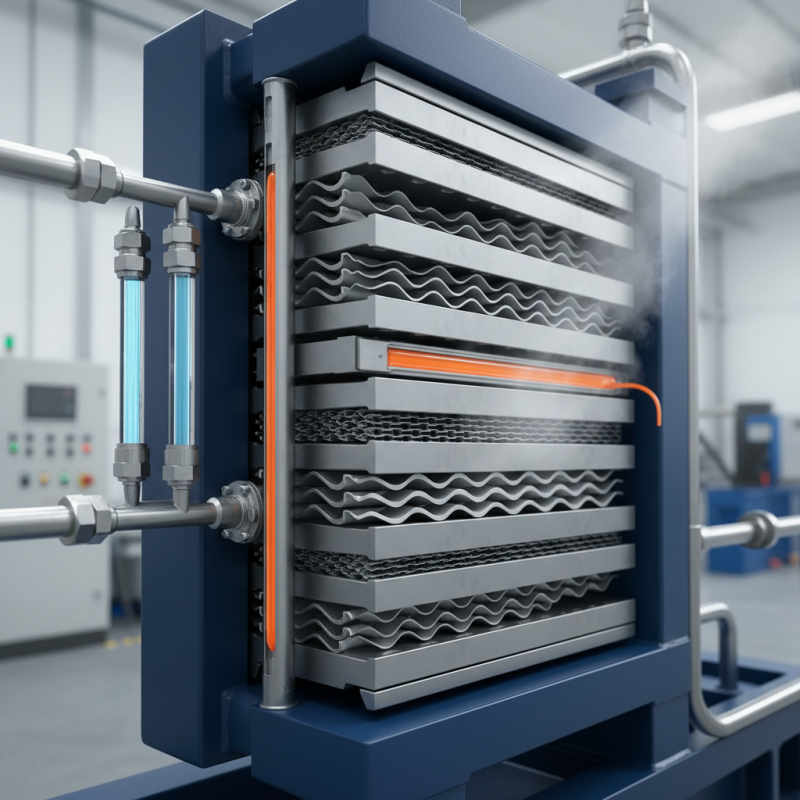
Plate Heat Exchangers (PHE) are crucial in various industries. They transfer heat efficiently between two fluids. This process plays a significant role in energy conservation. Industries such as food processing, chemical manufacturing, and HVAC rely heavily on PHE designs. The construction of PHE allows easy maintenance and effective heat transfer.
The design of PHE involves plates that create narrow channels. This maximizes the surface area for heat exchange. However, choosing the right PHE type can be challenging. Some applications require high-pressure capabilities, while others need compact designs. Each choice has its own set of pros and cons. It's essential to evaluate the specific needs of your application carefully. A misstep here can lead to inefficiencies and added costs.
Understanding the importance of PHE heat exchangers can’t be overlooked. They not only improve energy efficiency but also reduce environmental impact. A well-selected PHE optimizes thermal performance and saves energy. However, lacking proper knowledge might lead to poor choices. Evaluating options is essential for achieving maximum efficiency. Each decision requires careful analysis and an understanding of operational needs.
Types of PHE Heat Exchangers: A Comprehensive Overview
When considering PHE heat exchangers, efficiency is paramount. Plate heat exchangers (PHE) are known for their compact design and high thermal efficiency. Data from industry reports show that PHEs can achieve up to 90% heat transfer efficiency, surpassing traditional shell-and-tube options in many applications. This efficiency stems from their large surface area, allowing for effective thermal exchange in a smaller footprint.
Several types of PHEs cater to different industrial needs. For instance, gasketed plate heat exchangers offer flexibility for maintenance and cleaning. However, they can be prone to leakage, challenging reliability. On the other hand, welded plate heat exchangers eliminate gaskets, ensuring robust performance but at the expense of easier access for maintenance. Fin designs can also vary; some increase turbulence, improving heat transfer but requiring more pumping energy.
Despite these advantages, choosing the right type of PHE isn't straightforward. Each design has trade-offs impacting cost, efficiency, and maintenance. Some reports indicate that about 30% of heat exchanger malfunctions stem from improper selection. Users must weigh these factors carefully to enhance system performance while preventing costly downtime. Balancing efficiency with operational reliability can be tricky, yet it’s essential for optimal performance.
Best PHE Heat Exchanger Types for Optimal Efficiency
Factors Influencing Efficiency in PHE Heat Exchangers
When discussing the efficiency of plate heat exchangers (PHE), several factors come into play. Heat transfer efficiency largely depends on plate design and arrangement. A recent study from the International Journal of Heat and Mass Transfer highlights that optimized corrugated patterns can enhance heat transfer. These patterns increase turbulence, which improves thermal performance. However, it’s crucial to balance design with pressure drop to maintain efficiency.
Fluid properties also significantly influence overall efficiency. Viscosity, phase change, and fluid velocity affect heat transfer rates. Research indicates that adjusting flow rates can either elevate efficiency or create unfavorable conditions. For example, very high velocities may lead to erosion. It's a delicate balance. Additionally, fouling is a real concern in PHE. Studies show that even small accumulations on surfaces can reduce heat transfer by up to 30%. Regular maintenance, though often overlooked, becomes essential in mitigating such losses.
The thermal conductivity of the materials used is another critical factor. Metals with higher conductivity often perform better. Yet, they might come at a higher upfront cost. Engineers constantly face trade-offs between materials and long-term efficiency. Finding that sweet spot is key to optimal performance in PHE systems.
Best PHE Heat Exchanger Types for Optimal Efficiency
| Heat Exchanger Type |
Material |
Typical Efficiency (%) |
Applications |
Maintenance Frequency |
| Plate Heat Exchanger |
Stainless Steel |
90 |
Food Processing, HVAC |
Every 6 months |
| Shell and Tube |
Copper, Carbon Steel |
85 |
Oil Refineries, Marine |
Annually |
| Air Cooled Heat Exchanger |
Aluminum |
80 |
Power Plants, Chemical Plants |
Every 1-2 years |
| Double Pipe Heat Exchanger |
Steel |
78 |
Chemical Processing, Water Cooling |
Every 6 months |
| Spiral Heat Exchanger |
Stainless Steel |
88 |
Waste Heat Recovery, HVAC |
Every 1-2 years |
Comparative Analysis of PHE Heat Exchanger Designs
Plate Heat Exchangers (PHEs) are critical in various applications. Their designs greatly affect efficiency. Different configurations exist, enhancing performance under specific conditions. For example, gasketed PHEs offer flexibility and ease of maintenance. Their ability to handle fluctuating flows is impressive. However, they can leak if improperly maintained.
Welded PHEs are another option. They excel in high-pressure scenarios. Yet, their rigid structure restricts cleaning. Efficiency can diminish if fouling occurs. Plate designs vary, affecting how fluids interact. Corrugated plates increase turbulence, enhancing heat transfer. Still, this may introduce pressure drops.
Finally, hybrid designs combine features of various types. They aim to balance maintenance and efficiency. However, they can become complex. A deeper reflection is needed on the best fit for specific situations. The choice impacts long-term performance. Each design has strengths and flaws. Evaluating operational requirements is essential.
Best Practices for Achieving Optimal Efficiency in PHE Systems
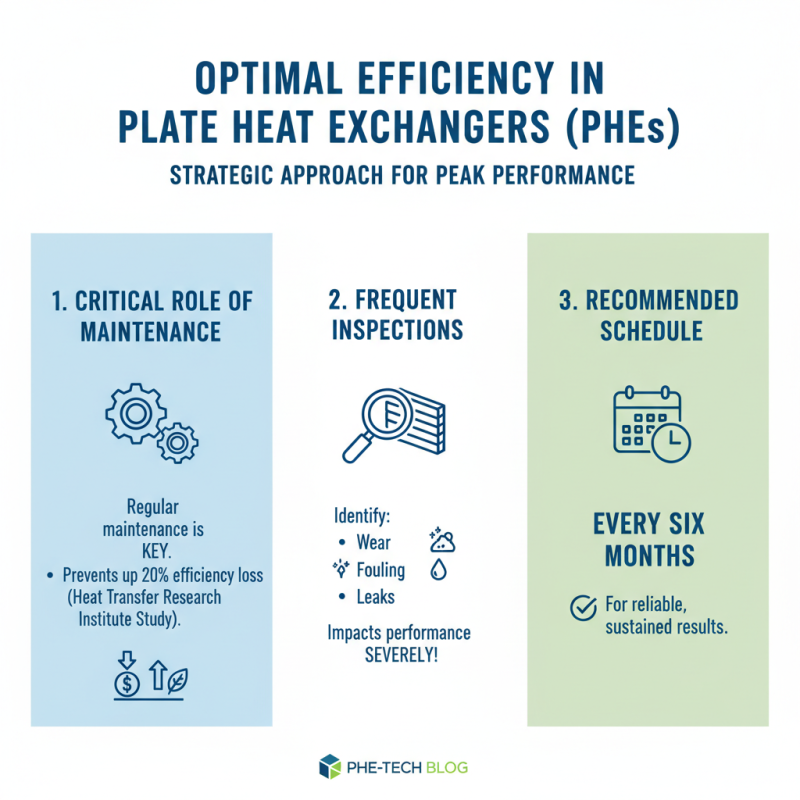
Achieving optimal efficiency in plate heat exchangers (PHE) requires a strategic approach. Regular maintenance plays a critical role. A study by the Heat Transfer Research Institute found that improperly maintained PHEs can lose up to 20% efficiency. Frequent inspections help identify wear, fouling, and leaks, which can severely impact performance. Schedule maintenance every six months for reliable results.
Operating parameters must also be closely monitored. For example, maintaining the right flow rates is essential. Deviations can lead to overheating or inefficient heat transfer. According to the European Institute for Heat Transfer, optimal flow rates can enhance heat transfer by as much as 30%. Adjusting temperatures correctly can prevent undue stress on materials.
Training personnel is another crucial aspect. Many operators lack sufficient knowledge about PHE systems. This can lead to inefficiencies. Investing in training programs can bridge gaps in understanding. A well-trained team is less likely to make costly mistakes. Always seek feedback about training effectiveness. This ensures constant improvement.