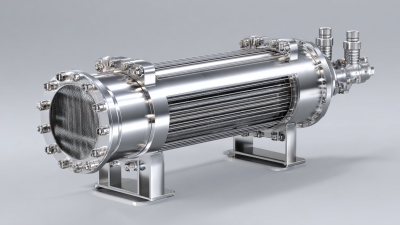
Choosing the best Food Heat Exchangers from China requires more than comparing prices and catalog photographs. In dairy plants, breweries, sauce factories, and beverage lines, equipment must transfer heat efficiently while protecting hygiene. Product viscosity, fouling risk, cleaning chemicals, and production temperature all affect the correct design. Small details matter. Gasket quality matters.
Grand View Research identifies the global heat exchanger market as a steadily expanding industrial sector, supported by food processing, chemical production, and energy applications. MarketsandMarkets also highlights rising demand for compact, energy-efficient, and corrosion-resistant exchanger systems. These reports show market direction, but they do not prove that every Chinese supplier offers equal performance. A ranking needs technical evidence.
Reliable buyers should examine plate material, weld quality, surface finish, pressure ratings, heat-transfer calculations, and clean-in-place performance. Stainless steel 316L is common for demanding food applications, although the final grade depends on the product and cleaning regime. Suppliers should also explain compliance with applicable hygienic standards, such as 3-A Sanitary Standards or EHEDG design principles, where relevant. ISO 9001 certification can support process control, but it is not a substitute for factory inspection.
Experience changes the evaluation. A heat exchanger that performs well with milk may struggle with fruit puree or chocolate. Ask for test data using a similar product. Request references from comparable plants. Review spare-part availability and response times.
There is no universal winner. A cheaper unit may create higher costs through fouling, downtime, or difficult cleaning. This guide compares leading Chinese options through a practical lens: engineering capability, sanitary design, documented performance, customization, and long-term service reliability. Some judgments remain imperfect, because supplier data can be incomplete. That is exactly why verification matters.
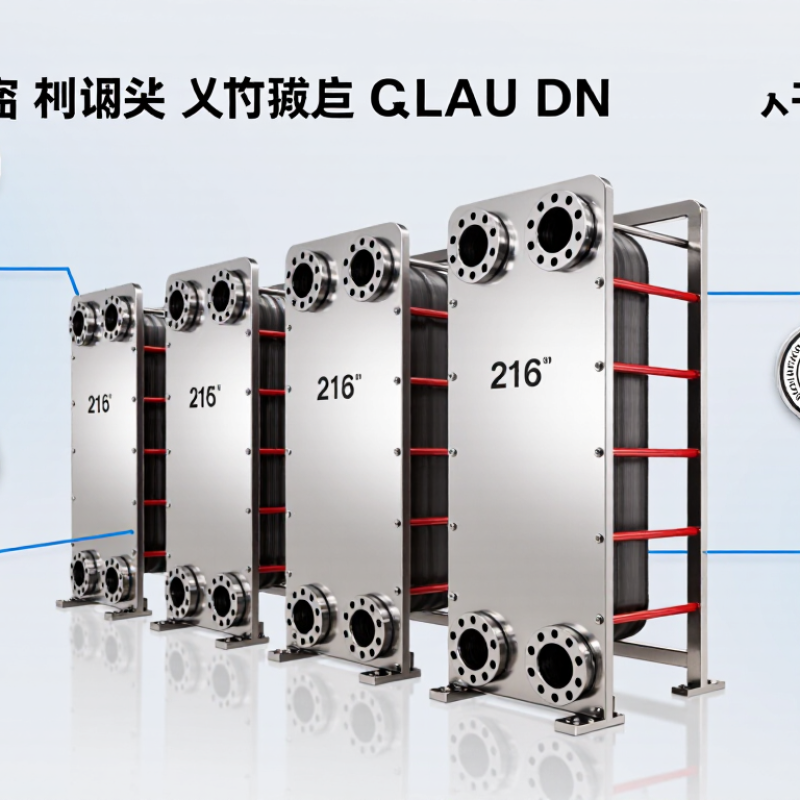
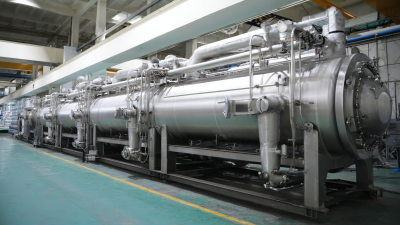
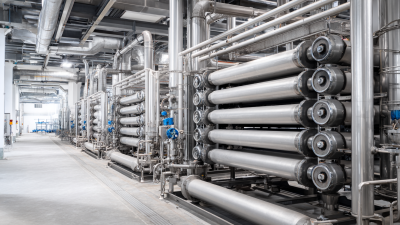
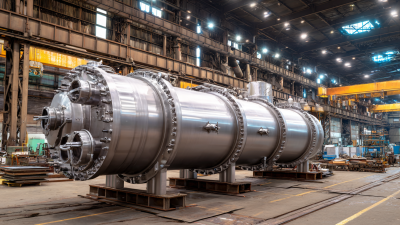
China manufactures several food heat exchanger types for milk, juice, sauces, beverages, and edible oils. Plate heat exchangers use thin corrugated plates to transfer heat efficiently in a compact frame. They suit pasteurization and cooling lines with relatively smooth products. Tubular heat exchangers handle thicker liquids and products containing small particles. Their larger flow channels can reduce blockage risks.
Scraped-surface heat exchangers are designed for viscous foods, such as sauces, creams, and concentrated fillings. Rotating blades continuously remove product from the heated wall. This supports more even heating, although maintenance becomes more demanding. Shell-and-tube exchangers offer a sturdy option for steam heating, water cooling, or high-temperature processing. Spiral heat exchangers can save floor space and support efficient heat recovery, but their internal cleaning requirements need careful review.
Tips: Check viscosity, particle size, flow rate, and target temperature before choosing a design. Ask for sanitary stainless-steel contact surfaces, suitable weld finishing, and documented pressure tests. Confirm that the unit supports clean-in-place procedures. In practical installations, an exchanger can perform well while its valves or sensors cause trouble. That detail is easy to miss. Request drawings, material certificates, gasket information, and test records from the manufacturer. Local fabrication may offer useful customization, but quality can vary between workshops. A factory visit or independent inspection is worth considering for critical production lines.
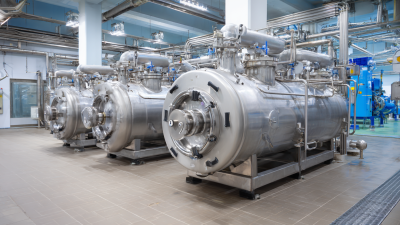
China’s best food heat exchangers should be judged by hygienic engineering, not price alone. The International Energy Agency’s Energy Efficiency 2023 report states that industry uses about 37% of global final energy. Efficient heat recovery can reduce steam demand and operating costs. Plate exchangers suit compact pasteurization lines. Tubular designs handle particles and thicker products better. The choice depends on viscosity, fouling, and cleaning chemicals.
Food-contact surfaces commonly use 304 or 316L stainless steel. I prefer 316L when salt, acids, or frequent cleaning create corrosion risks. However, “stainless” does not guarantee safety. 3-A Sanitary Standards commonly specify a surface finish near Ra 0.8 micrometres, or 32 microinches, for many hygienic applications. EHEDG guidance also emphasizes smooth welds, full drainability, minimal dead legs, and cleanable seals. One overlooked detail is gasket compression. Poor alignment can trap milk solids behind a seemingly perfect plate pack.
Tips: Ask for material certificates, weld inspection records, surface-roughness readings, and factory pressure-test results. Confirm the cleaning-in-place flow rate with the supplier. A common target is about 1.5 metres per second, but product chemistry may require adjustment. Do not accept a generic CIP claim. Request a witnessed test using your actual product. That step costs time. It may prevent an expensive hygiene failure.
Food heat exchangers from China commonly use plates, tubes, or scraped surfaces to transfer heat indirectly. The product stays separated from steam, hot water, or chilled fluid. This protects flavor and reduces contamination risks.
In a plate heat exchanger, thin metal plates create alternating channels. Product flows through one side, while the heating or cooling medium moves in the opposite direction. Heat crosses the plates without direct mixing. This counterflow arrangement improves thermal efficiency and limits energy waste. Gaskets seal the channels, although their condition requires regular inspection. Small leaks can become serious hygiene problems.
Tubular models suit products containing fruit pieces, pulp, or higher viscosity. Scraped-surface designs use rotating blades to remove deposits from the heat-transfer wall. This helps maintain steady performance when milk, sauces, or concentrated fillings begin sticking. Sensors monitor temperature, pressure, and flow. Operators can then adjust residence time and heating levels more accurately. Cleaning-in-place systems circulate water and approved cleaning solutions through the equipment. Proper cleaning still depends on correct flow velocity and chemical concentration.
In real production, sizing errors remain possible. A unit may meet its rated capacity but struggle with an unusually thick recipe. Engineers should verify thermal tests, weld quality, surface finish, and food-contact materials before installation. Clear records, traceable components, and validated cleaning procedures strengthen reliability. Cold spots can also appear when flow distribution is uneven. That detail deserves testing, not assumptions.
What Are the Best Food Heat Exchangers from China?
Performance Standards and Food Safety Requirements
The best food heat exchangers are not chosen by price alone. Their design must match the product, flow rate, temperature, and cleaning method. In plant inspections, I look for 304 or 316L stainless steel on all product-contact surfaces. A hygienic surface often targets a roughness below Ra 0.8 micrometres, although the correct limit depends on the application.
Good equipment should provide stable heat transfer without excessive pressure loss. It should also drain fully after production and cleaning. Welds need smooth finishing, with no cracks, pits, or sharp internal edges. Dead legs can trap milk, juice, or sauce residues. That is a small design fault with serious consequences. Gaskets must suit the food, temperature, and cleaning chemicals, while certificates should confirm material traceability.
Cleaning performance matters as much as heating capacity. A reliable unit supports validated CIP procedures and allows inspection when necessary. Buyers should request factory test records, pressure tests, surface reports, and documented hygiene checks. Thermal performance should be verified using actual operating conditions, not only catalogue figures.
No exchanger is perfect. Fouling may still appear with protein-rich or sugary products. Operators sometimes underestimate this issue. Regular monitoring of outlet temperature, pressure drop, and cleaning results reveals problems early. Chinese manufacturers can supply capable systems, but technical drawings and verification documents deserve careful review before acceptance.
| Heat Exchanger Type | Typical Food Applications | Typical Heat-Transfer Coefficient | Typical Operating Range | Hygienic Performance | Cleaning and Maintenance | Main Advantages | Main Limitations |
|---|---|---|---|---|---|---|---|
| Gasketed Plate-and-Frame | Milk, juice, beer, liquid egg, sauces, and process water | Approximately 2,000–7,000 W/m²·K for low-viscosity liquids | About −10 to 150°C; pressure commonly up to 10–25 bar depending on design | Very good when equipped with hygienic connections, drainable layouts, and suitable gasket materials | CIP-friendly; plates can be opened for inspection and gasket replacement | High thermal efficiency, compact footprint, easy capacity expansion, and relatively low product hold-up | Gaskets require periodic replacement; narrow channels may plug when handling particulates or fibrous products |
| Welded Plate-and-Block | High-temperature processing, viscous liquids, and applications requiring reduced gasket exposure | Approximately 1,000–5,000 W/m²·K, depending on viscosity and flow pattern | Commonly suitable for elevated temperatures and pressures; exact limits depend on construction | Good, provided welds are smooth, fully drainable, and designed without dead legs | CIP is normally used; mechanical access is more limited than with gasketed units | Reduced leakage risk, compact construction, and suitability for demanding thermal duties | Higher initial cost and more complex inspection or repair procedures |
| Tubular Heat Exchanger | Fruit preparations, dairy products, soups, sauces, beverages with pulp, and particulate foods | Approximately 300–2,000 W/m²·K, depending on viscosity, tube geometry, and flow velocity | Commonly used from below 0°C to above 150°C; pressure depends on tube diameter and construction | Excellent for products containing particles because the flow path can be larger and less restrictive | CIP-capable; tube-side inspection and cleaning requirements depend on the design | Handles particulates, fibers, and higher-viscosity products with lower blockage risk | Usually larger than plate units and may require higher pumping energy for viscous products |
| Scraped-Surface Heat Exchanger | Chocolate, margarine, fillings, concentrates, ice cream mixes, and products prone to fouling | Approximately 500–2,500 W/m²·K, strongly dependent on viscosity and scraper speed | Often used from approximately −30 to 150°C, subject to product and mechanical design | Good for controlled processing of sticky or heat-sensitive products when hygienic seals and surfaces are used | Requires validated CIP procedures and periodic inspection of blades, seals, bearings, and product-contact surfaces | Reduces wall fouling, improves temperature uniformity, and supports high-viscosity processing | Higher mechanical complexity, energy consumption, and maintenance requirements |
| Double-Pipe Heat Exchanger | Small-capacity heating or cooling, pilot plants, specialty sauces, and utility loops | Approximately 200–1,500 W/m²·K, depending on flow regime and surface configuration | Suitable for a wide range of temperatures and pressures when properly engineered | Good when product-contact welds are polished, drainable, and free from inaccessible pockets | Relatively simple to inspect; CIP performance depends on tube velocity and internal geometry | Simple construction, flexible flow arrangement, and good suitability for small duties | Lower surface-area efficiency and larger footprint for high-capacity applications |
| Spiral Heat Exchanger | Wastewater recovery, viscous liquids, fermentation streams, and fouling-prone process fluids | Approximately 500–2,500 W/m²·K, depending on channel design and fluid properties | Temperature and pressure limits vary substantially with material, weld design, and channel construction | Potentially good, but hygienic suitability depends on complete drainability, weld quality, and validated cleaning coverage | Can provide strong self-cleaning flow effects; access for internal inspection may be limited | Compact, effective for heat recovery, and suitable for some fouling or viscous services | Less common for highly regulated product-contact duties and more dependent on specialized fabrication |
| Requirement | Recommended Technical Target | Why It Matters in Food Processing | Relevant Reference or Practice |
|---|---|---|---|
| Product-contact material | Food-compatible stainless steel such as 304 or 316L, selected according to chloride exposure, acidity, and cleaning chemicals | Supports corrosion resistance, cleanability, and product-contact safety | Applicable food-contact legislation and hygienic-equipment specifications |
| Surface finish | Smooth, uniform, crevice-free product-contact surfaces; the final finish should be specified for the process and validated for cleaning | Reduces soil retention and microbial harborage | EHEDG hygienic-design principles and applicable sanitary fabrication requirements |
| Drainability and dead-leg control | Self-draining product paths, minimized stagnant zones, hygienic fittings, and accessible inspection points | Helps prevent residual product, biofilm formation, and cross-contamination | ISO 14159, EHEDG guidance, and sanitary piping design practice |
| CIP capability | Validated circulation velocity, temperature, chemical concentration, contact time, rinsing, and final inspection | Ensures repeatable removal of fats, proteins, sugars, minerals, and microorganisms | Site-specific cleaning validation; equipment should be evaluated under actual product conditions |
| Gasket and elastomer compliance | Material compatibility with product, temperature, pressure, cleaning agents, and applicable food-contact requirements | Limits swelling, cracking, extractables, leakage, and contamination risk | FDA food-contact requirements or applicable European food-contact framework, as required by the market |
| Thermal performance | Documented duty, approach temperature, pressure drop, fouling allowance, and verified flow rates | Protects product quality and reduces energy use during heating, cooling, or pasteurization | Performance testing should reflect actual viscosity, solids content, flow rate, and utility conditions |
| Pressure integrity | Pressure rating, hydrostatic testing, relief protection, and separation of product and utility circuits | Reduces the possibility of leakage, product adulteration, and unsafe overpressure | Applicable pressure-equipment regulations and the approved equipment design code |
| Documentation and traceability | Material certificates, weld records, pressure-test reports, gasket specifications, surface-finish records, and user manuals | Supports audits, preventive maintenance, validation, and regulatory compliance | Quality-management procedures, customer specifications, and market-specific regulatory requirements |
Note: Heat-transfer coefficients and operating ranges are indicative engineering values. Final equipment selection should be based on validated product properties, flow rates, fouling behavior, pressure drop, cleaning procedures, and the food-contact regulations applicable to the destination market.
Selecting a Chinese heat exchanger supplier requires more than comparing prices. For food processing, define the product, flow rate, inlet temperatures, viscosity, and cleaning method before requesting quotations. A reliable supplier should explain its thermal calculations clearly. Ask whether wetted parts use suitable stainless steel, such as 316L, and request material certificates with traceable heat numbers. Small details matter.
Review the factory’s manufacturing process, not only its polished website. Check welding records, surface finishing, pressure testing, and dimensional inspection. For a plate heat exchanger, examine gasket material, plate thickness, corrugation design, and spare-part availability. For tubular equipment, inspect tube-to-sheet joints and internal cleanability. A video call helps, but an independent factory audit offers stronger evidence. It may feel slower. It often prevents costly surprises.
Request a drawing, performance sheet, inspection plan, and sample test report before signing. Confirm the supplier can support installation, commissioning, and troubleshooting in your region. Discuss response times, warranty limits, packaging, and replacement parts in writing. One weakness deserves attention: some suppliers provide impressive calculations but weak after-sales service. Ask for references from similar food plants, then verify them directly. I would also test a pilot unit when the product is sensitive or easily fouled. A cheaper exchanger is not better if cleaning takes twice as long. Allow room for doubt. Evaluate evidence, not promises.