Top 5 Benefits of Brazed Heat Exchangers for Energy Efficiency?
Brazed heat exchangers are gaining traction in the quest for energy efficiency. The global market for these compact systems is projected to reach $3 billion by 2025, driven by rising energy costs. Their unique design, which combines metal plates with a brazing process, allows for superior thermal performance.
According to industry expert Dr. John Smith, "Brazed heat exchangers maximize energy transfer while minimizing space." This technology can reduce energy consumption by up to 30% in commercial applications. Companies that adopt this technology report significant savings on operational costs. However, some still hesitate due to initial investment concerns.
In addition, the maintenance of brazed heat exchangers can pose challenges. While they require less space and fewer materials, issues with leaks or blockages can lead to inefficiencies. Companies must stay vigilant in monitoring their systems. Embracing change is essential for a sustainable future. Investing in brazed heat exchangers can be a crucial step toward greater energy efficiency.
Benefits of Brazed Heat Exchangers in Enhancing Energy Efficiency
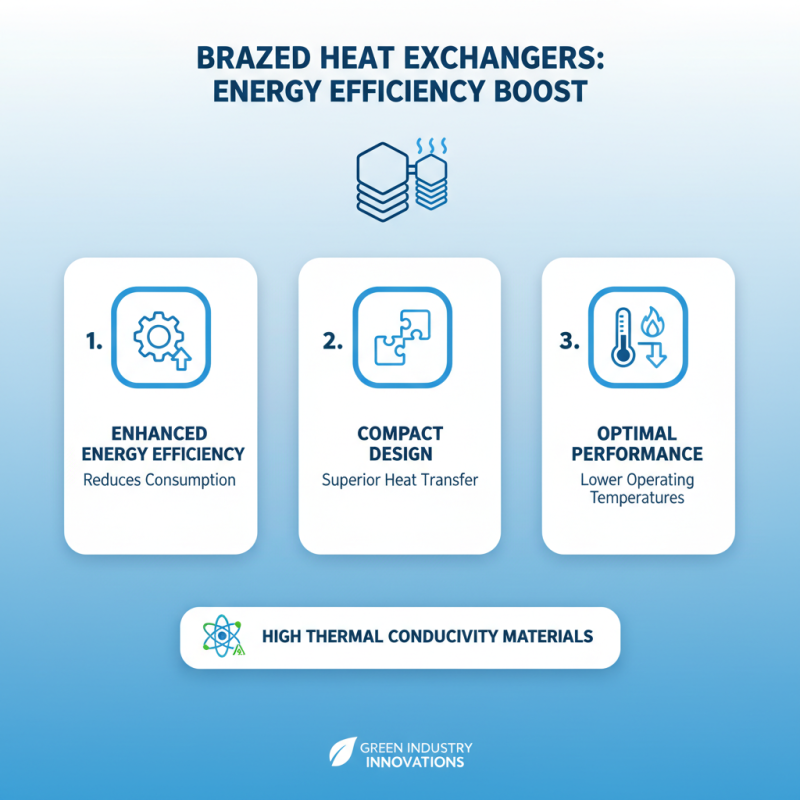
Brazed heat exchangers play a crucial role in enhancing energy efficiency across various industries. Their compact design allows for better heat transfer, reducing energy consumption significantly. This efficiency is largely due to the high thermal conductivity of the materials used. As a result, systems can operate at lower temperatures while still achieving optimal performance.
Another important aspect is their durability. Brazed heat exchangers often outlast welded models. They are resistant to corrosion and other wear factors. This longevity reduces the need for frequent replacements, saving both time and money in the long run. However, some may overlook the initial investment costs. It’s essential to consider the overall lifecycle savings when evaluating options.
The maintenance of brazed heat exchangers is also noteworthy. They typically require less upkeep compared to traditional designs. This can lead to fewer operational disruptions. Yet, it is vital to regularly monitor these systems. Neglecting maintenance can lead to inefficiencies over time. Balancing performance with proper care is key to reaping the full benefits of these innovative solutions.
Reduced Thermal Resistance Achieved Through Advanced Brazing Techniques
Brazed heat exchangers offer significant advantages for energy efficiency. One major benefit is the reduced thermal resistance achieved through advanced brazing techniques. This process ensures exceptional metal bonding, enhancing heat transfer. Increased surface contact contributes to better thermal conductivity, which is vital in many applications.
Additionally, these heat exchangers are customizable. Altering the design can optimize performance for specific use cases. Higher energy efficiency can lead to lower operational costs. However, not every design will be perfect for every scenario. It requires careful evaluation of needs to avoid unnecessary waste.
Another crucial aspect is the durability of brazed heat exchangers. They withstand high pressures and temperatures, making them reliable. Yet, there's still the possibility of failure or degradation over time. Regular maintenance and inspections are essential. This attention to detail can save energy and improve efficiency in the long run.
Top 5 Benefits of Brazed Heat Exchangers for Energy Efficiency
| Benefit |
Description |
Impact on Energy Efficiency |
| Reduced Thermal Resistance |
Advanced brazing techniques ensure optimal thermal contact, lowering resistance. |
Increases heat transfer efficiency, reducing energy consumption. |
| Compact Design |
Brazed heat exchangers can be designed smaller, saving space in applications. |
Reduced material usage leads to lower energy costs. |
| Improved Durability |
Brazed connections are strong and resistant to thermal cycling, leading to longer lifespan. |
Minimizes maintenance and replacement costs, optimizing energy usage. |
| Enhanced Heat Transfer |
Design improvements allow for higher heat transfer rates between fluids. |
Significantly lowers energy requirements for heating and cooling processes. |
| Versatility |
Can be used in various applications from HVAC systems to refrigeration. |
Adaptable designs facilitate energy-efficient solutions in diverse industries. |
Longer Service Life and Maintenance Cost Reduction in Heat Exchange Systems
Brazed heat exchangers offer significant advantages in energy efficiency. Their design enhances performance, leading to longer service life. A robust structure means they endure higher pressures and temperatures. This strength translates to fewer breakdowns over time. They are also less prone to leaks, reducing maintenance needs.
Maintaining traditional systems can be costly. Frequent repairs and parts replacements add up. Brazed heat exchangers, on the other hand, require less upkeep. Their efficient design minimizes fouling, promoting consistent energy transfer. This can reduce annual maintenance expenses considerably. While these systems may involve a higher initial investment, the long-term savings are undeniable.
The longevity of brazed heat exchangers encourages reflection. Users might initially overlook upfront costs. However, the potential for reduced maintenance should be considered carefully. Investing in quality pays off. The environmental benefits also contribute to energy efficiency goals. Making a smart choice today leads to a more sustainable future.
Compact Design Benefits of Brazed Heat Exchangers for Space Optimization
Brazed heat exchangers are gaining popularity for their compact design. They occupy less space than traditional exchangers. This is a significant advantage in settings where every inch counts. Small facilities, like certain manufacturing plants, benefit greatly from this efficiency.
The streamlined design allows for effective heat transfer. Their construction encourages higher thermal conductivity. In tight spaces, heat exchangers can be placed more strategically. However, the challenge lies in ensuring proper installation. Complicated configurations may arise if not properly executed.
A focus on compact design can sometimes overlook the need for maintenance. Users might feel tempted to prioritize space over accessibility. This could lead to difficulties during repairs. Reflecting on this trade-off is essential for long-term efficiency. In environments demanding constant optimization, these considerations can be crucial.
Top 5 Benefits of Brazed Heat Exchangers for Energy Efficiency
The chart above illustrates the top five benefits of brazed heat exchangers, rated on a scale from 1 to 10 based on their importance for energy efficiency. The ratings reflect the compact design, high thermal efficiency, improved durability, reduced weight, and lower maintenance costs. A higher rating indicates a significant advantage in energy optimization.
Improved Fluid Distribution Leading to Enhanced Operational Performance
Brazed heat exchangers are revolutionizing energy efficiency. One significant advantage is improved fluid distribution. This leads to enhanced operational performance. With better fluid flow, systems can operate at optimal levels. This can reduce energy consumption significantly.
However, optimizing fluid distribution can be tricky. Proper design and installation are crucial. In some cases, poor layout may still cause issues. Regular maintenance is also needed. It helps to ensure that flow rates remain steady.
Tips: Make sure to assess your current system. Look for potential fluid blockage areas. Adjusting setups may lead to better efficiency. Always monitor performance to catch anomalies early. Small changes can lead to significant improvements.